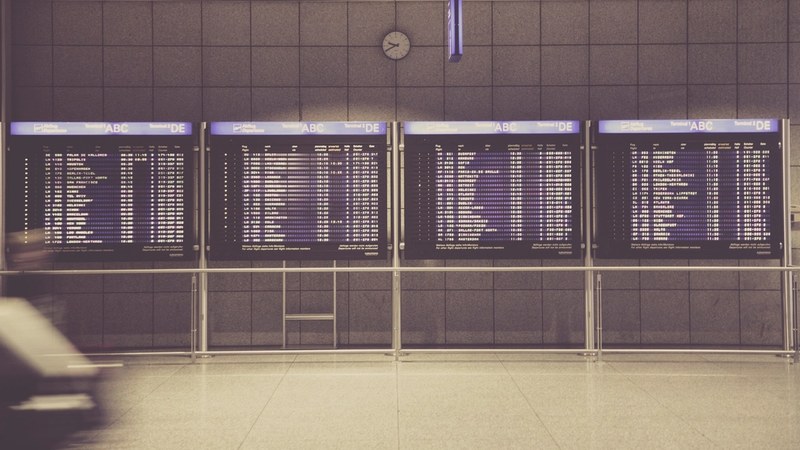
The Federal Aviation Administration (FAA) issued a nationwide ground stop on November 13, 2026, at approximately 4 p.m. ET, resulting in the suspension of all U.S.-bound flights at Toronto Pearson International Airport and Montreal-Trudeau Airport. The stoppage continued for more than four hours and was lifted shortly before 9 p.m. ET, yet delays at major Canadian airports persisted into November 14 as backlogs were addressed.
Communication Failure from FAA System Upgrade Triggers Ground Stop
The FAA ground stop was initiated due to communications failures at regional U.S. air traffic control centers caused by instability following a telecommunications upgrade. The upgrade, conducted by L3Harris Technologies, involved replacing copper wire systems
with fiberoptic cables, but a faulty router overwhelmed network connections with over 1,000 attempts every five seconds, disrupting radar and communication feeds.
Transportation Secretary Sean Duffy stated investigations are ongoing to determine whether the fault was due to user or installation error by L3Harris or a defective router. FAA Administrator Bryan Bedford confirmed there was no evidence of a cyberattack or malicious intent, emphasizing the decision to ground flights was made out of safety concerns due to unstable communication with aircraft.
Flight Suspensions and Airport Impacts Across Canada
Toronto Pearson International Airport halted departures and arrivals for flights bound to the United States following the FAA ground
stop. Montreal-Trudeau, Calgary, and Vancouver airports implemented traffic management measures under the coordination of NAV Canada, which manages Canadian air traffic control. These restrictions were lifted by NAV Canada shortly after 6 p.m. ET on November 13, although delays persisted as airports began clearing flight backlogs.
John C. Munro Hamilton International Airport reported no operational disruption during the ground stop period. Billy Bishop Toronto City Airport advised passengers to contact airlines for flight status updates but did not expect any U.S.-bound flights to be diverted there that evening.
Thousands of Flight Cancellations and Passenger Disruption
The FAA ground stop resulted in more than 9,000 cancellations and over
7,000 delays affecting U.S.-bound flights on November 13, with disruptions extending into the next day. By 9:40 a.m. ET on November 14, over 3,700 flights remained canceled and nearly 2,000 delayed across U.S. airspace. Canadian airports experienced significant passenger impacts; travelers reported being stranded or forced to arrange overnight accommodations independently.
A passenger stranded at Calgary International Airport, Naji Zuain, criticized Air Canada for not covering accommodation costs, describing the situation as “unfair” given the disruptions were beyond the airline’s control. Airlines including American Airlines, Delta Air Lines, and United Airlines responded by offering fee waivers for ticket changes and
extra pay incentives to flight crews to expedite schedule recovery.
Official Responses and Ongoing Operations
NAV Canada stated it continues to maintain “air traffic moving safely and efficiently” in Canadian airspace despite some delays expected while clearing operational backlogs. Federal Transport Minister Steven McKinnon said the Canadian government closely monitored developments and maintained contact with NAV Canada and relevant authorities during the disruption.
John Gradek, a McGill University professor of operations and integrated aviation management, stressed the critical safety role of air traffic controller communications and noted this was the most significant disruption to occur since the September 11, 2001 attacks. Aviation analyst and former
Air Canada COO Duncan Dee explained airlines face complex rescheduling challenges as grounded aircraft and crew are not always positioned to resume flights immediately.