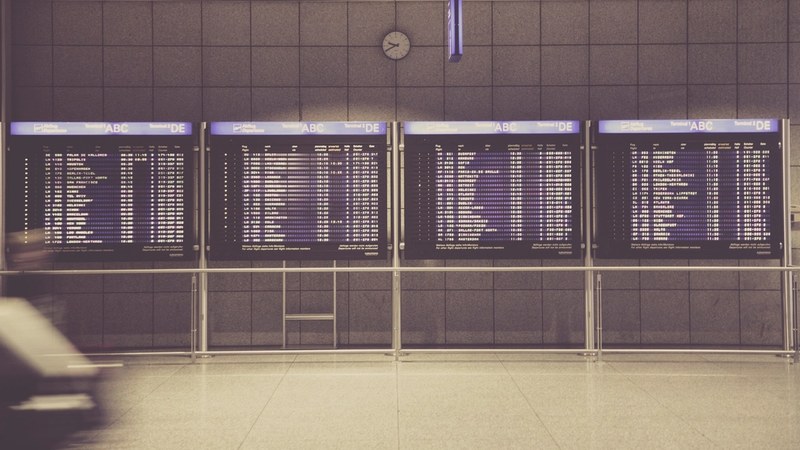
The Federal Aviation Administration (FAA) issued a nationwide ground stop for all departing flights in the United States on November 13, 2026, lasting about five hours. The halt, prompted by extraordinary safety concerns, ended with U.S. airspace reported as operating normally by 7:30 a.m. Eastern Time on November 14, 2026, though recovery remains gradual.
Flight Delays and Cancellations Across Major Airlines
FlightAware reported 9,159 flight cancellations and 7,190 delays nationwide on November 13, 2026, with disruption extending into the following day. On November 14, Delta Air Lines canceled 640 flights, United Airlines canceled 530, and American Airlines canceled 488. Additionally, more than 2,000 flight delays and over
3,800 cancellations were recorded on November 14, demonstrating ongoing operational challenges.
Impact on Key Airports
The ground stop and ensuing backlog affected several major U.S. hubs, including Chicago O’Hare International Airport, Chicago Midway International Airport, Atlanta’s Hartsfield-Jackson International Airport, and New York’s John F. Kennedy International Airport. Other affected locations included Boston, Miami, Pittsburgh, Los Angeles, and Baltimore.
Cause of the Ground Stop: Telecommunications Outage
The initial FAA investigation attributed the outage to overloaded Cisco 600 series routers manufactured between 2001 and 2006, which caused inconsistent data flow and triggered a system shutdown. The FAA’s air traffic control telecommunications infrastructure, operated and upgraded by contractor L3Harris, relies on legacy Time-Division Multiplexing
(TDM) technology. Recent security patches appeared to overwhelm the aging routers, resulting in system instability.
Official Statements and Response Measures
FAA Administrator Bryan Bedford confirmed no evidence of cyberattacks or artificial intelligence involvement, describing the problem as a defective equipment failure. Transportation Secretary Sean Duffy thanked air traffic controllers, pilots, and crews for their dedication during the crisis and emphasized the need for emergency congressional funding to modernize the outdated system, stating, “You will have more of these unless the American people and the Congress tell us to build.” Department of Homeland Security Secretary Markwayne Mullin reiterated that no nefarious or terrorist activity was linked
to the outage.
American Airlines responded by adding 1,750 seats through extra flights and imposing fare caps to ease passenger disruptions. The airline also allowed commuting crew members to book confirmed seats and offered premium pay to assist with recovery efforts.
New York Governor Kathy Hochul criticized Transportation Secretary Duffy for repeated aviation system failures during his tenure and demanded his resignation amid the incident.
FAA Telecommunications Modernization Efforts
The FAA has completed over 70% of its conversion from copper-based to fiber optic communications in its air traffic control network. However, the current backbone remains reliant on outdated infrastructure described as obsolete in a
November 2023 safety review. L3Harris, which operates and upgrades the FAA’s telecommunications system, has been tasked since 2002 with modernizing this critical network. Officials state that without adequate emergency funding, system failures similar to the November 13 outage will continue.