The Federal Aviation Administration (FAA) issued a rare nationwide ground stop for all US airports at 3:54 p.m. ET on November 13, 2026, halting departures for more than four hours until 8:15 p.m. ET, interrupting thousands of domestic and international flights.
Approximately 3,500 planes were already airborne when the ground stop took effect. The pause in departures impacted major hubs including Newark, John F. Kennedy (JFK), LaGuardia, Dallas-Fort Worth, Orlando, and Chicago O’Hare airports.
Technical Failure Due to Outdated Air Traffic Control Systems
Transportation Secretary Sean Duffy attributed the incident to the FAA’s aging air traffic control infrastructure, which relies on analog telecommunications technology. Overloaded switches and routers caused
inconsistencies in radar and communication signals, prompting an emergency system shutdown.
Duffy called on Congress to allocate billions of dollars for a complete modernization of the air traffic control network to prevent recurrence. He described the situation as an “emergency” requiring swift legislative action.
Flight Cancellations and Delays Across US and Canada
The ground stop forced thousands of flight cancellations and widespread delays. Airlines including United, Southwest, and American Airlines canceled dozens of flights and worked to assist stranded passengers. Canadian airports, including Toronto Pearson and Montreal-Trudeau, were also affected by the disruption spilling over from the US airspace.
Australian authorities suspended US-bound flights from Sydney International Airport
during the outage. Eurocontrol member states suspended US-directed airspace operations in response to the ground stop.
Passenger Disruptions and Airline Responses
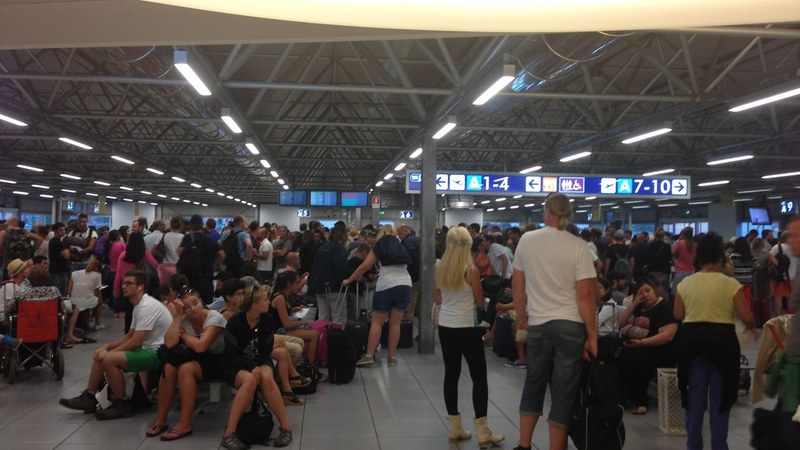
Thousands of travelers were left stranded at airports without confirmed accommodations for overnight stays. Airlines such as Delta, United, American, and JetBlue concentrated efforts on resuming services and supporting passengers. FAA officials warned that the ripple effects would persist for several days, with cancellations expected through the Thanksgiving weekend.
Official Statements Denying Cyberattack and Emphasizing Safety
Homeland Security Secretary Markwayne Mullin stated there was no evidence indicating a cyberattack or nefarious activity caused the outage. “There’s nothing completely certain right now. It doesn’t appear that way,” Mullin said.
AirSpace Intel, the
contractor behind the FAA’s SMART AI system rollout, confirmed their product was not involved in the incident.
Duffy emphasized the United States maintains the safest airspace worldwide but cautioned incidents like the ground stop will recur without modernization. “Our switches, our routers, actually got overloaded with data … and started to give us inconsistency in the data from those routers,” Duffy explained.
Congressional Leaders Call for Investigation and Funding
House Democratic leader Rep. Hakeem Jeffries described the outage as an “unprecedented breakdown,” demanding timely explanations and assurances for aviation safety under the Trump Administration.
Senator Tammy Duckworth, as Ranking Member of the Senate Aviation Subcommittee, pledged to
seek a thorough investigation into the causes of the nationwide ground stop.
Senate Commerce Committee Ranking Member Maria Cantwell noted ongoing committee review into the technological issues surrounding air traffic communication systems.
Duffy asserted that a failure of “old legacy equipment” was responsible and said, “You will have more of these. You will have more of them unless the American people and the Congress tell us to build.” He added, “It’s going to take us some time to unwind what’s happened this afternoon, hopefully tomorrow we are going to start to see far better movement.”
Historical Context of the Ground Stop
This was only the second
nationwide ground stop issued in the United States since the 9/11 terrorist attacks. The previous nationwide ground stop occurred in 2023 after a failure in the FAA’s Notice to Air Missions (NOTAM) system.
The FAA estimates a full overhaul of the air traffic control system could cost up to $50 billion.