The U.S. Federal Aviation Administration (FAA) issued a ground stop on November 13, 2026, shortly before 4 p.m. ET, halting all flights bound for the United States from Toronto’s two main airports—Toronto Pearson International Airport and Billy Bishop Toronto City Airport. The order was lifted around 8:15 p.m. ET the same day amid communication issues at U.S. regional air traffic control centers.
Toronto Pearson International Airport suspended all U.S.-bound departures and arrivals during the ground stop, resulting in cancellations of more than 120 flights. Air Canada cancelled all remaining U.S. flights scheduled for the evening, including those crossing U.S. airspace
en route to the Caribbean and South America. Porter Airlines also cancelled all remaining Friday U.S.-inbound and outbound flights operating from Billy Bishop Toronto City Airport. Additionally, twenty other international flights at Pearson were cancelled as a direct effect of the ground stop.
NAV Canada, responsible for Canadian air traffic control, implemented temporary traffic management measures at Toronto Pearson and three other major Canadian airports to safely manage the volume of air traffic during the FAA ground stop. Toronto Pearson’s emergency operations centre remained activated to coordinate recovery efforts. Federal Transport Minister Steven MacKinnon confirmed the government was closely monitoring
the situation and working with NAV Canada. NAV Canada reported that its systems were fully operational and unaffected by the U.S. ground stop.
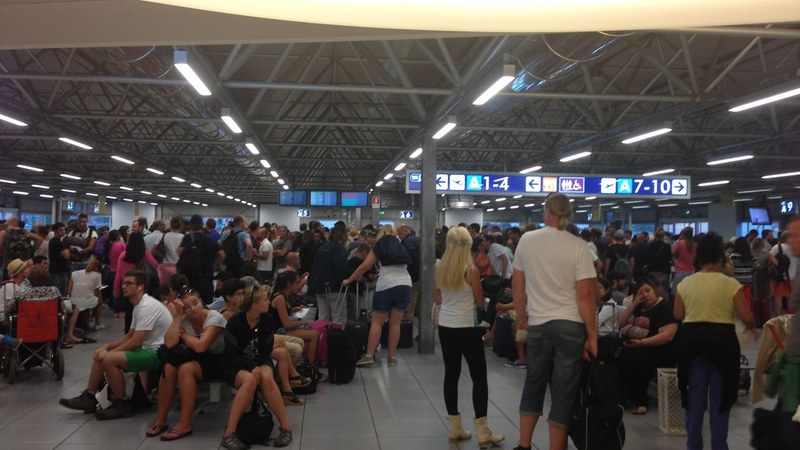
Passengers faced significant disruptions with rescheduling, cancellations, and delays extending into November 14 and beyond. Some travelers were stranded overnight, including a passenger named Lyle Jakobsen, who was left in Sint Maarten after an Air Canada flight cancellation. Two passengers flying to New York City and Las Vegas expressed disappointment and uncertainty about the likelihood of timely rebooking.
Toronto Pearson spokesperson Erica Vella said the airport was entering a recovery mode and working closely with airlines to
resume normal operations over November 14 and 15. She said, “We are working very, very closely with our airlines, and we will be moving into a bit of a recovery mode today and tomorrow to make sure that airlines can get their schedules back on schedule and make sure that passengers can get to their destinations.” NAV Canada advised passengers that some delays may continue as operations normalize and backlogs clear.
The FAA ground stop is only the third nationwide ground stop in U.S. aviation history, issued due to communication failures between air traffic control centers. Industry analysts emphasized the
critical nature of reliable communications to aviation safety and noted that the disruption affected flights not only to U.S. destinations but also routes overflying U.S. airspace to the Caribbean and South America. The event underscored vulnerabilities in the North American air traffic control infrastructure and the interdependence between Canadian airlines and U.S. airspace management.