Nearly 1,900 flights within, into, or out of the United States faced delays as of 6:45 p.m. EDT on October 27, 2026. FlightAware reported 1,886 delays and 52 cancellations tied to U.S. operations, a sharp increase from about 800 delays and 32 cancellations earlier the same day. Worldwide, there were more than 12,000 delays and 730 cancellations reported.
Major U.S. Airports Experience Operational Strains
The Federal Aviation Administration (FAA) identified Denver International Airport, San Diego International Airport, and Seattle-Tacoma International Airport as locations where low cloud cover threatened flight operations. While the FAA did not attribute all delays and cancellations to weather, they noted that low
clouds could delay flights at these airports. FlightAware tracks flights within, into, and out of the United States, offering real-time updates on flight status.
Low Clouds and Other Factors Impact Flight Schedules
Low cloud ceilings limited the number of aircraft able to land safely at affected airports within a given time frame. Flight disruptions on October 27 also resulted from increased air traffic volume, aircraft availability challenges, and crew scheduling issues. Airlines adjusted their schedules throughout the day in response to these operational constraints.
Passenger Guidance Amid Increasing Flight Disruptions
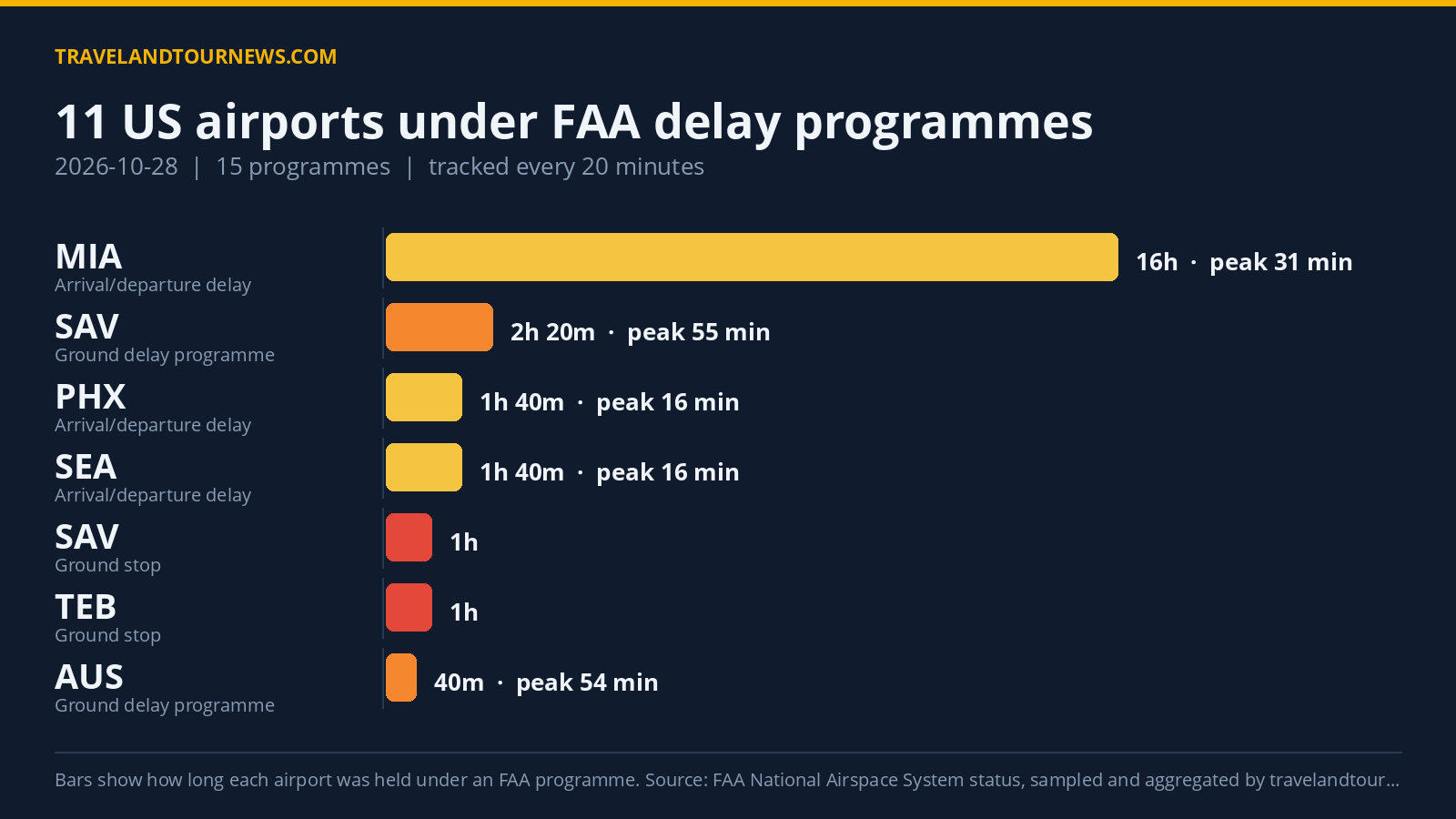
Travelers faced disruptions across multiple U.S. airports on October 27 due to the surge in delays and cancellations. The FAA’s National Airspace System dashboard
provided real-time updates on airport constraints and traffic-management programs. Airlines managed rebooking and scheduling adjustments, and passengers were urged to allow extra travel time and monitor flights before heading to airports.