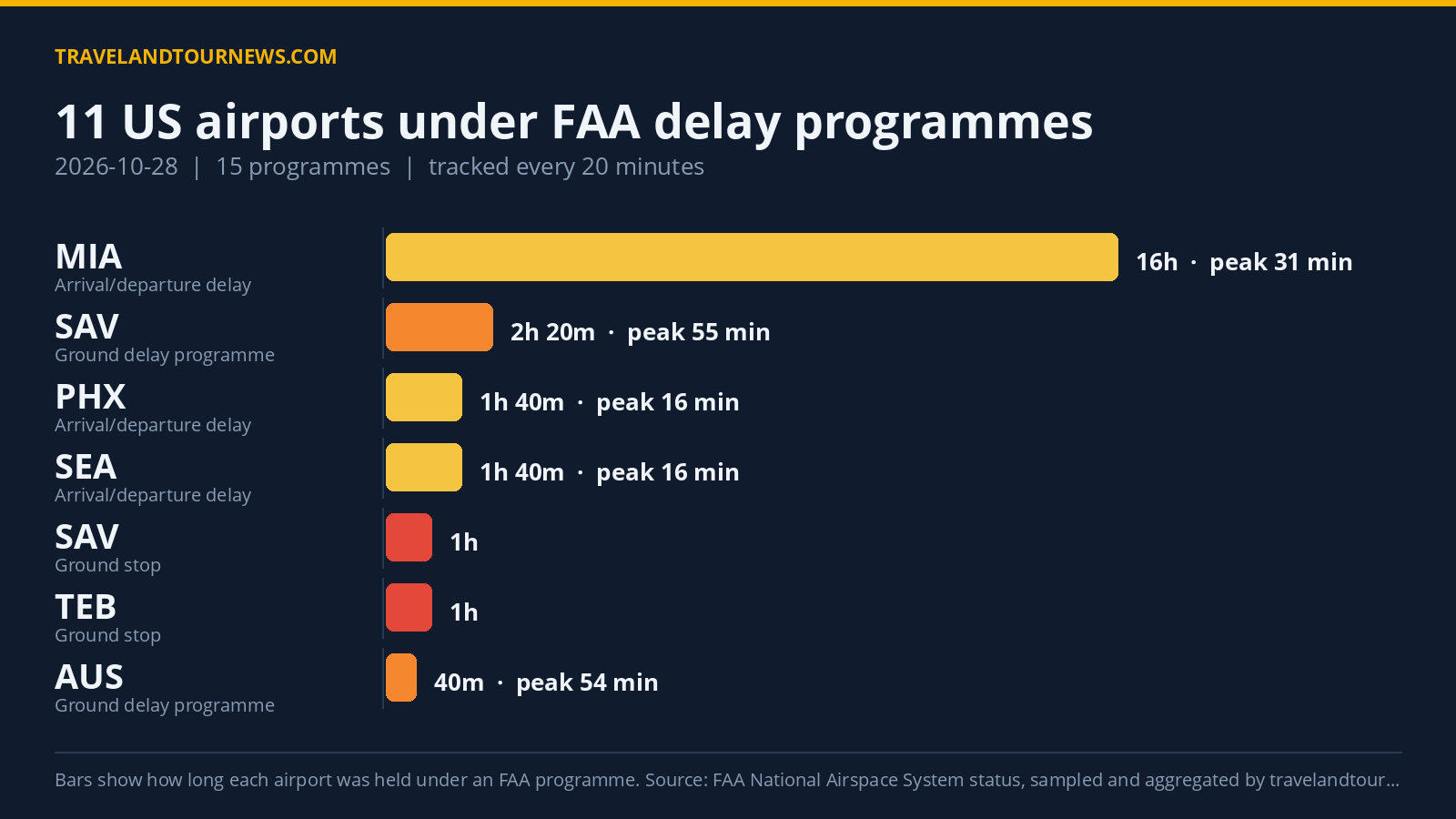
On October 27, 2026, flight disruptions intensified across the United States, with FlightAware reporting 1,886 delays and 52 cancellations involving flights within, into, or out of the country as of 6:45 p.m. EDT. These figures represent a marked rise from the approximately 800 delays and 32 cancellations recorded earlier that morning.
FAA Identifies Low Clouds Affecting Major US Airports
The Federal Aviation Administration (FAA) attributed some delays to low cloud ceilings impacting operations at Denver International Airport, San Diego International Airport, and Seattle-Tacoma International Airport. The FAA cautioned that not all delays and cancellations recorded were weather-related, but low clouds at these airports reduced the number of aircraft
that could land safely, contributing to the travel disruptions.
FlightAware Reports Global and US Flight Disruptions
FlightAware monitored a total of more than 12,000 global flight delays and 730 cancellations on the same day. Its statistics regarding the U.S. involved flights highlight the scale of the disruption across domestic and international air traffic linked to U.S. airports.
Operational Factors and Traveler Advisories
Flight delays and cancellations stem from a combination of factors including weather, air traffic volume, aircraft availability, and crew scheduling adjustments. The FAA underlined the dynamic nature of conditions, especially at airports affected by low clouds, which can quickly reduce landing capacity.
The FAA advised travelers to monitor their flight
status closely and prepare for possible delays or cancellations. The agency’s National Airspace System dashboard offers real-time updates on airport constraints and traffic-management programs.
Passengers were encouraged to allow extra time when traveling to airports on October 27 and to verify departure and arrival information with their airlines to accommodate the disruptions caused by low cloud ceilings and operational constraints.