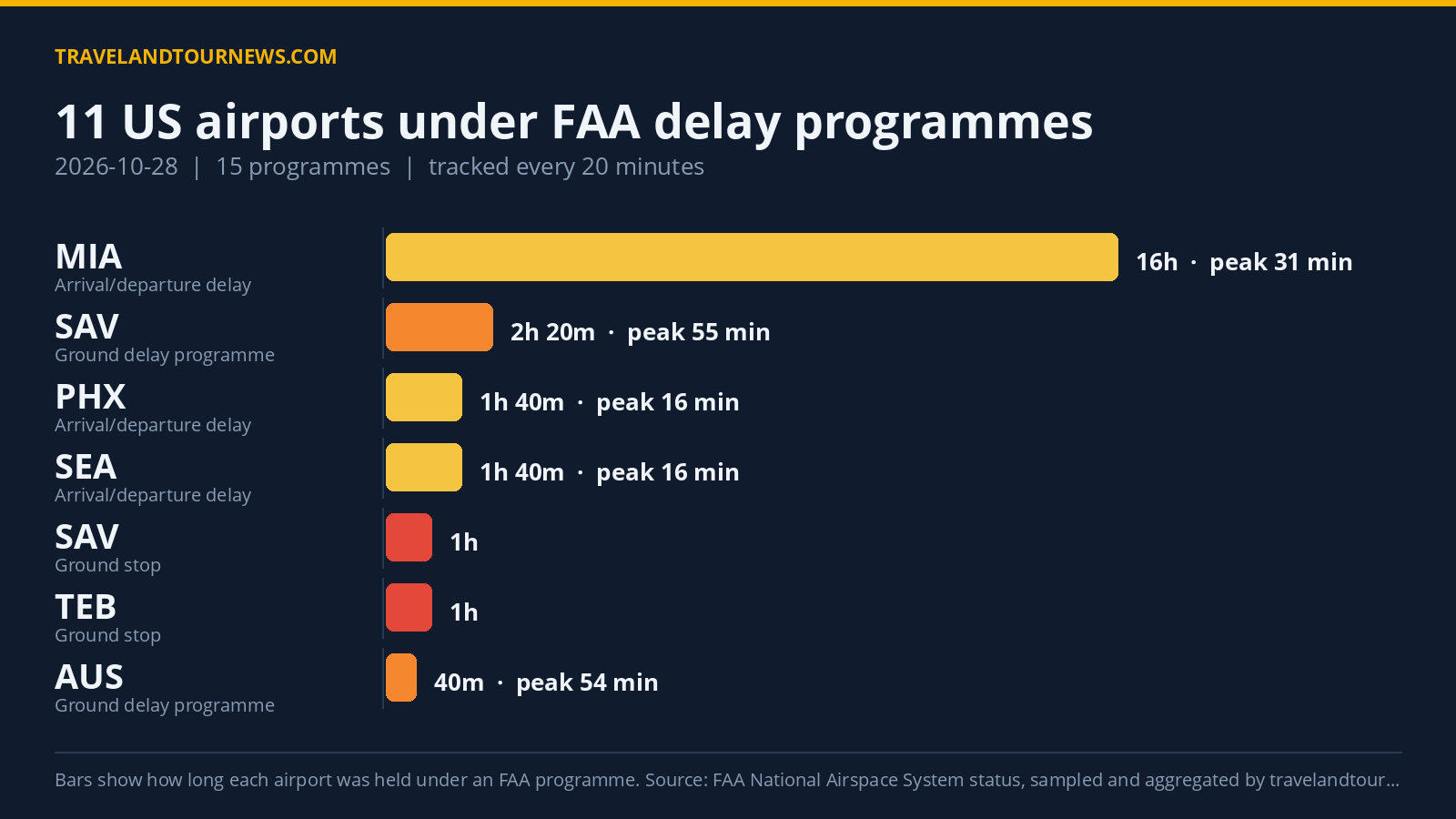
Flight disruptions grew across the United States on Tuesday, October 27, 2026, as FlightAware recorded 1,886 flight delays and 52 cancellations involving flights within, into, or out of the country by 6:45 p.m. Eastern Daylight Time.
Earlier that day, morning figures showed about 800 U.S.-related delays and 32 cancellations, indicating a sharp increase in disruptions by evening. On a global scale, FlightAware reported more than 12,000 flight delays and 730 cancellations for the same date.
Airports Affected by Low Cloud Coverage
The Federal Aviation Administration (FAA) identified low clouds as a potential cause of delays at several major airports, including Denver International Airport, San Diego International
Airport, and Seattle-Tacoma International Airport. The FAA noted these conditions could slow flight operations but did not attribute all delays or cancellations to weather factors.
Low cloud ceilings reduce the capacity for aircraft to land safely within a given timeframe, complicating airport throughput. The FAA’s National Airspace System dashboard tracks these constraints and ongoing traffic management initiatives in real time.
Causes and Operational Adjustments
Flight disruption patterns reflect a combination of weather conditions and routine airline schedule adjustments. These involve responses to air traffic volume fluctuations, aircraft availability, and crew scheduling throughout the day.
Traveler Recommendations and Monitoring
The FAA advised passengers to monitor their flight statuses before
heading to airports due to rapidly changing conditions. Travelers were urged to allow extra time for adjustments related to flight arrivals and departures.
As of October 27, 2026, these disruptions persisted into the evening across U.S. airports, affecting multiple routes and carriers nationwide.