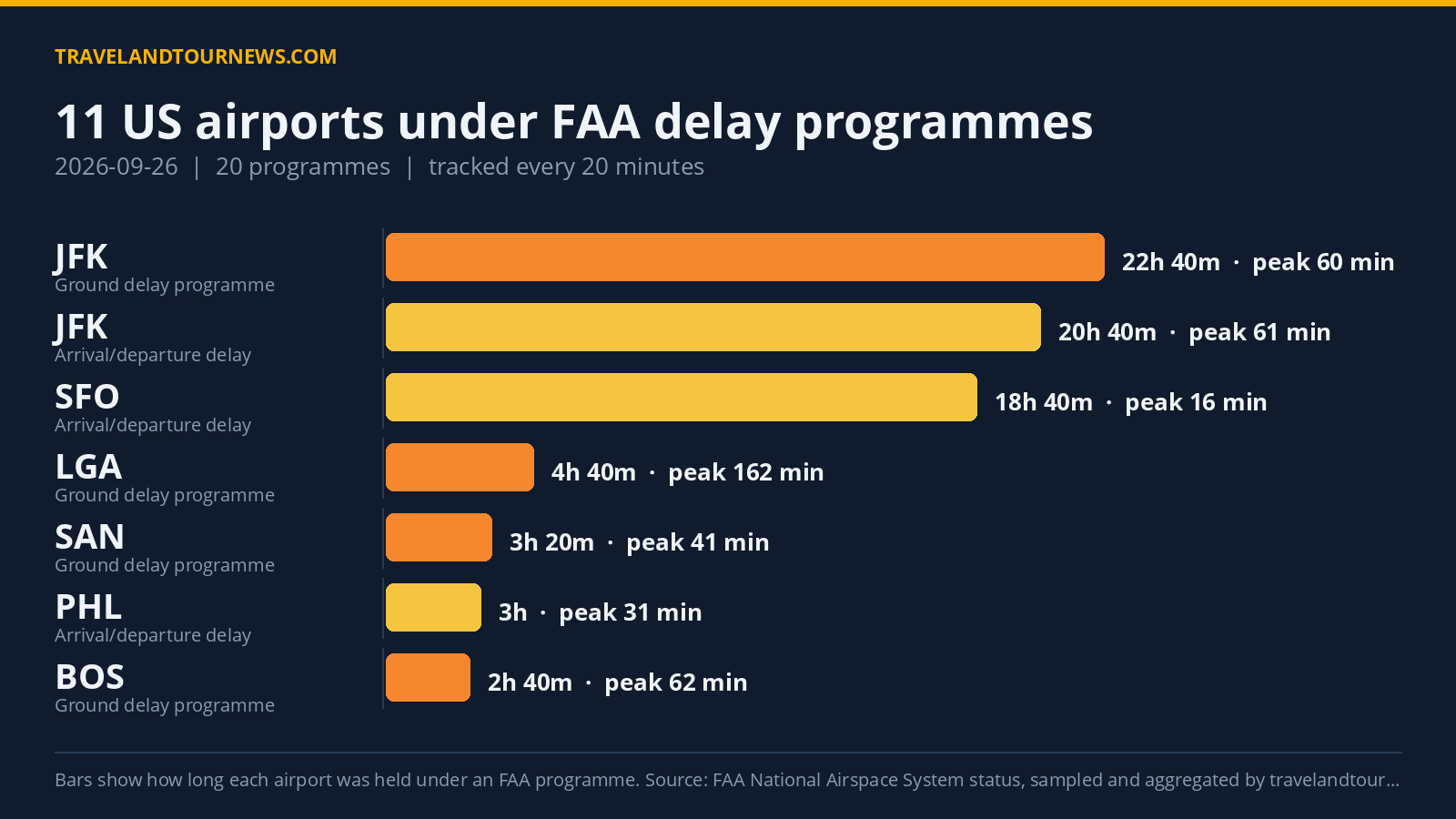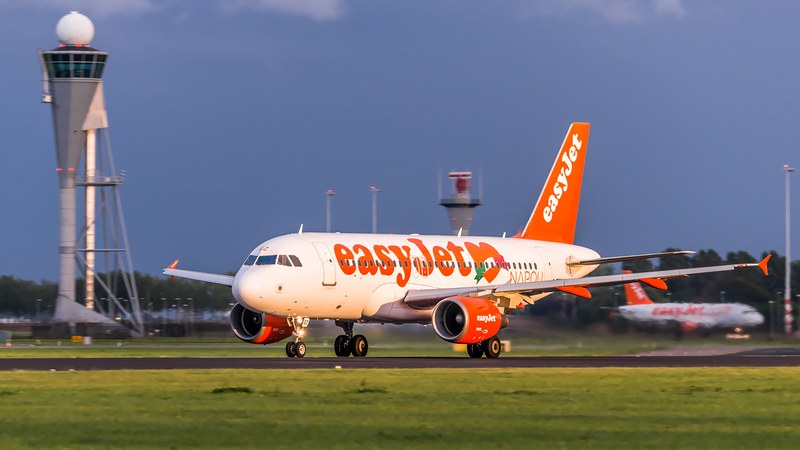
The Federal Aviation Administration (FAA) issued a warning on September 26, 2026, about the potential implementation of ground stops and ground delay programs at several major Northeast U.S. airports. The airports flagged for possible operational disruptions include John F. Kennedy International Airport (JFK), Newark Liberty International Airport, Boston Logan International Airport, Philadelphia International Airport, LaGuardia Airport, Reagan National Airport, and Washington Dulles International Airport. These measures could persist through approximately 7 p.m. Eastern Time, with a possible ground stop at Dulles effective after 2:30 p.m. ET.
Weather and Passenger Volume Drive Traffic Controls
The FAA’s traffic-management advisories stem from adverse weather and air traffic system limitations. Boston
Logan is experiencing rain and strong winds, while New York and Philadelphia air traffic operations face wind-related constraints. JFK was scheduled for evaluation after 6 p.m. ET to determine if additional traffic-management actions are necessary due to high passenger volumes.
Airlines Issue Travel Waivers for Affected Northeast Airports
Delta Air Lines has issued waivers covering flights scheduled for September 26 and 27 at JFK, LaGuardia, Newark, Philadelphia, Providence, Portland, and Westchester County airports. Passengers eligible under these waivers may adjust their travel with rebooking flexibility through September 30. Separately, Delta extended a waiver for Boston Logan covering travel from September 26 through September 29, with new travel permitted
through October 2.
American Airlines released a severe-weather alert encompassing Boston, JFK, LaGuardia, Newark, Philadelphia, Dulles, and Reagan National airports for travel originally planned between September 25 and 27. Eligible passengers may request a one-time reservation change subject to ticketing and rebooking conditions.
JetBlue also declared a waiver for travel through September 27 at Boston, JFK, LaGuardia, Newark, and several other Northeast airports. Rebooking for these travelers is allowable up to September 30 based on the airline’s conditions.
FAA and DOT Rules on Ground Stops, Delays, and Refunds
The FAA defines a ground stop as a measure that holds departing aircraft at their origin airports to manage arrival capacity at
congested destinations. Ground delay programs assign arrival slots to delay flights en route or at their origin without full stops. These traffic controls are deployed quickly when airport arrival capacity diminishes due to weather or volume.
The U.S. Department of Transportation (DOT) establishes refund rights when flights are canceled or experience significant schedule alterations, defined as arrivals delayed by three or more hours. Voluntary ticket abandonment due to anticipated delays or ground stops does not automatically qualify passengers for a refund under DOT guidelines.
Travel Monitoring and Geographic Impact
Passengers flying through the impacted Northeast airports are facing delays and potential cancellations influenced by the
FAA traffic-management plans. Although no active ground stops were in place at the time of the FAA’s 1:25 p.m. ET operations plan release, conditions remain fluid with quick adjustments possible throughout the day.
The geographic scope covers major hubs in the Northeast including JFK, Newark, Boston Logan, LaGuardia, Philadelphia, Reagan National, Washington Dulles, as well as regional airports such as Providence, Portland, and Westchester County.
Travelers are advised to monitor airline applications and FAA operational updates closely. Flights marked “on time” earlier in the afternoon may still face delays later due to shifting weather and traffic conditions.
Uncertainties and Ongoing Monitoring
Details regarding the
exact number of flights affected or delayed have not been released. The FAA’s equipment situation contributing to these disruptions has not been fully disclosed, and the status of active ground stops at specific airports such as JFK or Newark remains unconfirmed as of the latest report.
The FAA may modify, extend, or cancel ground stops and delay programs as conditions evolve. Passengers should consider this variable status when planning or adjusting travel.