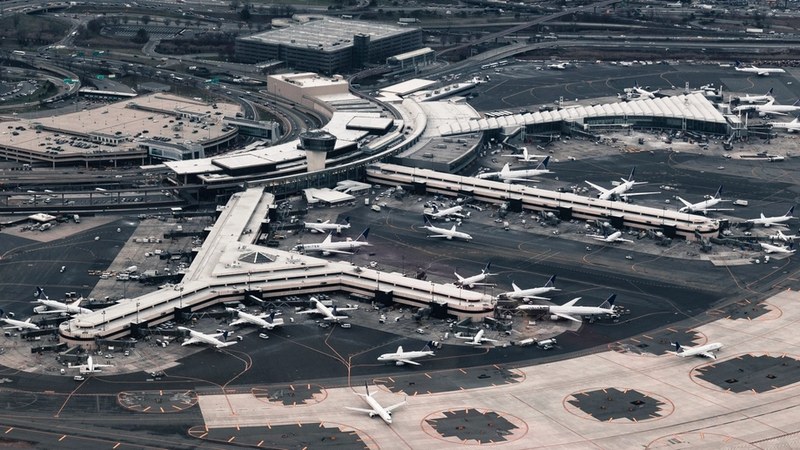
The Federal Aviation Administration (FAA) implemented ground stops for flights headed to Chicago O’Hare International Airport (ORD) and Midway Airport on August 11 due to severe storms affecting the Chicago area. The ground stop for O’Hare was enforced until 11:15 a.m. Central Time, and for Midway until at least 11:30 a.m. CT as a response to a dangerous line of storms with destructive wind gusts reaching up to 100 mph, brief tornadoes, and heavy rain.
Following the ground stop, an FAA ground delay program remained active at O’Hare until 10 p.m. on August 11 to manage the ongoing weather impact
and airport capacity limitations.
Storm Forecast and Weather Risks Around Chicago
The National Weather Service (NWS) issued a Hazardous Weather Outlook for the Chicago O’Hare area warning of thunderstorms and flooding risks beginning the afternoon of August 11. Showers and storms were predicted to start after 4 p.m. local time, with a 100% chance of precipitation overnight and rainfall estimates between 0.75 and 1 inch.
The NWS highlighted the potential for storms approaching severe limits southwest of a Rochelle to Kankakee line, cautioning that heavy rain could cause localized flooding across the Chicago metropolitan region.
History of Flight Disruptions Due to Severe Weather at Chicago Airports
Chicago O’Hare has experienced significant weather-related disruptions in recent weeks. On Monday,
July 27, ORD led the U.S. in flight cancellations, with over 1,000 flights canceled amid thunderstorms. That day saw an average delay of 438 minutes per flight due to a ground delay program enforced by the FAA.
The FAA’s response to weather disturbances on July 27 extended beyond Chicago. On July 28, ground stops impacted 13 major U.S. airports including Newark Liberty International Airport (EWR), John F. Kennedy International Airport (JFK), and LaGuardia Airport (LGA). Combined cancellations reached 2,538 nationwide, with more than 8,400 delays reported.
In 2022, weather-related delays at Chicago O’Hare exceeded 5,000, making it one of the
most affected hubs alongside New York-area airports, which accounted for over 30,000 delays exceeding 15 minutes.
Traveler Disruptions Including Midway Control Tower Evacuation
The severe storm complicated operations at Midway Airport, where the Chicago Department of Aviation reported a brief evacuation of the Midway control tower during the storms on August 11. This disrupted normal airport functions amid the broader weather event impacting the Chicago region.
Flight cancellations and delays at both O’Hare and Midway during the ground stop and subsequent delay program affected numerous passengers traveling in and out of Chicago, with the FAA restricting flight departures from multiple U.S. airports to these Chicago hubs during
the storm period.
FAA Coordination and Regional Flight Disruption
The FAA adopts ground stops and ground delay programs as tools to manage air traffic amid severe weather and limited airport capacity, as demonstrated on August 11 at Chicago O’Hare and Midway airports. These actions help prevent excessive congestion and enhance air traffic control during hazardous conditions.
Earlier in the summer, ground stops at other major hubs including Newark, JFK, and LaGuardia have underscored how weather systems affect multiple airports in the region. The FAA data consistently shows that severe weather is a leading cause of substantial delays and cancellations at major U.S. airports with high demand
and limited capacity during peak periods.