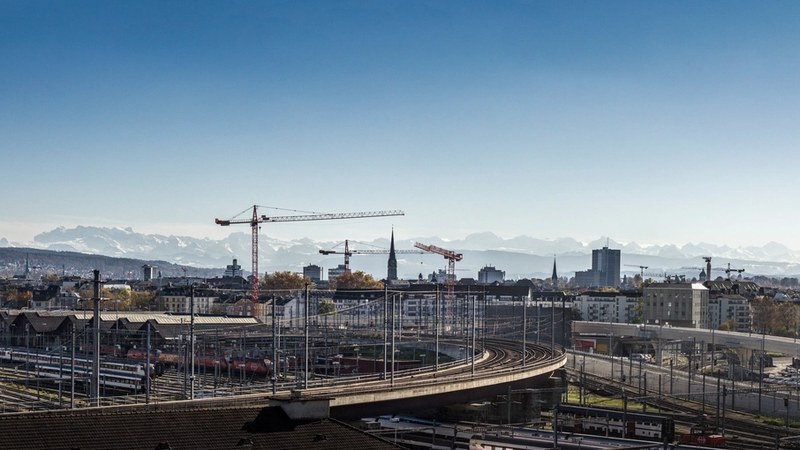
All 14 portal beams spanning the Delhi-Mumbai main line in Vadodara, Gujarat, have been completed as part of the Mumbai-Ahmedabad bullet train project. Each portal beam weighs approximately 1,500 tonnes and measures 37 metres in length, four metres in width, and four metres in height.
Construction of each beam required about 590 cubic metres of concrete and a reinforcement steel cage weighing roughly 55 tonnes. Due to space restrictions and the presence of active railway infrastructure, the beams were constructed on-site using the cast-in-situ method. The Vadodara section itself is 8.3 kilometres long and crosses five Indian Railways lines, including
two main lines.
Work over operational railway lines demanded detailed planning, continuous monitoring, and close coordination with Indian Railways, including the use of controlled blocks to minimize disruption. This process required high-capacity cranes, hydraulic jacks, long-boom concrete pumps, and precision surveying equipment throughout construction.
Next, the project will proceed with launching 40-metre-long composite girders across the busy Delhi-Mumbai railway route to further develop the elevated viaduct on which the bullet train will run.
This milestone represents a major achievement in the Mumbai-Ahmedabad high-speed rail corridor, supporting the ongoing construction of India’s first bullet train infrastructure, as stated by the National
High Speed Rail Corporation Limited (NHSRCL).