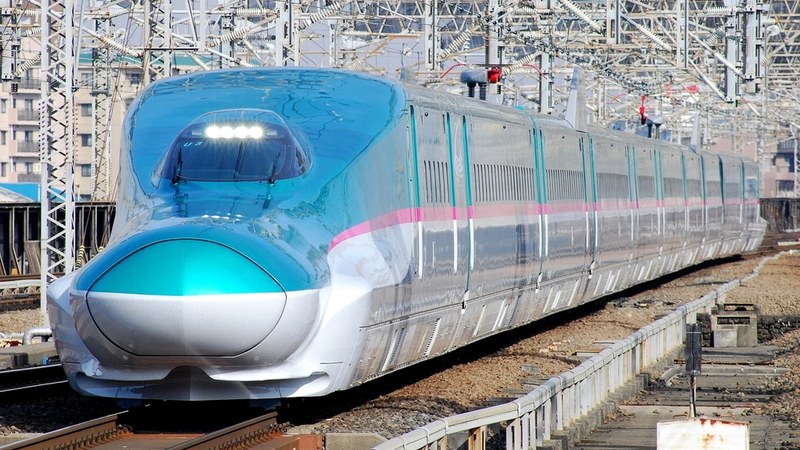
On July 15, 2026, the Japanese national government confirmed the preferred route for extending the Hokuriku Shinkansen line from its current terminus at Tsuruga southwards to Shin-Osaka. The extension measures 139 kilometers and follows the Wakasa Route, running via Obama and Maizuru before passing through a 34-kilometer tunnel beneath the Tanba Highlands near Kyoto. This route was first identified as the optimal option in December 2015 after assessments by the Ministry of Land, Infrastructure, Transport and Tourism (MLITT) and the Japan Railway Construction, Transport and Technology Agency (JRTT). The Hokuriku Shinkansen had reached Kanazawa from Tokyo in March 2015 and
then extended 125 km to Tsuruga by March 2024. The original vision from the 1970s envisioned connecting the Hokuriku region to Osaka to improve western Honshu rail connectivity.
Environmental Concerns Lead to Katsuragawa Interchange
The government adopted the Katsuragawa Plan to address environmental concerns raised by Kyoto local authorities about tunnelling impacts under Kyoto station, particularly risks to groundwater and heritage sites. Instead of tunnelling directly beneath Kyoto station, the extension will serve an underground interchange station near Katsuragawa, approximately 5 kilometers west of Kyoto’s city center. This station will connect with local rail and metro lines, with transfer journeys to central Kyoto station estimated to
take around 10 minutes. The Katsuragawa Plan balances operational feasibility with mitigation of environmental damage.
Project Cost, Construction Timeline and Financing
The Hokuriku Shinkansen extension is expected to cost ¥5.5 trillion (US$34 billion). Detailed design and environmental procedures are scheduled to begin in the months following the July 2026 announcement, with construction anticipated to start as early as the fiscal year 2027. Civil works for the 139 km line, including the 34 km tunnel, are projected to last at least 26 years, delaying the opening date to no earlier than 2054. Upon completion, the travel time from Kanazawa to Shin-Osaka is estimated at 1 hour 21
minutes. Financing will primarily rely on access payments from Japan Rail (JR) Group operators using the line, aiming to cover at least 75% of construction costs. The current cost-sharing ratio between the national government and local authorities stands at 2:1, but revisions are expected to reduce local governments’ financial burden. The International Tourism Tax on foreign visitors to Japan is also planned to support funding.
Stakeholder Roles in Planning and Delivery
Since 2012, MLITT and JRTT have collaborated on route evaluations and project delivery strategies for the Hokuriku Shinkansen extension. The JR Group operators will finance the project through access payments after the line’s completion. The
national government confirmed the preferred route on July 15, 2026, following consultations with local authorities and railway stakeholders. Kyoto city officials influenced the station siting decisions by voicing environmental objections that resulted in the Katsuragawa alternative. This partnership framework aims to balance infrastructure development with local concerns and fiscal responsibilities.
Travel Impact and Service Improvements
When finished, the extension will establish a continuous high-speed rail link between the Hokuriku region and Osaka, significantly reducing travel times between Kanazawa and Shin-Osaka to approximately 1 hour 21 minutes. Passengers bound for Kyoto will transfer at the Katsuragawa underground station, located about 5 kilometers west of central Kyoto,
with an estimated 10-minute connecting journey to Kyoto station via local rail services. This configuration provides high-speed rail access while avoiding construction risks associated with tunnelling directly under Kyoto center.