India and Japan are jointly developing the Mumbai-Ahmedabad High-Speed Rail Corridor, targeting phased operations from 2027. The corridor includes domestically developed bullet trains and internationally interoperable signalling systems to transform connectivity between major cities including Mumbai, Thane, Surat, and Ahmedabad.
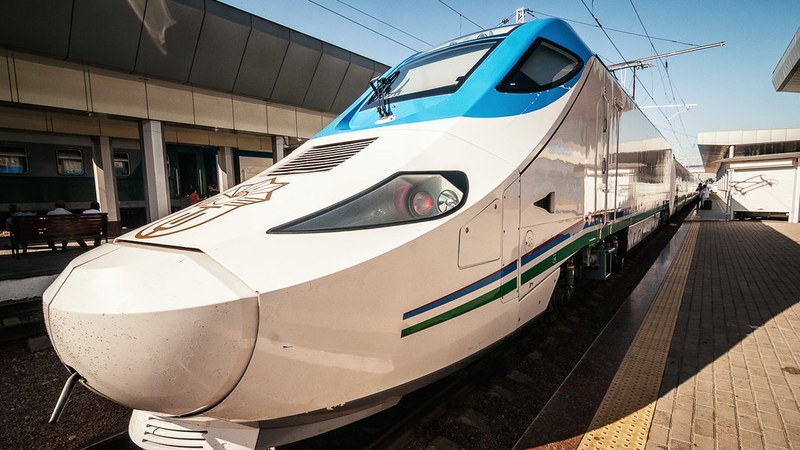
BEML Limited has been awarded a contract worth Rs 866.87 crore to design, manufacture, and commission two eight-coach prototype bullet trainsets codenamed B-28. These trains will have a design speed of 280 kmph and capabilities exceeding 250 kmph. Production is underway at BEML’s ‘Aditya’ High-Speed Rail Complex in Bengaluru, supporting the government’s push for domestic manufacturing. The trainsets will feature
fully air-conditioned chair car coaches with enhanced passenger amenities and dedicated facilities for differently-abled travelers.
The project uses an open architecture signalling system chosen over Japan’s proprietary DS-ATC technology after a detailed technical and commercial evaluation. This interoperable signalling supports global standards and future expansion. Japanese technical experts from the Ministry of Land, Infrastructure, Transport and Tourism continue to oversee design approvals, engineering standards, construction methodologies, and quality assurance since construction started in 2021.
Civil construction on the 97 km Surat-Vapi section is expected to complete by 2026, clearing the path for track and train testing during 2027. Commercial operations
across the corridor are targeted for August 2027, with testing of indigenous bullet trains planned to start mid-year.
Initially, Japanese manufacturers were expected to supply the trainsets, predominantly the E5 series. However, procurement delays and lack of suitable offers prompted a decision to pursue indigenous trains. Indian officials have indicated that Japan is phasing out the E5 series and developing a newer E10 series scheduled to debut in Japan in 2032 and India by 2034, making immediate procurement unfeasible.
Japan International Cooperation Agency (JICA) is providing financial support through Official Development Assistance loans, maintaining a key role in the project’s
funding. Despite the shift to indigenous trains, all major technical and operational decisions are jointly made by India and Japan, ensuring adherence to international safety and performance standards.
The Mumbai-Ahmedabad corridor will deliver faster journeys and enhanced passenger comfort with air-conditioned coaches and modern onboard facilities. It will notably reduce travel times between major cities and improve accessibility through specialized arrangements for differently-abled passengers.
According to a senior government official, “This is a flagship project for India and Japan. Both countries are working on a common goal of commercial operations in 2027.” The official also noted efforts to obtain Japanese
offers for equipment spanned two years, underscoring the commitment to collaboration despite changes in procurement.
The corridor exemplifies India-Japan infrastructure cooperation by combining Japanese high-speed rail technology expertise with India’s expanding railway manufacturing capabilities. The project positions India to develop a scalable high-speed rail network that integrates advanced interoperable signalling and indigenous rolling stock, laying the groundwork for future expansion beyond the Mumbai-Ahmedabad route.