Brightline West’s high-speed rail project linking Las Vegas, Nevada, to Southern California has experienced significant construction delays as of October 26, 2026. Funding uncertainties, particularly a pending Federal Railroad Administration (FRA) decision on a $6 billion loan application, have stalled construction progress on the 218-mile rail line along the Interstate 15 corridor.
Funding Bottleneck Halts Construction Momentum
The project was awarded a $3 billion FRA grant in December 2023. In September 2025, Brightline West submitted a $6 billion loan application under the FRA’s Railroad Rehabilitation and Improvement Financing program, which remains under review. The pending loan approval remains the main barrier preventing full-scale construction from
advancing.
Initial work began in 2025 at the Las Vegas station site, including construction on a parking garage, sewer lines, and a box culvert. However, the parking garage is still incomplete and no work crews have been visible on-site in recent months. The overall project cost grew from an estimated $12 billion to $20.1 billion by 2025, driven largely by rising construction costs.
Teri Williams, spokesperson for the State of Nevada Department of Business and Industry, confirmed that Nevada and California have secured $2.5 billion in private activity bonds without financial risk to the states. She noted, “There are no
penalties due to the State of Nevada if the project is not completed.” Brightline West Managing Director Michael Reininger leads project delivery efforts amid the funding impasse.
Impact on Project Timeline and Financing
The original target to have Brightline West operational in time for the 2028 Los Angeles Olympics has been abandoned. The earliest feasible completion date is now late 2029, with delays in federal loan approval potentially pushing the timeline further. Brightline West spokesman Antonio Castelan highlighted the extensive preparatory progress, stating, “Years of work and substantial investments have brought this transformational project to the starting line…We are now focused on finalizing project financing, which
will allow us to move into full-scale construction, create thousands of jobs, and deliver a high-speed rail system connecting Las Vegas and Southern California in approximately four years.”
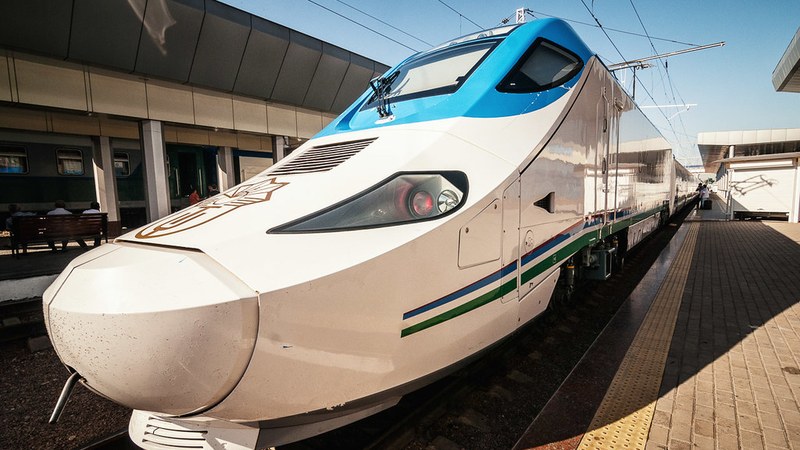
The remaining project funding relies heavily on private equity and debt, awaiting full financing closure before construction can resume. Brightline West has continued procurement efforts with trainsets being manufactured by Siemens Mobility in Germany. As of July 2026, two train car bodies were completed. Siemens also plans to open a train assembly facility in Horseheads, New York, by the end of 2026.
Leadership Changes Amid Financial Challenges
In August 2026, Brightline West President Sarah Watterson resigned from
her leadership role but remains a project adviser. Interim President Adrian Share, with prior experience leading Brightline Florida’s Phase 1, oversees operations. Brightline Florida’s passenger rail filed for Chapter 11 bankruptcy in September 2026; however, this restructuring does not affect the Brightline West project as both entities operate independently.
Political Support Remains Strong
Despite funding delays, Brightline West retains bipartisan backing from state and federal officials. Nevada Governor Joe Lombardo affirmed, “Brightline West would create thousands of jobs, bring significant investment to Nevada, and support our tourism economy.” California Governor Gavin Newsom’s office expressed ongoing commitment through spokesperson Anthony Martinez, noting California’s dedication to
a comprehensive rail network integrating local and interstate travel.
Clark County Commission Chairman Michael Naft cited cross-administration support, stating the project benefits both local residents and the tourism economy, urging stakeholders to complete financing. Las Vegas Convention and Visitors Authority President Steve Hill emphasized tourism and traffic relief benefits, adding, “High-speed rail in the region would provide a more fun way to get to Las Vegas but would also reduce traffic on I-15.”