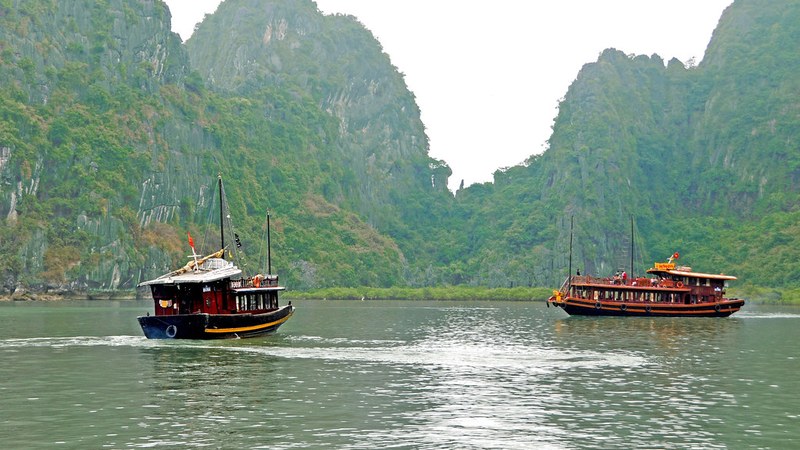
Vietnam aims to welcome between 45 million and 50 million international visitors and generate US$80 billion to US$90 billion in tourism revenue by 2030, according to a development plan issued by the Vietnam Ministry of Culture, Sports and Tourism. The plan outlines a high-growth scenario targeting significant expansion of both international arrivals and domestic tourism.
Vietnam’s Three Tourism Growth Scenarios through 2030
The ministry has established three distinct growth pathways for the tourism sector spanning 2027 to 2030. The low-growth scenario anticipates international arrivals reaching 35 to 38 million by 2030 alongside about 155 million domestic tourist trips. The medium-growth path projects 40 to 45 million foreign
visitors and approximately 158 million domestic trips by 2030. The high-growth scenario, the most optimistic, expects 45 to 50 million international arrivals and 160 million domestic tourist trips.
Annual growth rates for international tourist arrivals are estimated at 8 to 10 percent under the low-growth scenario, 12 to 15 percent for medium growth, and 15 to 18 percent if the high-growth targets are realized. The plan envisions focusing on attracting high-spending travelers with longer stays as part of the high-growth framework.
2026 Targets Set Amid Economic Growth Goals
For the year 2026, Vietnam’s tourism sector aims to attract 25 to 27 million international visitors and achieve 150
to 153 million domestic tourist trips. Corresponding tourism revenues are expected to reach VND1.125 to 1.23 quadrillion (approximately US$43.4 to US$47.5 billion). This target aligns with Vietnam’s national economic growth objective of at least 10 percent GDP expansion in 2026.
The plan includes short-term goals focused on sustaining growth momentum, complementing medium- and long-term strategies to ensure sustainable and continuous tourism development throughout the decade.
Scenario Assumptions and Market Focus for Near-Term Growth
The high-growth scenario assumes swift resolution of the Middle East conflict and continuation of strong growth momentum recorded since early 2026. Under this scenario, the plan targets 27 million international and 153 million domestic tourists
for that year. Efforts will focus on significantly increasing arrivals from China, maintaining steady growth from South Korea and India, and expanding the Russian market.
Conversely, the low-growth scenario presumes continued geopolitical conflicts, disruptions in air connectivity, and persistently high oil prices. These factors would reduce international visitor arrivals to 23.2 million and domestic trips to 148 million in 2026, negatively impacting overall tourism performance.
Official Position and Regional Tourism Context
The Ministry of Culture, Sports and Tourism has stated that the development plan aims to sustain tourism growth while preserving macroeconomic stability and controlling inflation. The tourism sector is being positioned as a spearhead economic
driver in Vietnam’s future development framework.
By 2030, Vietnam expects to maintain its status as one of Southeast Asia’s leading tourism destinations in terms of size and growth. The planned growth in international arrivals and domestic trips supports the country’s strategic goal to enhance the tourism sector’s contribution to the national economy.