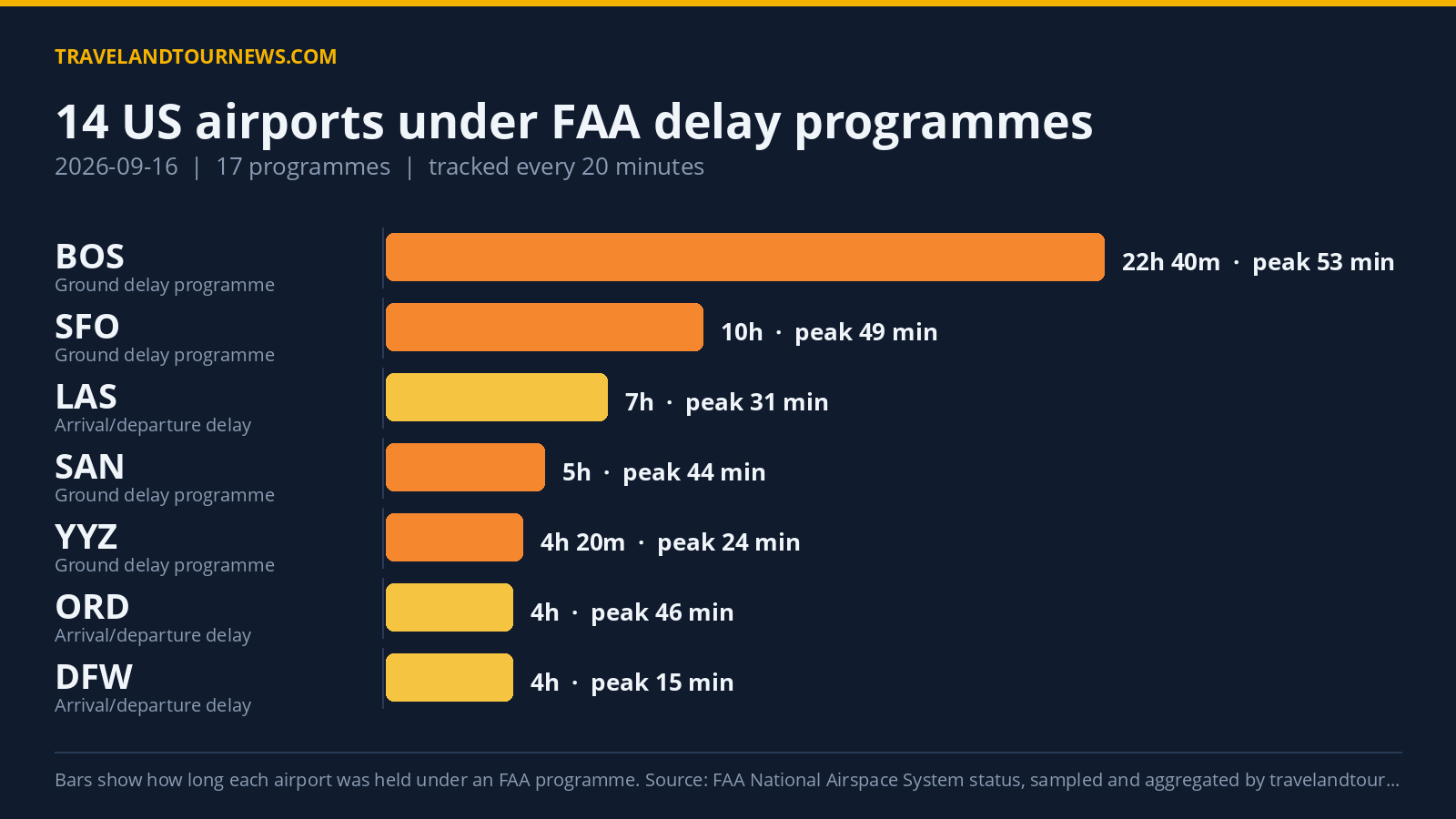
On July 19, 2026, U.S. airports experienced widespread flight disruptions, with 1,144 cancellations and 3,647 delays recorded nationwide. Major hubs impacted include Atlanta Hartsfield-Jackson, Chicago O’Hare, New York JFK, Boston Logan, Newark Liberty, LaGuardia, and Philadelphia airports.
Delays and Cancellations at Key Airports
Hartsfield-Jackson Atlanta airport registered the most delays today, with 480 flights delayed and 197 cancellations. Chicago O’Hare reported 311 delays and 72 cancellations. New York JFK had the highest cancellation count in the country with 233 flights cancelled and also saw 231 delays. Boston Logan recorded 243 delays and 105 cancellations, while Newark Liberty faced severe disruption with 234 delays and 167 cancellations.
LaGuardia experienced 195 delays and 124 cancellations, and Philadelphia reported 161 delays alongside 95 cancellations.
Airline-Specific Flight Disruptions
Delta Air Lines carried the largest share of cancellations with 333 flights cancelled, representing about 29.1% of all U.S. flight cancellations today, along with 380 delays. American Airlines cancelled 116 flights but had the highest number of delays at 677. United Airlines reported a total of 122 cancelled flights and 333 delayed. Republic Airlines faced 179 cancellations and 158 delays. United’s disruptions were notably concentrated at Chicago O’Hare and Newark Liberty, while American Airlines operates heavily through Philadelphia where significant delays and cancellations were also
recorded.
Causes Behind the Disruptions
The disruptions come amid heightened geopolitical tensions following U.S. military strikes targeting Iran’s Islamic Revolutionary Guard Corps units linked to recent attacks in Jordan. Kuwait activated air defenses after detecting Iranian missiles and drones during the escalation. Meanwhile, a severe multiday weather system forecasting thunderstorms, wind gusts, hail, and tornado risks across the Upper Midwest, Great Lakes, Mid-Atlantic, and Northeast United States is expected to continue disrupting air travel through midweek. Both geopolitical uncertainty and adverse weather conditions are reshaping airline operations nationwide.
Traveler Impact and Recommendations
Passengers flying through affected airports today should anticipate substantial operational disruptions, including missed connections, extended wait
times at terminals, aircraft substitutions, and limited availability on subsequent flights. Airlines continue to update schedules dynamically in response to evolving conditions. Travelers at hubs such as Atlanta, Chicago, New York, Boston, and Philadelphia are advised to monitor airline communications and prepare for ongoing adjustments throughout the day.
Qatar Airways has also filed its winter 2026/27 schedule plan, reducing flight frequencies on U.S. routes between Doha and cities including Los Angeles, Boston, Atlanta, and Miami through March 2027, reflecting seasonal operational changes. These reductions impact onward connections to Asia, Africa, the Middle East, and Australia but do not involve outright
cancellations.
U.S. officials have confirmed that American forces targeted units responsible for the Jordan attack, with President Donald Trump stating Iran is no longer adhering to the June interim peace agreement. The rise in Middle East tensions is contributing to operational challenges for airlines alongside domestic severe weather disruptions.