More than 1,238 flights were delayed and 53 flights were cancelled across the United States on September 15, 2026, as travel disruptions spread across multiple major airports.
Weather-Related Delays Affect Major Hubs
Thunderstorms impacted the Chicago area airports of Midway and O’Hare, Houston’s Hobby and Intercontinental airports, and multiple gateways in Florida, contributing to widespread delays. Low cloud conditions over Denver and Seattle airports further reduced arrival rates, compounding the scheduling challenges.
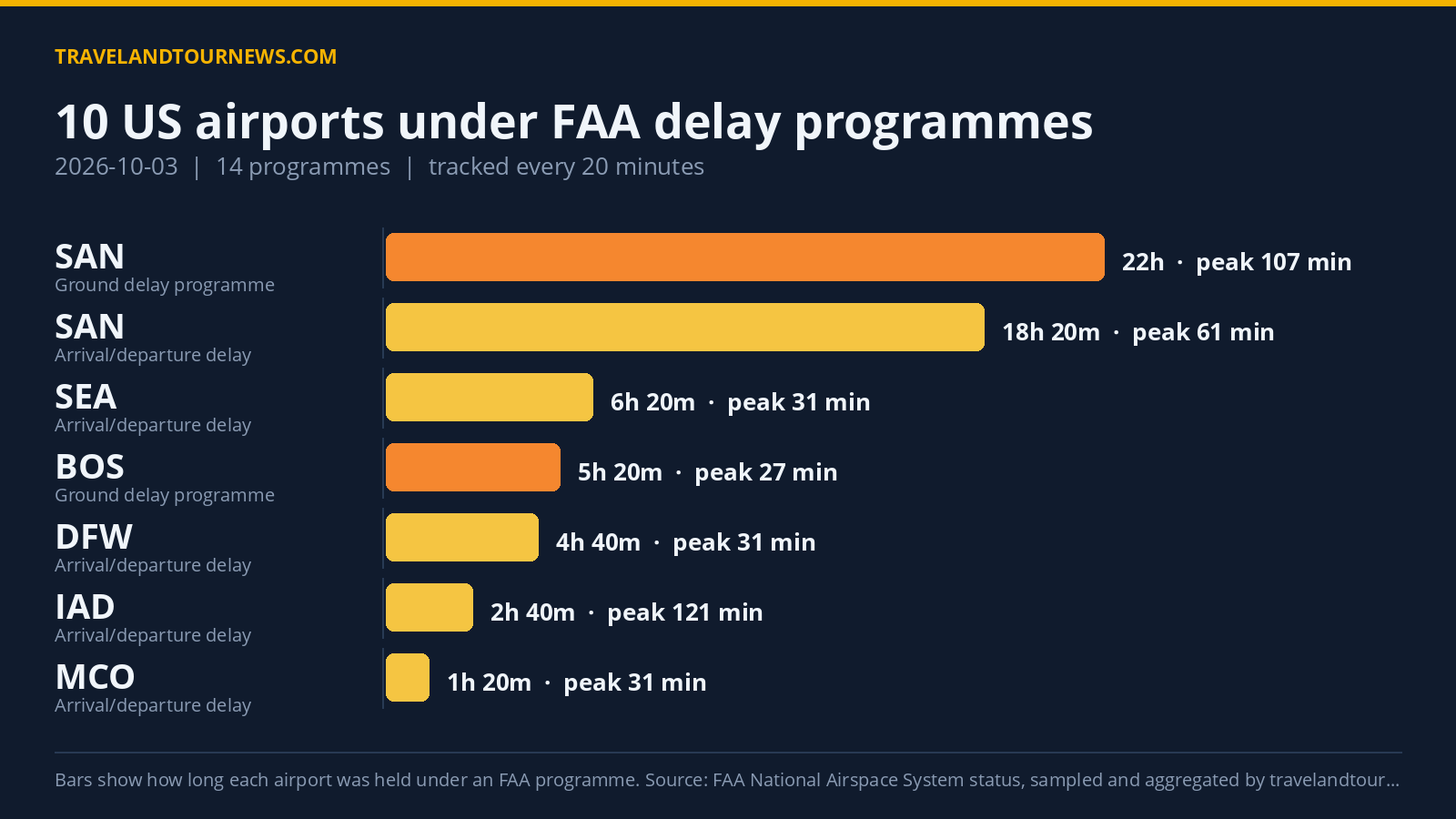
Boston Logan and Miami International airports operated ground delay programs to manage arrivals during peak congestion. These programs aim to meter demand when weather and airport capacity limitations restrict safe operations.
FAA Traffic Management Measures and Outlook
The Federal
Aviation Administration (FAA) daily air traffic outlook issued at 15:11:12 GMT on September 15, 2026, identified thunderstorms and low cloud coverage as key weather pressure points across the Midwest, Gulf Coast, and Florida regions. The FAA employed ground delay programs at Boston Logan and Miami International airports to keep arrivals within safe limits.
Traffic-management tools help regulate flights when demand exceeds available capacity, avoiding unsafe congestion in terminal airspace. Ground delay programs delay departures to manage inbound flows smoothly.
Cascading Flight Delays Across the Network
Weather disruptions along busy air corridors caused reroutes and increased spacing requirements, generating delays beyond affected airports. These delays cascaded through
airline schedules as aircraft and crews arrived late for subsequent flights. Crew duty time restrictions and aircraft rotations added complexity to recovery efforts even after weather improved.
Passengers with connecting flights or assignments on specific aircraft types faced increased risk of delays due to rolling schedule adjustments that extended throughout the day.
Traveler Guidance and Rebooking Options
Travelers experienced significant delays and cancellations at airports including Boston Logan, Miami International, Chicago Midway and O’Hare, Houston Hobby and Intercontinental, Denver, and Seattle. Checking live updates from airline apps, the FAA airport-status dashboards, and flight-tracking platforms like FlightAware is essential for current status.
U.S. Department of Transportation
guidance typically requires airlines to offer refunds for cancellations regardless of cause. Airlines prioritize rebooking passengers on their networks, though alternate same-day routings via nearby airports can sometimes be faster in congested regions.
FAA Role in Managing Weather-Driven Disruptions
The FAA has emphasized that weather remains the dominant factor in system-wide delays. Its deployment of ground delay and ground stop programs aims to maintain safety while balancing demand. These measures result in departure holds and changes in boarding times to control traffic flow.
Even after storm activity decreases, airlines require additional time to reposition aircraft and crews, which can sustain elevated delay levels beyond weather clearance.