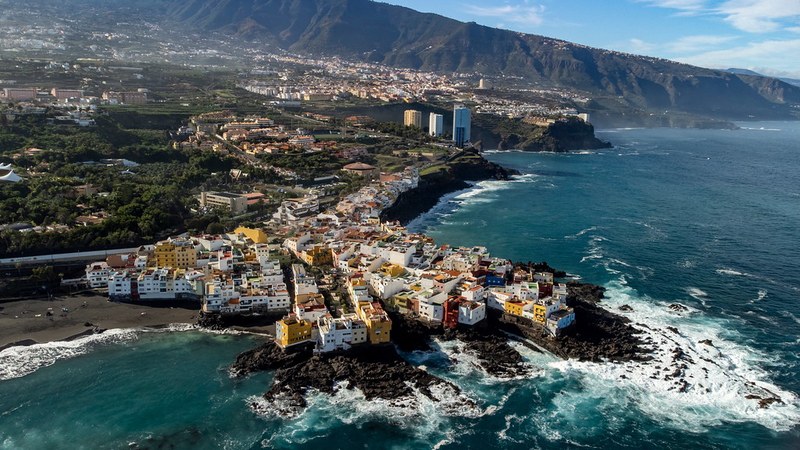
Spain received 96.8 million international tourists in 2025 and projects to welcome 100 million in 2026 as tourism continues to account for 12.6% of the nation’s GDP, supporting approximately three million jobs. In 2026, the Spanish government formally announced its Spain Tourism 2030 strategy focusing on sustainability and resident participation in tourism management.
Spanish Government Implements Comprehensive Sustainability Strategy
The Spain Tourism 2030 plan represents a government-wide effort spanning all ministries to integrate economic, social, and environmental sustainability into tourism policy. Developed with input from over 200 tourism experts, businesses, and government bodies, the policy identifies residents as a primary focus group alongside visitors, destinations, tourism
workers, and industry businesses.
Addressing Overcrowding, Climate, and Social Challenges
Spain faces issues including overtourism-related overcrowding in some destinations, climate change impacts, employment concerns, housing affordability, and regional depopulation. These challenges underpin the government’s decision to redesign tourism management to balance growth with sustainability, aiming to alleviate pressure on saturated locations.
Strategic Structure and Target Groups
The plan outlines a three-phase framework executed through two-year action plans. It centers five stakeholder groups: residents, destinations, tourism businesses, workers, and visitors. Residents are emphasized as an integral part of the system, acknowledging that tourists predominantly visit inhabited areas where locals must maintain quality of life and affordable housing.
Spreading Tourism Beyond Traditional Hotspots
Spain Tourism 2030 promotes distributing
tourism more evenly across the country, particularly encouraging travelers to visit rural and inland areas. Destinations such as the Pyrenees, Picos de Europa, Sierra de Guadarrama national park near Madrid, and the historic cities and towns of Castilla are highlighted as alternatives to overcrowded coastal and urban hubs like Barcelona.
Official Statements from Turespaña
Carlos Ruiz González, director of the Spanish Tourist Office for the Gulf region at Turespaña, stated at the Arabian Travel Market in Dubai that the government considers tourism management a nationwide policy involving all sectors. He said, “We have some destinations that are dying of success, I would say. Well,
we have a big country, a diverse country. So, the government of Spain decided this has to be a full government policy, a country policy, and not just tourism. All the ministries, all the sectors in Spain are aligned.” Ruiz González emphasized including residents, noting, “Tourists go where people live, so people need to keep living and be able to afford to buy a house or buy an apartment or just walk in and out without problems.”
Impacts on Travelers and Infrastructure
The strategy encourages longer stays and slower travel to distribute economic benefits while reducing crowding at popular sites. Spain’s extensive high-speed rail network
supports easier access to less-frequented inland destinations. Ruiz González added, “Some destinations don’t need much promotion – they are very well known. Basically, we want people to go more inland in Spain. We also want people to travel slow, to stay as long as possible. We want all our destinations to be part of the solution.”