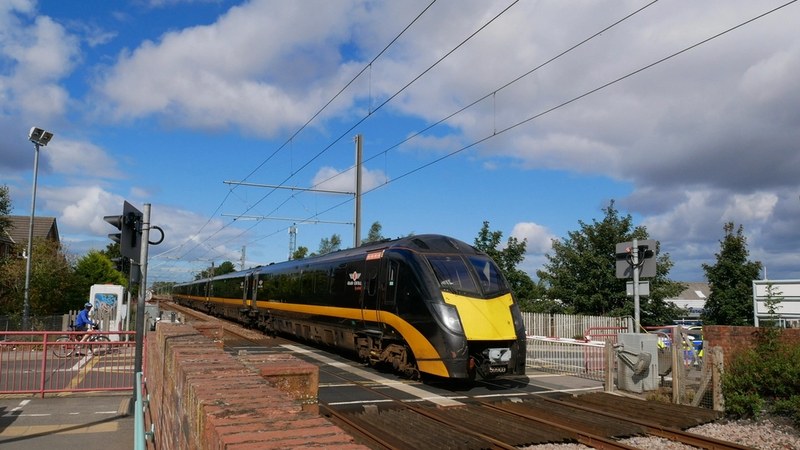
A Russian drone attacked a passenger train on Sunday, September 13, 2026, near Ukraine’s border with Poland, striking a train just two kilometres from the Polish border, according to Ukrzaliznytsia, Ukraine’s state railway operator.
The attack narrowly missed a separate diplomatic train that had departed earlier than scheduled. The diplomatic service was adjusted in real time to avoid Russian strikes amid the ongoing hostilities. Notable passengers on the diplomatic train included former British Prime Minister Boris Johnson and former Swedish Prime Minister Carl Bildt, who had recently travelled on the same route.
Another passenger train was present at Yahodyn station
during the drone attack, carrying former CIA director David Petraeus at the time, Ukrzaliznytsia confirmed.
Border crossing strikes and operational impact
Earlier that Sunday, a truck less than one kilometre from the Ukraine-Poland border was hit by a Russian attack. This caused a temporary suspension of operations at the Dorohusk-Yahodyn border crossing point, according to Ukrainian border guards.
Polish Foreign Minister Radoslaw Sikorski described the increasing frequency of Russian strikes near NATO’s eastern borders as an escalation, reflecting Moscow’s intensified targeting of Ukraine’s border infrastructure with Western allies.
Strategic context and Western response
The European Union’s foreign policy chief, Kaja Kallas, called the drone attack on the passenger train a deliberate
attempt to intimidate Western countries supporting Ukraine. Speaking at a summit on Arctic strategy in Rovaniemi, Finland, Kallas emphasized the need to demonstrate steadfast support for Ukraine despite Russian aggression.
Kremlin spokesperson Dmitry Peskov stated that Russian military operations would continue across Ukrainian territory and welcomed U.S. President Donald Trump’s public appeal for Ukrainian President Volodymyr Zelenskyy to stop strikes on Russian diesel fuel infrastructure. Trump, speaking during the Irish Open at his Doonbeg golf club, stated, “Mr. Zelenskyy has to do one thing. He has to stop knocking out diesel fuel in Russia.”
Ukrainian position on infrastructure attacks and peace prospects
President Volodymyr Zelenskyy expressed a willingness
to halt Ukrainian strikes against Russian energy infrastructure if Russia would reciprocate by ceasing attacks on Ukrainian energy facilities, infrastructure, and food supply routes. Zelenskyy posted on Telegram that Ukraine is not yet convinced Moscow would abide by such an agreement.
Speaking about the ongoing conflict, Zelenskyy said, “The war must be brought to an end. And a de-escalatory step regarding critical infrastructure could be the first step toward peace. We expect specifics from our partners.”
The conflict remains largely static along the frontline, with both sides increasing long-range strikes on strategic targets in an effort to shift momentum.