On July 18, 2026, a total of 4,896 flights were delayed and 126 cancelled throughout the United States, impacting major airports such as Chicago O’Hare, Hartsfield-Jackson Atlanta, Orlando, San Francisco, New York JFK, and Newark Liberty. Airlines experiencing the largest operational disruptions included Southwest Airlines with 866 delays and 9 cancellations, American Airlines with 850 delays and 11 cancellations, SkyWest with 434 delays and a peak of 21 cancellations, and United Airlines with 434 delays and 4 cancellations, according to data compiled for the day.
Wildfire Smoke Reduces Visibility and Complicates Flight Operations
Wildfire smoke drifting south from Canada lowered visibility across the northeastern United States, including airports
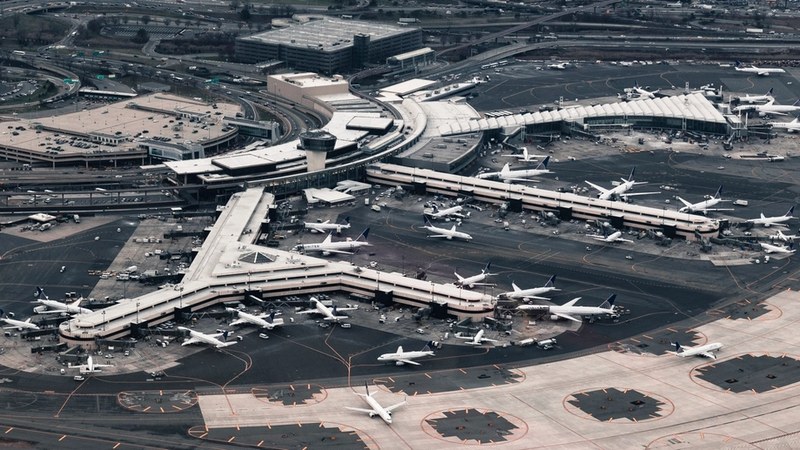
serving the New York metropolitan area—JFK, LaGuardia, and Newark Liberty. This haze forced increased spacing between aircraft arriving and departing, slowing airport traffic. Air quality advisories were issued across New York and New Jersey due to hazardous smoke conditions. The Federal Aviation Administration attributed these smoky conditions as a significant factor in flight management challenges contributing to cascading delays nationwide.
Smoke presence stretched beyond the Northeast, affecting parts of the Midwest and Mid-Atlantic regions, with cities such as Chicago and Detroit recording some of the poorest air quality in the country. This environmental factor added complexity to aviation operations across
heavily trafficked hubs.
Airport-Level Disruptions Across Key U.S. Hubs
Chicago O’Hare recorded the highest number of disruptions, with 801 delays and 17 cancellations, marking it as the most severely affected airport nationally. As a major connecting hub, these delays have ripple effects on domestic and international flight schedules.
Hartsfield-Jackson Atlanta experienced 420 delays and 16 cancellations amid high traffic volumes. Orlando reported 216 delays and 5 cancellations, affecting leisure and family travel to the city’s renowned tourist destinations.
San Francisco International Airport faced 213 delays and 7 cancellations, impacting both domestic and international flights. San Diego reported 182 delays and 12 cancellations, causing extended waits in
Southern California.
New York JFK registered 115 delays and 4 cancellations, while Newark Liberty had 87 delays and 4 cancellations, both operating under constraints due to reduced visibility from wildfire smoke.
Airline-Specific Disruption Numbers
Southwest Airlines, operating an extensive domestic network, carried the largest volume of delayed flights at 866 with 9 cancellations. American Airlines recorded 850 delays and 11 cancellations, with major impact at hubs including Dallas-Fort Worth and Chicago O’Hare.
Regional carrier SkyWest had 434 delayed flights but led airlines in cancellations with 21. United Airlines also reported 434 delays alongside 4 cancellations, with many flights routed through key hubs such
as Chicago O’Hare and Newark Liberty.
Other airlines including Frontier Airlines and Delta Air Lines also faced widespread schedule disruptions amid ongoing operational challenges. The convergence of wildfire smoke and FAA staffing constraints contributed to the difficulty of managing air traffic and recovering schedules across airlines and airports nationwide.
Public Health and Event Context
The wildfire smoke affected not only aviation but public health, triggering hazardous air quality warnings in affected states including New York, New Jersey, and Illinois. This environmental concern is critical as MetLife Stadium in New Jersey is set to host the 2026 FIFA World Cup Final, scheduled for the following day,
with an expected crowd of approximately 82,500 attendees exposed to outdoor smoky conditions.
The smoky conditions thus directly impact large-scale public events and raise health considerations for residents and travelers in the region. Aviation operations at nearby airports continue despite these challenges, contributing to the widespread delays and cancellations experienced today.