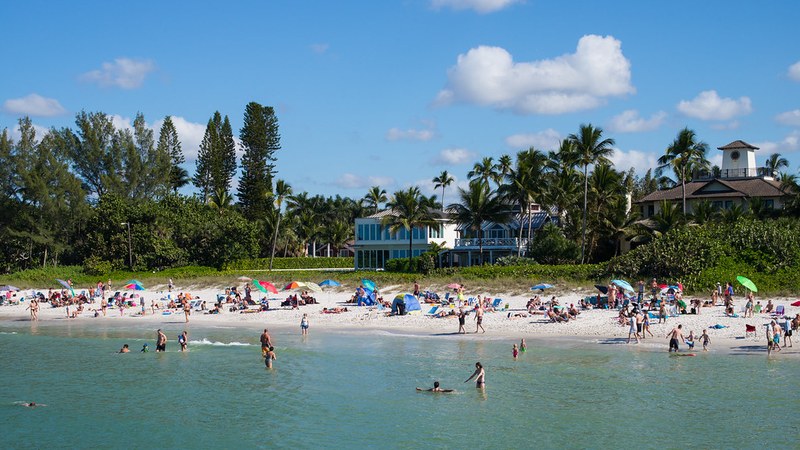
Florida’s tourism sector generated an estimated $134 billion economic impact in 2025, reaching a new milestone with 143 million visitors, the highest on record. Visitor numbers rose sharply from approximately 105 million in 2015, reflecting a decade-long growth of around 38 million travelers, according to figures presented by Governor Ron DeSantis at the 2026 Governor’s Conference on Tourism in West Palm Beach.
Expanded Tourism Beyond Orlando
The state’s tourism economy extends well beyond its famous Orlando theme parks, embracing a wide geographic range. Destinations such as Bradenton, Sarasota, Naples, Fort Myers, and Mexico Beach have drawn new tourists and investment as communities recover following
major hurricanes. Popular beach areas along the Gulf Coast and Northwest Florida, including the famed white sands of 30A, continuously attract visitors from across the southern United States. During Memorial Day weekend in 2020, 30A notably hosted crowds from Texas, Louisiana, Mississippi, Alabama, Tennessee, and Georgia.
Environmental Investments Supporting Tourism
Under Governor DeSantis’ administration, Florida has invested nearly $10 billion in Everglades restoration efforts. These environmental initiatives support tourism activities such as boating and fishing by improving water quality and protecting natural resources critical to visitor experiences. Restoration projects also address prior environmental challenges, including harmful algae blooms affecting prime waterfront destinations.
Major Sporting and Cultural Events
During DeSantis’
tenure, Florida has hosted two Super Bowls, two college football national championships, the Daytona 500, Formula One racing in Miami, Art Basel, UFC events, golf tournaments, NASCAR races, Major League Baseball, NBA bubble games, and WWE events. These high-profile sporting and cultural events contribute significantly to tourism attraction and spending statewide. The UFC staged an event in Jacksonville during the COVID-19 pandemic following direct encouragement from Governor DeSantis.
Economic Impact and Tax Revenue
Tourism spending in Florida generates considerable revenue through hotels, restaurants, attractions, and retail, contributing a significant share of the state’s sales and tourism-related tax income. Governor DeSantis highlighted that a large portion
of Florida’s sales tax revenue comes from visitors and seasonal residents rather than permanent residents, reducing local tax burdens. Florida has successfully reduced its state budget for four years in a row while quadrupling its rainy-day fund, running surpluses, and paying down 52% of its historical debt during the current administration.
Florida is approaching $10 billion in tax reductions over an eight-year period, including the elimination of the commercial rent tax and exemptions for certain family and recreational products. The governor also promoted Amendment 3 as a potential historic property-tax cut for homesteaded homeowners, enabled by the state’s strong economic
base.
COVID-19 Tourism Policies and Recovery
Florida’s decision to keep beaches open during the early months of the COVID-19 pandemic aided tourism resilience. Locations such as Daytona Beach and Brevard County maintained accessible recreational venues and permitted sporting events to resume. These policies helped Florida recover faster than many other regions. Governor DeSantis recalled urging UFC President Dana White to hold fights in Florida, resulting in an event in Jacksonville that helped sustain tourism interest alongside other sports like golf, NASCAR, Major League Baseball, and the NBA bubble.
Governor DeSantis stated, “I’m excited to say that Florida is and remains and will continue to be
the number one tourist destination in these United States,” emphasizing that tourism remains a primary driver of Florida’s economic strength even amid economic and geopolitical challenges.