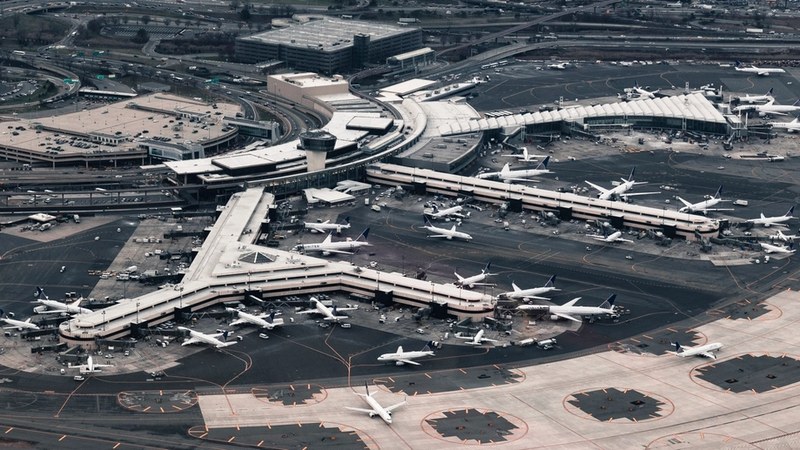
An Amazon Prime Air Boeing 767 cargo aircraft overran a diagonal runway at Miami International Airport in Miami, Florida, on Sunday, September 6, 2026. The jet breached the airport perimeter and came to rest beyond the airport property, causing immediate closure of the affected runway.
The incident led to the closure of two of Miami International Airport’s four runways. The Federal Aviation Administration (FAA) imposed a full ground stop shortly after the crash, lasting several hours on the same day. By Tuesday, September 8, the FAA had lifted the ground stop. However, the airport operates on a reduced schedule with
only two runways fully available while investigations and recovery operations continue.
Flight disruptions started immediately after the incident, with hundreds of flights delayed or canceled on Monday, September 7. Inbound flights were diverted to alternate airports across the Southeastern United States during the initial ground stop and runway closures. Although partial operations resumed by September 8, delays and cancellations remain frequent as airlines funnel traffic through the two operational runways, resulting in increased spacing between flights and lower hourly movement capacity.
Federal safety investigators remain on-site documenting the wreckage and mapping the aircraft’s path beyond the runway. Recovery crews are
planning heavy-lift operations to remove the Boeing 767. The compromised runway will remain closed pending detailed inspections of the pavement and airfield infrastructure. This process is expected to take several more days before all runways can be reopened for full service.
Airlines have responded by adjusting departure schedules, consolidating lightly booked flights, and canceling segments to manage the operational backlog caused by the crash. Miami International Airport directs flights away from the affected runway, relying on the remaining airfield capacity to support passenger and cargo movements.
The incident occurred during a peak post–Labor Day travel period, typically one of the
busiest for Miami International Airport. Ongoing weather patterns, including afternoon thunderstorms common in early September, risk complicating recovery and operational stabilization efforts. Passengers traveling through Miami should expect extended wait times, potential last-minute schedule changes, and are advised to monitor flight status consistently. Travel experts also recommend booking nonstop flights and enabling flight alerts to minimize connection disruptions during this period.