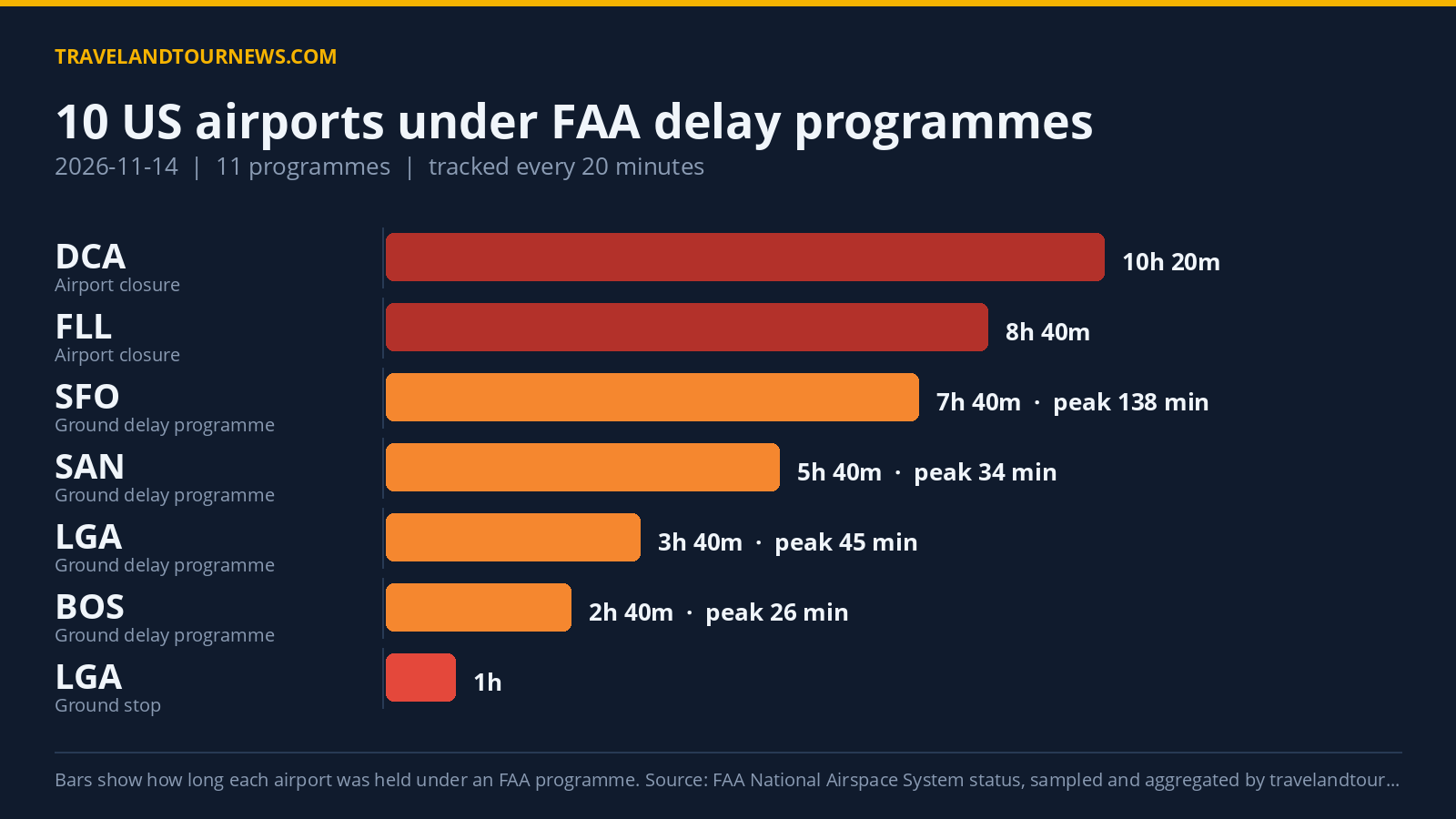
The Federal Aviation Administration (FAA) issued a nationwide ground stop on November 13, 2026, halting all flight departures across the United States for more than four hours. The halt, a rare occurrence being only the second nationwide ground stop since September 11, 2001 and the first since January 2023, was lifted shortly before 7:30 p.m. that evening.
Chicago Airports Report Hundreds of Flight Cancellations and Delays
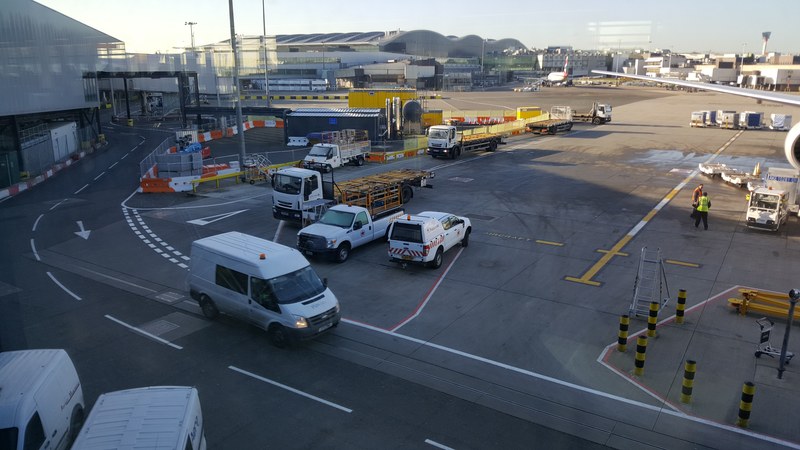
Following the FAA ground stop, operations at Chicago O’Hare International Airport and Chicago Midway International Airport have experienced significant disruptions on November 14, 2026. As of 1:43 p.m. that day, O’Hare reported 605 flight cancellations and delays averaging 28 minutes. Midway had 72
flights canceled with average delays of 23 minutes. The initial ground stop at O’Hare began at 2:10 p.m., shortly followed by Midway’s at 2:17 p.m. due to an equipment outage.
Cause Traced to FAA Telecom System Outage During Infrastructure Upgrade
The FAA’s nationwide ground stop was triggered by a failure in its telecommunications system amid replacement work switching from copper wiring to fiber optic infrastructure. The outage was linked to the FAA contractor L3Harris, currently under investigation for possible equipment failure or operational issues. Transportation Secretary Sean Duffy confirmed the problem was not a cyberattack but attributed it to outdated FAA systems and called for increased funding. Homeland Security Secretary
Markwayne Mullin demanded a complete overhaul of FAA technology, citing incompatibility of new equipment with legacy frameworks.
Passengers Face Tarmac Delays, Flight Cancellations, and Logistical Challenges
Passengers stranded at Chicago airports reported long waits and travel difficulties. Vivian Azeredo, a traveler whose flight to Dublin was canceled, spent 6.5 hours on the tarmac after losing communication with the control tower mid-flight. Gerard Hill and his wife missed a family birthday party in Nashville following disruptions. At O’Hare, Dan Throm and his son awaited delayed checked baggage and transportation for a college football game in Oklahoma City. Travelers struggled to recover lost luggage, find rental cars, and book hotel rooms
near the airports, many of which reached capacity amid large crowds and long lines.
Official Responses and Industry Reactions
The Chicago Department of Aviation confirmed that its infrastructure was not part of the affected FAA communication systems. L3Harris stated it is supporting the FAA’s investigation and acknowledged the serious impact on passengers and operations. Secretary Duffy criticized the contractor and equipment for not meeting operational demands during the replacement. The ground stop also prompted temporary flight restrictions from Mexico’s Federal Civil Aviation Agency and led Air Canada to cancel several Canada-U.S. flights despite Canadian navigation systems remaining unaffected.
Impact on Airlines, Flight Routes, and College Football Schedules
While flights to Europe resumed earlier due
to their use of different air traffic control systems, domestic routes remained heavily affected. The widespread delays disrupted schedules for major carriers including American Airlines at Chicago hubs. Additionally, college football games across major conferences such as the SEC, Big Ten, and Big Twelve were impacted; for example, the Mississippi vs. Oklahoma game was rescheduled from Saturday to Sunday with kickoff times pushed back to accommodate travel delays caused by the FAA ground stop.