The Federal Aviation Administration (FAA) issued a nationwide ground stop on November 14, 2026, lasting about four hours and lifted shortly before 7:30 p.m. on November 13. This marked only the second nationwide ground stop since September 11, 2001, and the first since January 2023.
Flight Cancellations and Delays at Chicago O’Hare and Midway
The ground stop resulted in extensive flight disruptions at Chicago O’Hare International Airport and Chicago Midway International Airport. By 1:43 p.m. on November 14, 2026, O’Hare had recorded 605 flight cancellations, while Midway had 72 canceled flights. Average delays at O’Hare were 28 minutes, and at Midway, 23 minutes. Late Saturday night, Midway’s average delay
reached 65 minutes, with at least three flights canceled for the Sunday morning schedule.
Cause of Ground Stop and Official Responses
The nationwide halt was caused by the failure of the FAA’s aging communications and radar systems. An equipment upgrade did not work as intended, disrupting radar and communication operations nationwide. Transportation Secretary Sean Duffy stated, “We don’t believe this was cyber at all. This was an FAA system that didn’t meet -didn’t meet the moment.” The U.S. Department of Homeland Security said the shutdown was a precautionary measure and does not currently believe it was a cyberattack, though it has not been completely ruled out. University
of Illinois expert Dr. Sheldon Jacobson called the incident the most significant ground stop since September 11, 2001.
Passenger Experiences and Airport Conditions
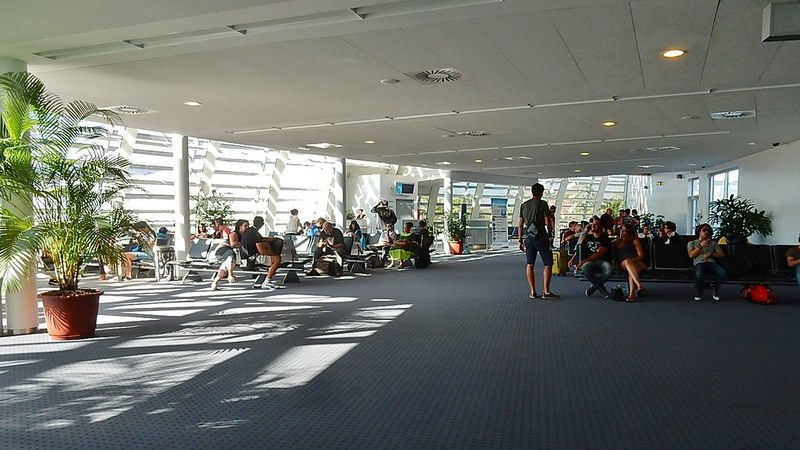
Passengers at both Chicago airports encountered long waits, canceled flights, and lost luggage. Some planes remained parked on runways awaiting gates. Vivian Azeredo, whose flight to Dublin, Ireland, was canceled, said her plane lost contact with the tower mid-flight but landed safely before being stranded on the tarmac for six and a half hours. Another passenger, Gerard Hill, expressed frustration searching for luggage and uncertainty about the cause. At Midway, passenger Stephanie Hugel reported being at the airport since 5 a.m. and
missing a connecting flight by two minutes, forcing her to spend the night there. Rental cars and hotel rooms near the airports quickly sold out due to the delays.
International and National Ripple Effects
The FAA system failure led to broader travel disruptions beyond the United States. Mexico’s Federal Civil Aviation Agency imposed temporary flight restrictions as a precaution. Air Canada canceled flights between Canada and the U.S., although Canadian aviation systems remained unaffected. Flights arriving from Europe were among the first to resume, since European airports use separate systems. Eurocontrol officials indicated uncertainty about when flights from Europe to the U.S. would fully normalize.
Impact on College Football Travel
The ground stop disrupted scheduled travel for college football teams. Mississippi’s game against Oklahoma, originally set for Saturday, was rescheduled to Sunday due to travel delays. Major conferences including the SEC, Big Ten, and Big Twelve adjusted kickoff times for Saturday games to accommodate late arrivals. Some teams opted to travel by bus rather than face further flight risks.
Passengers voiced fatigue and frustration amid the continuing disruptions. Johnny Barginear said, “Flights just kept getting delayed, pushed back. Had to stay there a little while, but we got through it. Glad to be back home.” Tom McDonald emphasized the need
for resolution, stating, “I think it has to end, and I think we all would agree it has to end. We all have to come together and end it, and not worry about politics.”