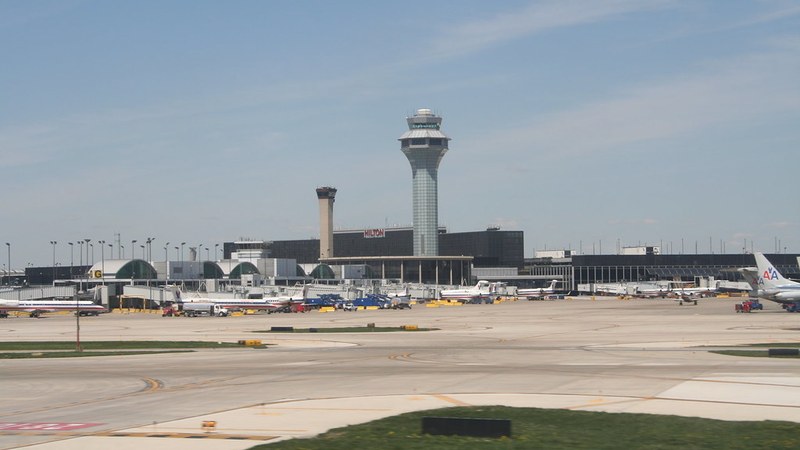
The Federal Aviation Administration (FAA) is preparing for possible flight delays and ground stops at Chicago O’Hare International Airport (ORD) on Friday, July 31, and Saturday, August 1, 2026, amid forecasted hazardous weather conditions. The National Weather Service (NWS) issued a Hazardous Weather Outlook alert warning of thunderstorms and flooding risks in the Chicago O’Hare area for both days.
Weather Forecasts Signal Increased Flight Disruptions
According to the NWS, showers and thunderstorms are likely at ORD after 4 p.m. local time on July 31, with a 100% chance of precipitation expected Friday night. Rainfall totals between 0.75 and 1 inch are predicted. The threat of heavy
rain and possible localized flooding persists through Saturday, with an 80% chance of precipitation forecast for August 1. More favorable conditions are expected to return Sunday, August 2, continuing through Tuesday night.
FlightAware data reported minimal operational impacts at ORD early on July 31 at 6 a.m. EST, with one cancellation and 28 delays, representing 2% of all departures at that time. However, the risk of disrupted operations is expected to increase during the afternoon and evening.
ORD’s Recent Weather-Related Disruptions Provide Context
Chicago O’Hare faced severe weather disruptions earlier in the week on Monday, July 27, when thunderstorms caused over 1,000 flight cancellations. The FAA
reported that ground delays during that day averaged 438 minutes. This marked the highest number of U.S. cancellations for that date.
Following this, FAA ground stops affected 13 airports on Tuesday, July 28, including major hubs such as Newark Liberty International Airport (EWR), John F. Kennedy International Airport (JFK), and LaGuardia Airport (LGA). During this period, FlightAware recorded 2,538 cancellations and 8,434 delays across multiple U.S. airports.
Data from 2022 indicates that weather-related delays are heavily concentrated in major hubs. The New York City area—including EWR and LGA—reported 30,000 delays exceeding 15 minutes. Chicago O’Hare accounted for over 5,000 weather-related
delays, while Las Vegas and Boston Logan airports experienced nearly 8,000 and nearly 5,000 such delays respectively. The FAA attributes much of this to airports operating near full capacity combined with system-impacting weather.
FAA and NWS Advise Monitoring Flight Status
At 6 a.m. EST on July 31, the FAA had yet to issue official ground stops or delays for Chicago O’Hare but is closely monitoring the evolving situation. Travelers using ORD on Friday or Saturday should expect possible changes to flight schedules.
The NWS notes the possibility of thunderstorms that may reach severe limits southwest of a Rochelle to Kankakee line, with heavy rain leading to localized
flooding. The FAA acknowledges that airports with constrained capacity, like ORD, face longer waits during weather-related disruptions as delayed flights must queue for landing or departure slots.
Passengers departing or arriving at ORD are advised to follow updates on the FAA website and from their airlines for peak operational periods during the forecasted hazardous weather.