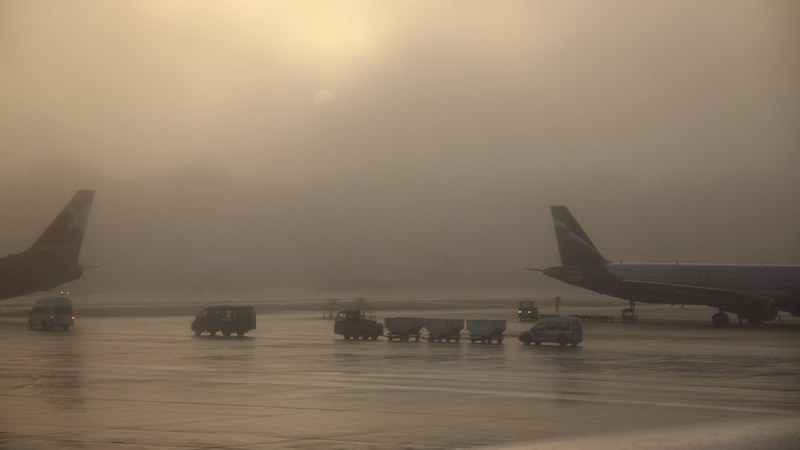
Mount Anak Krakatau erupted on Sunday, 6 September 2026 at 3:53 a.m. local time, forcing the temporary closure of eight airports in Indonesia, including Soekarno-Hatta International Airport, Halim Perdanakusuma Airport (Jakarta), and Radin Inten II Airport (Lampung). The ash plume caused delays or cancellations of 1,558 flights on Monday morning 7 September, impacting approximately 170,000 passengers, with Soekarno-Hatta International accounting for over 900 affected flights.
Airspace Affected and Safety Measures
The ash plume from Anak Krakatau volcano rose between 20,000 feet (6,100 meters) and 50,000 feet (15,200 meters), drifting across airspace over Banten, Jakarta, West Java, Lampung, Bengkulu, and parts of Sumatra. Indonesia’s Meteorology, Climatology
and Geophysical Agency (BMKG) confirmed volcanic ash forced closures due to the serious risks volcanic ash poses to aircraft engines. AirNav Indonesia closed airspace around Jakarta airports and six others as a safety precaution.
Passenger Impact and Travel Disruptions
The closures stranded thousands of travelers, causing widespread flight cancellations, lengthy delays, and long waits at terminals. Flight schedules remained subject to sudden changes due to ongoing volcanic ash monitoring by authorities. Passengers faced challenges finding alternative routes amid ongoing airspace restrictions.
Official Responses and Monitoring
Indonesia’s Ministry of Transportation coordinated with airlines and airport operators to manage disruptions but has not announced any fixed reopening schedules. Lukman F. Laisa,
director general of civil aviation, said, “Safety remains our top priority in every operational decision.” The Geological Agency maintained Anak Krakatau at Level III (Siaga) alert status. BMKG monitors volcanic ash plume 24/7 to inform aviation safety decisions, while Transportation authorities continue reviewing airport closures as ash conditions evolve.
Eruption Timeline and Geological Context
The eruptive episode lasted approximately 25 hours, starting late on 4 September 2026 and continuing through Saturday into early Sunday, 6 September 2026. Anak Krakatau, located in the Sunda Strait between Java and Sumatra, is the offspring of the famous Krakatau volcano, which erupted catastrophically in 1883. The 2018 eruption caused
a tsunami. Indonesia’s position on the Pacific Ring of Fire subjects it to frequent volcanic activity and related air travel disruptions.
Volcanic ash can travel long distances depending on wind and weather, complicating airport impact predictions. Authorities maintain an exclusion zone around Anak Krakatau and warn against approaching the crater due to hazardous volcanic materials. Travelers are advised to monitor airline and airport status closely due to ongoing uncertainty related to ash dispersion and dynamic flight schedule changes.