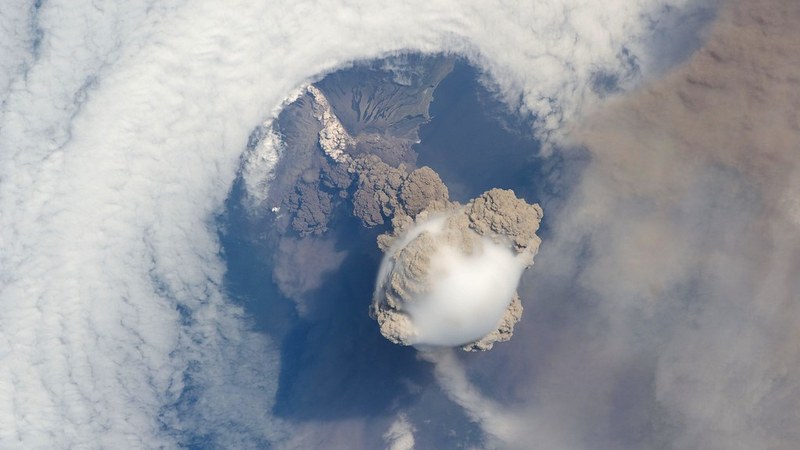
The Anak Krakatau volcano erupted in the Sunda Strait between Java and Sumatra from late 4 September until early 6 September 2026, triggering the closure of eight Indonesian airports on 7 September to prevent aviation hazards from volcanic ash clouds.
Flight operations remain suspended at key airports in the Jakarta region, including Soekarno-Hatta International Airport, where more than 900 flights are affected. Initial reports indicated 1,558 flights delayed or cancelled impacting approximately 170,000 passengers, with numbers rising to over 2,300 flights and 270,000 passengers as of 7 September 2026.
Volcanic ash plumes from Anak Krakatau reached altitudes of 20,000 feet
(6,100 meters) and up to 50,000 feet (15,200 meters). Ash spread across airspace affecting Banten, West Java, Jakarta, parts of Sumatra, Lampung Province’s Radin Inten II Airport, and Bengkulu province, forcing dynamic airport closures based on ash dispersal monitored by Indonesia’s Meteorology, Climatology and Geophysical Agency (BMKG).
The eruptive episode lasted approximately 25 hours from late on 4 September until early 6 September 2026. Indonesia’s Geological Agency has maintained an alert Level III (Siaga) status on Anak Krakatau, warning against approaching the crater and enforcing a three-kilometer volcanic material exclusion zone.
Thousands of travelers are stranded amid hundreds of cancelled
and delayed flights, facing long queues and alternative travel arrangements. Lukman F. Laisa, director general of civil aviation at Indonesia’s Ministry of Transportation, stated that safety remains the top priority in all operational decisions. The Ministry’s Directorate General of Civil Aviation coordinates with airlines, airports, air navigation, and meteorology agencies to monitor ash movement and adjust airport closures dynamically instead of setting fixed reopening times.
Anak Krakatau is the volcanic “child” of the Krakatau volcano, notorious for the 1883 major eruption. Its recent eruptive activity recalls the 2018 Anak Krakatau eruption that triggered a deadly tsunami due to an underwater
landslide. Indonesia’s position on the Pacific Ring of Fire exposes it to frequent volcanic and geological activity impacting air travel.
Volcanic ash poses serious risks to aircraft engines and navigation systems, prompting ongoing collaboration between Indonesia’s Ministry of Transportation’s Directorate General of Civil Aviation, BMKG, and Indonesia’s Geological Agency to ensure aviation safety in volatile airspace conditions.
Passengers affected by airport closures face uncertain schedules as conditions change. Spanish tourist Diego Urdiales said, “It’s of course an inconvenience” and reported a lack of communication from airlines. Indonesian passenger Michele Gouw commented, “It’s a natural disaster, it’s a force majeure, so,
what can we do?” adding, “We just have to accept it and wait for the airline and airport directions.”