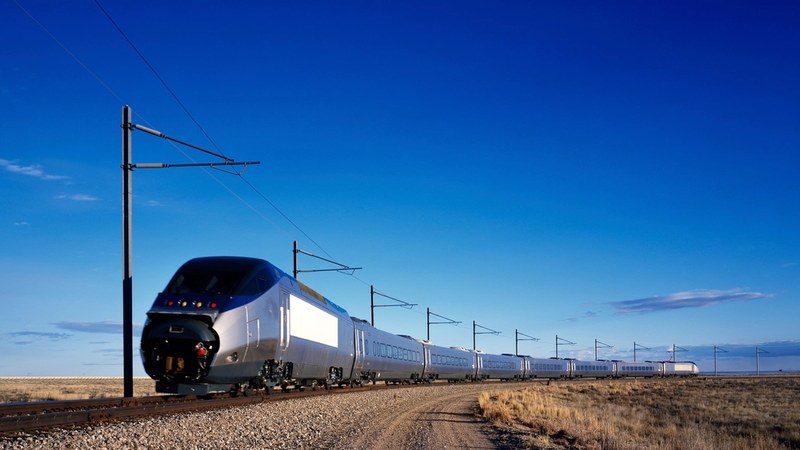
Amtrak was awarded nearly $3 billion in federal grants on August 14, 2026, from the Federal Railroad Administration (FRA) to acquire up to 43 new trainsets and carry out rail infrastructure upgrades along 21 state-supported routes across the United States.
Funding Details and Scope
The $2.05 billion portion of the $3 billion grant is allocated specifically for purchasing new trainsets to replace legacy equipment that has reached the end of its service life. These 43 trainsets will expand the fleet capacity and support potential new routes beyond the current network. This funding is part of a broader $5.3 billion FRA grant round announced by
Administrator David Fink, covering 41 projects in 23 states. The grants are administered under the National Railroad Partnership Program, established by the Infrastructure Investment and Jobs Act of 2021.
In addition to trainset acquisition, the grant package includes $572 million for relocating Amtrak’s Chicago-area maintenance facility from the 14th Street Yard to the Canal Street Yard to improve operational efficiency and accommodate expected ridership growth. Another $140.6 million is earmarked for overhauling 41 Siemens Charger locomotives at the Siemens facility in Lexington, North Carolina, addressing ongoing reliability issues.
Other infrastructure funds include $87 million for rehabilitating more than a dozen
bridges and viaducts near the new Chicago maintenance site and $37.25 million to improve the 110-year-old South Branch Chicago River lift bridge, which suffers extreme-weather operational problems. A $45.1 million grant will install onboard shunt-enhancement safety devices across all 32 state-supported routes and 15 long-distance routes.
Amtrak Routes and Equipment Impact
The 21 Amtrak routes scheduled to benefit from the new trainsets span from the Adirondack in New York to the Wolverine in Michigan and include the Blue Water, Carolinian, Amtrak Cascades, Capitol Limited corridors through Washington, D.C. to Newport News, Norfolk and Roanoke, the Downeaster, Empire, Ethan Allen, Hartford Line, Hiawatha, Illini/Saluki, Illinois Zephyr,
Keystone, Lincoln, Pennsylvanian, Pere Marquette, Piedmont, and Missouri River Runner. All of these are state-supported services operated under agreements with state transportation departments.
The newly funded 43 trainsets are separate from the 83 Siemens Airo trainsets already on order, which will see phased deployments starting with the Amtrak Cascades in late 2026 and Northeast Regional expected in 2027, followed by other routes by 2029. The delivery timeline for the newly funded trainsets is uncertain, but procurement processes indicate that new trains will unlikely enter service before 2031 or 2032.
Amtrak and its state partners must provide a 20% funding match
on all projects in the package, requiring additional capital commitments from state departments of transportation.
Current Operational Challenges
Recent cancellations on Midwest routes, including the Illinois Zephyr, have been triggered by a shortage of operable Siemens Charger SC44 locomotives, which power many state-supported services in the region. Siemens has acknowledged working closely with Amtrak to enhance fleet availability. Reliability issues with the Charger locomotives have a documented history, including a sensor failure in August 2025 that stranded passengers on a Wolverine train for over five hours without air conditioning or lighting.
The $140.6 million overhaul grant targets 41 Charger diesel-electric locomotives of both
SC44 and ALC-42 variants. At least one unit had been transferred to Siemens’ Lexington facility for refurbishment by August 2026, but no timelines for completion are publicly available.
Federal Funding Redirection and Policy Shift
Approximately $2 billion of the funding was redirected from a cancelled California high-speed rail project. The FRA terminated the federal cooperative agreement with the California High-Speed Rail Authority in July 2025 following findings of non-compliance in nine areas, including a $7 billion funding shortfall and missed deadlines. In response, the California authority criticized the federal government as no longer being a “reliable, constructive, or trustworthy partner.”
Congress also rescinded $929 million allocated
for California’s rail program in January 2026. The FRA and the Department of Transportation emphasized that the redirecting of funds reflects a shift in federal priorities toward investment in existing passenger rail networks rather than new high-speed rail projects.
Transportation Secretary Sean Duffy said the grants represent “putting dollars behind new trains and new tracks to improve transportation and make America and its rails safer, smoother, and world class.” Amtrak Interim President Byl Herrmann said, “Thanks to these new grants and continued support from Secretary Duffy and Administrator Fink, Amtrak is investing in vital projects that will drive economic growth,
create jobs, and improve and expand rail service for millions of Americans.”