An Amazon Prime Air Boeing 767 cargo jet operating as 21 Air Flight 7598 overran Runway 30 at Miami International Airport around 2 p.m. local time on Sunday, September 6, 2026. The aircraft came to rest beyond the airport perimeter near Northwest 67th Avenue, colliding with vehicles and catching fire. At least five fatalities were reported, along with multiple injuries including individuals on the ground.
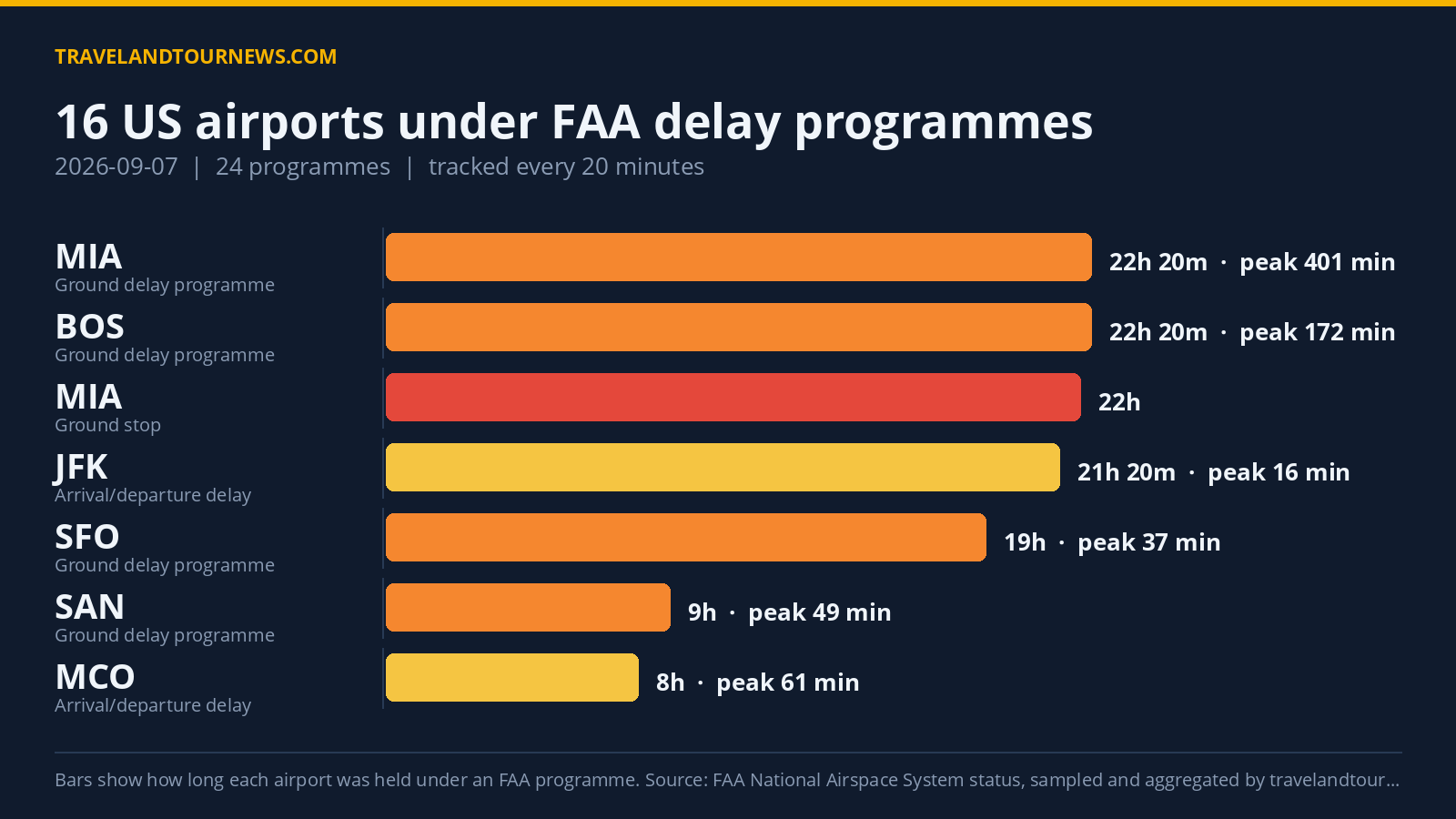
The crash triggered a full ground stop at Miami International Airport, closing all four runways and taxiways initially. Miami-Dade Fire Rescue and other emergency crews responded immediately. The Federal Aviation Administration (FAA) imposed the ground
stop, an action more commonly seen during severe weather events. Later that day, two of the airport’s four runways reopened, but recovery operations and investigations extended into the following day.
Flight Disruptions at Miami and Texas Airports
Miami International Airport, a major hub connecting Texas with Florida, the Caribbean, and Latin America, saw cascading disruptions from the incident. Flight tracking data revealed that departures from Dallas Fort Worth, Houston’s airports, and Austin-Bergstrom International Airport bound for Miami experienced delays, while some inbound flights from South Florida were canceled. Dallas Fort Worth expected roughly 1.4 million customers during the September 3-8 Labor Day period, which includes the single
busiest day of the weekend on Monday.
Extended passenger lines and rebooking difficulties were reported at Texas airports. Many passengers missed connections or faced indefinite holds due to the sudden drop in Miami’s runway capacity and slot availability. Airlines rerouted some travelers through alternative hubs like Atlanta, Charlotte, and Chicago. Several carriers allowed itinerary changes on affected routes without additional fees to accommodate disruption-related adjustments.
Operational and Investigative Response
The FAA opened a formal investigation into the overrun, focusing on flight data, cockpit voice recordings, runway conditions, aircraft performance, braking action, and crew decision-making. The cause of the incident remains undetermined, with no official
statements on weather or mechanical factors. At about 3 p.m. local time on September 6, Miami International Airport announced the ground stop and described the situation as a “disabled aircraft.” Officials confirmed the aircraft overran the diagonal runway and was disabled at the airport’s northwest end.
A ground vehicle operator was heard communicating to the control tower, stating, “Looks like we have an aircraft that overran the runway on 30.” Recovery efforts have continued alongside investigation work, limiting full runway availability during the high-demand holiday weekend.
Context and Ongoing Travel Impact
Miami International Airport’s role as a major gateway to Latin America and the Caribbean
intensified the disruption’s reach. The crash occurred amid the Labor Day holiday peak, leading to severe pressure on flight operations at Miami and connected Texas hubs. Passengers traveling to or from Miami and South Florida faced significant delays, cancellations, and rerouting uncertainties extending beyond Labor Day Monday.
Airlines and airports urged travelers to maintain flexibility as normal flight schedules gradually resume. Texas-based travelers on Miami routes might encounter longer lines, equipment changes, or overnight delays due to the continued impact of the runway overrun and limited takeoff and landing slots during the recovery phase.