The Federal Aviation Administration (FAA) ordered a nationwide ground stop affecting all U.S. airports beginning Friday at 2:54 p.m. Central Time, lasting over four hours. This marked only the second nationwide ground stop since the September 11th attacks.
Chicago O’Hare International Airport experienced a ground stop starting at 2:10 p.m., while Chicago Midway International Airport initiated its ground stop at 2:17 p.m. As of Saturday morning by 10:14 a.m., Chicago O’Hare had recorded 519 flight cancellations with average delays of 31 minutes, and Midway had 64 cancellations with average delays under 15 minutes. The nationwide ground stop was lifted before
7:30 p.m. Central Time on Friday.
Cause of Communication Failures
The nationwide ground stop was triggered by a failure in the FAA’s communication system caused by a faulty router during scheduled maintenance at a remote FAA facility. The maintenance involved transitioning communication lines from copper wire to fiber optics. According to Transportation Secretary Sean Duffy, the defective router flooded other routers with over 1,000 connection attempts every four to five seconds, which disrupted radar feeds and communications critical for air traffic control.
FAA Administrator Bryan Bedford stated there is no evidence of cyberattacks or artificial intelligence involvement, emphasizing the issue was due to equipment
failure. Department of Homeland Security Secretary Markwayne Mullin also confirmed no indication of a cyberattack, though the investigation remains ongoing.
Impact on Travelers and International Ripple Effects
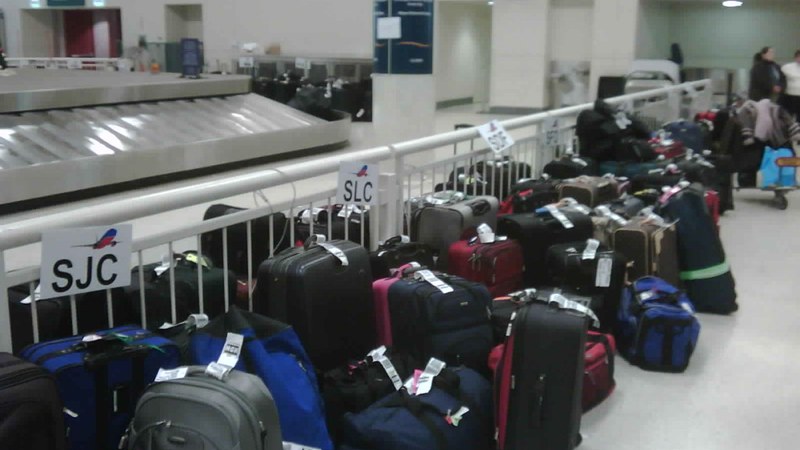
The communication failure led to hundreds of flight cancellations and delays at Chicago’s two busiest airports, resulting in large crowds of stranded passengers. Aircraft were parked on runways while waiting for gates to clear. Airlines continued working into Saturday morning to reschedule flights and reposition crews and aircraft.
The FAA ground stop caused international disruptions as well. Mexico’s Federal Civil Aviation Agency imposed temporary restrictions on air travel into its airspace, and Air Canada canceled flights between Canada and the
U.S., despite the Canadian Civil Air Navigation Service reporting no impact on Canadian systems. Flights to Europe resumed more quickly due to different air traffic control systems in place at European airports.
Major college football schedules were also affected, with a notable rescheduling of the Mississippi vs. Oklahoma game from Saturday afternoon to Sunday due to travel delays.
Official Responses and Calls for Modernization
Transportation Secretary Sean Duffy called the situation an “emergency,” blaming aging technology and overloaded systems at the FAA. He urged Congress to approve billions in funding to modernize critical infrastructure, stating, “I believe that it’s going to take us some time to
get back to capacity.”
FAA Administrator Bryan Bedford said, “We see zero evidence of anything nefarious, and zero evidence of anything AI-related. So we want to be clear that we have an equipment issue, and we’re working through what this defective piece of equipment was.”
New York Governor Kathy Hochul called for Secretary Duffy’s resignation or removal, citing repeated failures in the aviation system during his tenure. She criticized the focus on personal interests over agency crises, adding, “With millions of Americans preparing to travel for the holidays, families deserve answers and confidence in the safety of our skies. Congress
must launch a full investigation to determine what went wrong and ensure it never happens again.”
Secretary Duffy thanked air traffic controllers, pilots, and flight crews for their professionalism and dedication throughout the disruption.
Ongoing Recovery and Travel Outlook
Though the FAA lifted the nationwide ground stop by Friday evening, the disruption’s effects persisted into Saturday. Airlines at O’Hare and Midway continued efforts to recover normal operations, managing delayed departures, cancellations, and reallocation of crews and planes. Average flight delays remained at 31 minutes at O’Hare and under 15 minutes at Midway as of Saturday morning.
The FAA emphasized safety as its top priority while
resuming flight operations. Secretary Duffy noted that operations were “slowly” returning to normal but cautioned that delays and cancellations could continue as the system stabilizes.