The Federal Aviation Administration (FAA) lifted a nationwide ground stop at approximately 8:30 p.m. ET on November 13, 2026, that had halted all flights at U.S. airports for over four hours. The halt began near 4 p.m. ET due to instability in communications and radar systems at regional air traffic control centers, affecting more than 3,500 planes in flight nationwide at the time.
Transportation Secretary Sean Duffy attributed the shutdown to overloaded telecommunications switches and routers operating within the FAA’s aging analog air traffic control system. The analog equipment’s data inconsistencies triggered the FAA to issue the ground stop as
a safety precaution. Regional centers equipped with newer digital IP systems did not experience disruptions.
Nationwide Flight Disruptions and Delays
By 8 p.m. ET, the number of airborne aircraft dropped to fewer than 400 following the grounding. Although the FAA did not lose all radar or telecommunications capabilities, the event forced a halt on departing flights at all U.S. airports. Exceptions were made for critical medevac, life-saving cargo, and law enforcement flights, which continued operating during the stoppage.
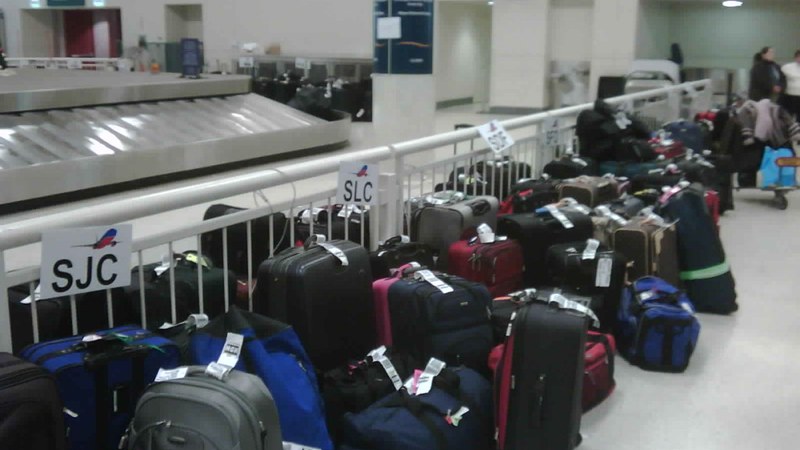
After the ground stop was lifted, extensive delays and cancellations persisted across the country, with Chicago O’Hare and Midway airports most heavily affected. As of 9:30 p.m.
CT on November 13, nearly 900 flights were delayed and over 800 canceled at these two airports combined. By 9 a.m. CT on November 14, delays had decreased to under 400, though more than 500 cancellations remained.
Approximately 11,000 flights had been scheduled to depart U.S. airports after 4 p.m. ET on November 13, with about 600 flights diverted—including 104 redirected to other airports—as a result of the ground stop.
Airline Responses to Ongoing Disruptions
American Airlines prioritized flights to non-hub cities and international routes to optimize crew and aircraft positioning for recovery operations. The carrier acknowledged continuing delays and cancellations into the following day.
United Airlines resumed operations on some flights Friday night and issued a travel waiver covering disruptions expected to extend into the weekend. Delta Airlines allowed customers to change flights without additional fees while it worked to restore normal schedules. JetBlue canceled the remainder of its Friday flights, except for European routes, as well as some Saturday flights, to reposition crews and planes.
Officials Confirm No Cyberattack or Safety Threat
Homeland Security Secretary Markwayne Mullin assured that there was no threat to public safety or evidence of a cyberattack related to the outage. “The public was never in danger through this process,” Mullin said, emphasizing that the ground
stop was imposed out of an abundance of caution.
President Donald Trump was kept informed throughout the event and declared the air traffic control failures a national emergency. Secretary Duffy highlighted the need for urgent infrastructure modernization, increasing the requested federal funding to $50 billion from the president’s initial $30 billion proposal.
“What we have is an incredibly old air traffic control system,” Duffy said. “You will have more of these [disruptions] unless the American people and Congress tell us to build. I can’t wait for that.” Former airline executive Robert W. Mann Jr. noted recovery could take time given
displaced crews and aircraft.
Background on Air Traffic Control Infrastructure
The FAA’s air traffic control network has undergone phased upgrades replacing some copper wiring with fiber optics and updating technologies. However, many U.S. regional centers still rely on obsolete analog telecommunications equipment, which led to the overload and failure on November 13. The newer control centers with digital systems did not experience breakdowns during the incident.
Previous regional failures occurred in New York and Newark in recent years, but a nationwide ground stop is rare. The last such event was in January 2023 due to a pilot alert system malfunction; prior nationwide stops occurred only after
the September 11, 2001 attacks.
The disruption came during one of the busiest travel periods before the Thanksgiving holiday set for November 26, further complicating passenger itineraries and airline recovery plans.