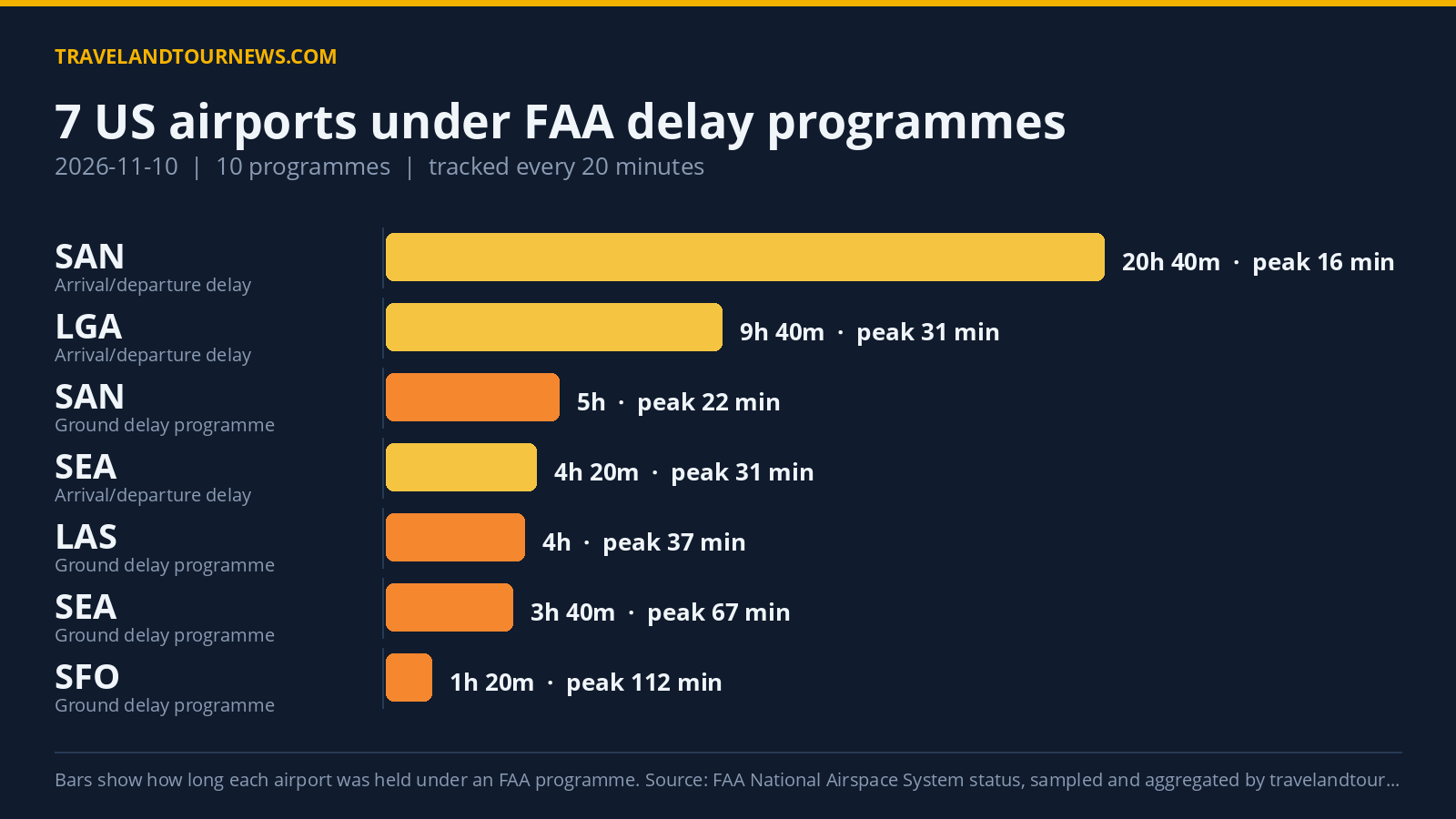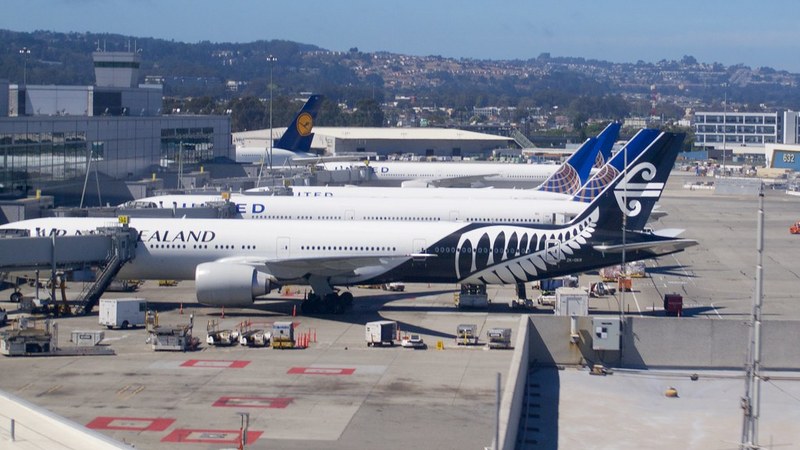
San Francisco International Airport experienced multiple Federal Aviation Administration ground stops and ground delay programmes on Monday, November 9, 2026, amid dense fog and low cloud conditions. The first ground stop began shortly before 8 a.m. Pacific Time and was lifted around 9:15 a.m., with further restrictions imposed around 10:28 a.m. and again shortly before noon. By approximately 10:30 a.m., FAA data showed 187 flights delayed and three cancellations at San Francisco.
Fog and Visibility Conditions Impact Flight Operations
Visibility at San Francisco International Airport fell to about 0.13 miles near 8 a.m., significantly below normal operating minimums. The airport’s proximity to the San Francisco Bay makes
it vulnerable to coastal fog, which combined with low ceilings restricted aircraft movements. The National Weather Service issued a dense fog advisory for San Francisco and adjacent bay shoreline areas, warning visibility could be as low as a quarter mile. These meteorological conditions sharply limited capacity at the airport.
Operational Consequences and Passenger Impact
The FAA implemented ground stops that held departures at other airports before flights could proceed to San Francisco, reducing congestion in the airport’s airspace. Average arrival delays approached 63 minutes during the disruption, although individual flights experienced varied wait times. Ground delay programmes remained active even after initial stops were lifted
to manage the reduced throughput caused by low visibility procedures. Airlines and passengers operating through San Francisco may encounter further delays as late-running inbound aircraft disrupt subsequent departures.
FAA and Weather Service Reporting on Restrictions
FAA traffic management notifications attributed the restrictions primarily to low ceilings and severely reduced visibility in the San Francisco area. Ground stops are temporary traffic control measures and do not signify airport closure. The National Weather Service’s dense fog advisory confirmed hazardous conditions affecting flight safety. Operational limitations included increased spacing between arriving aircraft and adherence to low-visibility procedures, directly reducing the number of flights the airport could accommodate during the morning
hours.
Evolving Status of Flight Delays and Cancellations
Flight delays and cancellations continued into the midday period, with FAA updates indicating fluctuating restriction levels based on weather changes. The 187 delayed flights and three cancellations reported by midmorning do not represent total daily disruptions. Further updates are pending to clarify the extent of ongoing schedule impacts into the afternoon and evening at San Francisco International Airport.