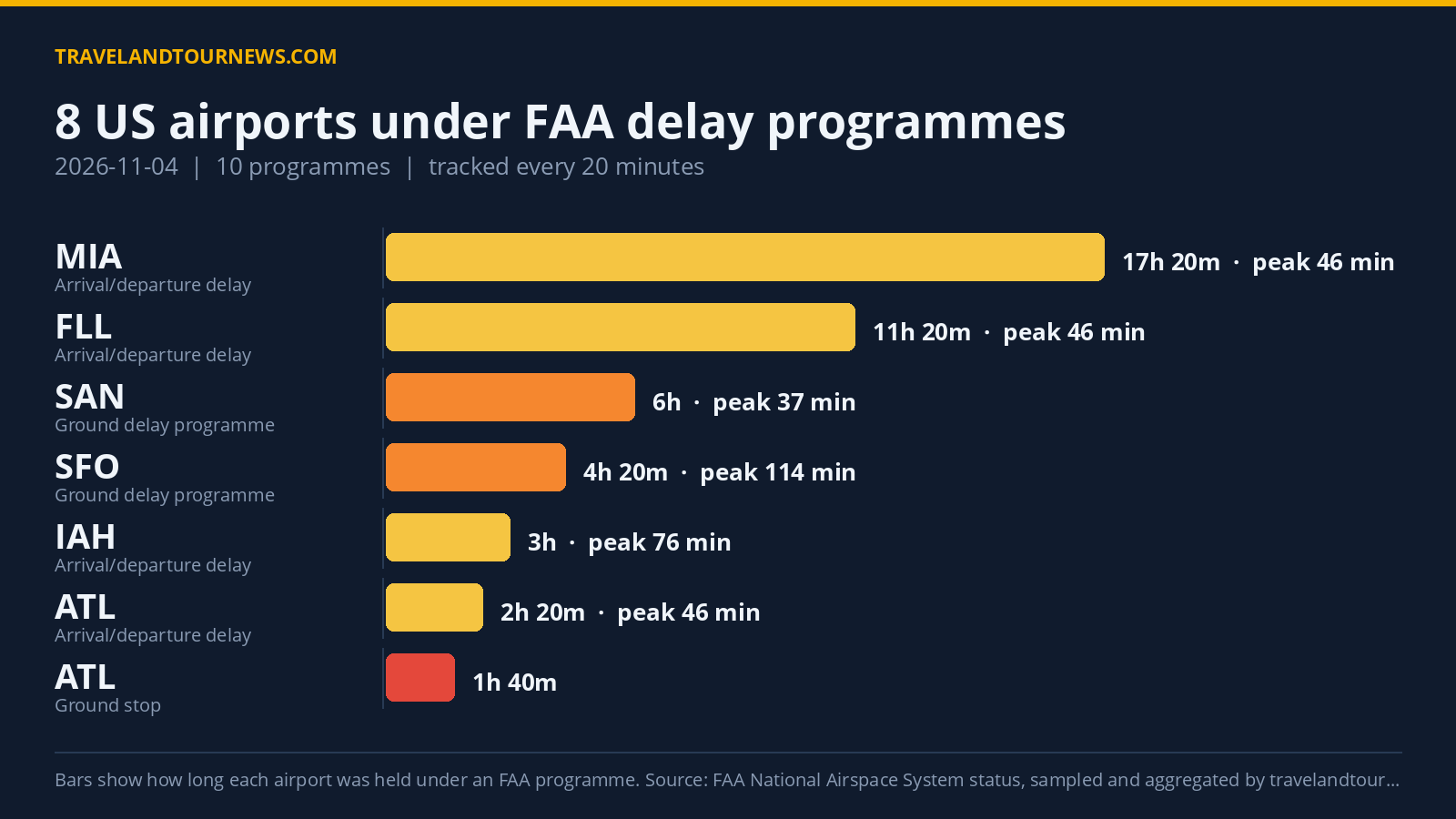
On November 3, 2026, US airports recorded 1,442 flight delays and 141 cancellations as of 12:44pm Eastern Time. JetBlue Airlines led cancellations with 46 flights canceled, while American Airlines experienced the highest number of delays at 375 flights. Dallas-Fort Worth International Airport registered the most delays with 278, whereas Fort Lauderdale and Miami airports topped cancellations with 35 and 30 respectively.
Earlier that morning, at approximately 10:25am Eastern, 881 delays and 133 cancellations had been reported across the country. The bulk of cancellations were established by mid-morning, with delays continuing to rise throughout the day. Compared to the prior day,
November 2, the midday snapshot showed fewer delays (1,442 versus 2,426) but a higher cancellation count (141 versus 82). The Federal Aviation Administration (FAA) issued a morning outlook forecasting possible thunderstorm-related delays in Memphis, Houston, Austin, and San Antonio, along with low visibility conditions causing delays at Philadelphia airport.
Key Airports and Airlines Reporting Highest Disruption
Dallas-Fort Worth International Airport accounted for the highest number of flight delays nationwide with 278 reported by midday. Meanwhile, Fort Lauderdale Airport led cancellations with 35 flights canceled, closely followed by Miami Airport with 30 cancellations. JetBlue Airlines endured the largest share of cancellations with 46 flights affected. American Airlines experienced
the most significant delay impact, with 375 flights delayed. Airports in Chicago and New York saw some delays and cancellations but at comparatively modest levels based on available data. These figures represent midday snapshots and are expected to increase later throughout the day.
Impact and Causes of Current Flight Disruptions
The widespread flight delays and cancellations across major US hubs on November 3 are attributed to multiple operational challenges and weather-related issues. The FAA’s early day forecast identified thunderstorm conditions likely to cause delays in Memphis, Houston, Austin, and San Antonio. Philadelphia airport faced low visibility delays as forecasted by the FAA. These factors combined with operational
constraints contributed to the significant travel disruptions nationwide.
Overall, the disruptions affected more than 1,500 flights across the United States by midday on November 3, 2026. Travelers encountered delays intensified throughout the morning period, while cancellation numbers largely stabilized after mid-morning hours.