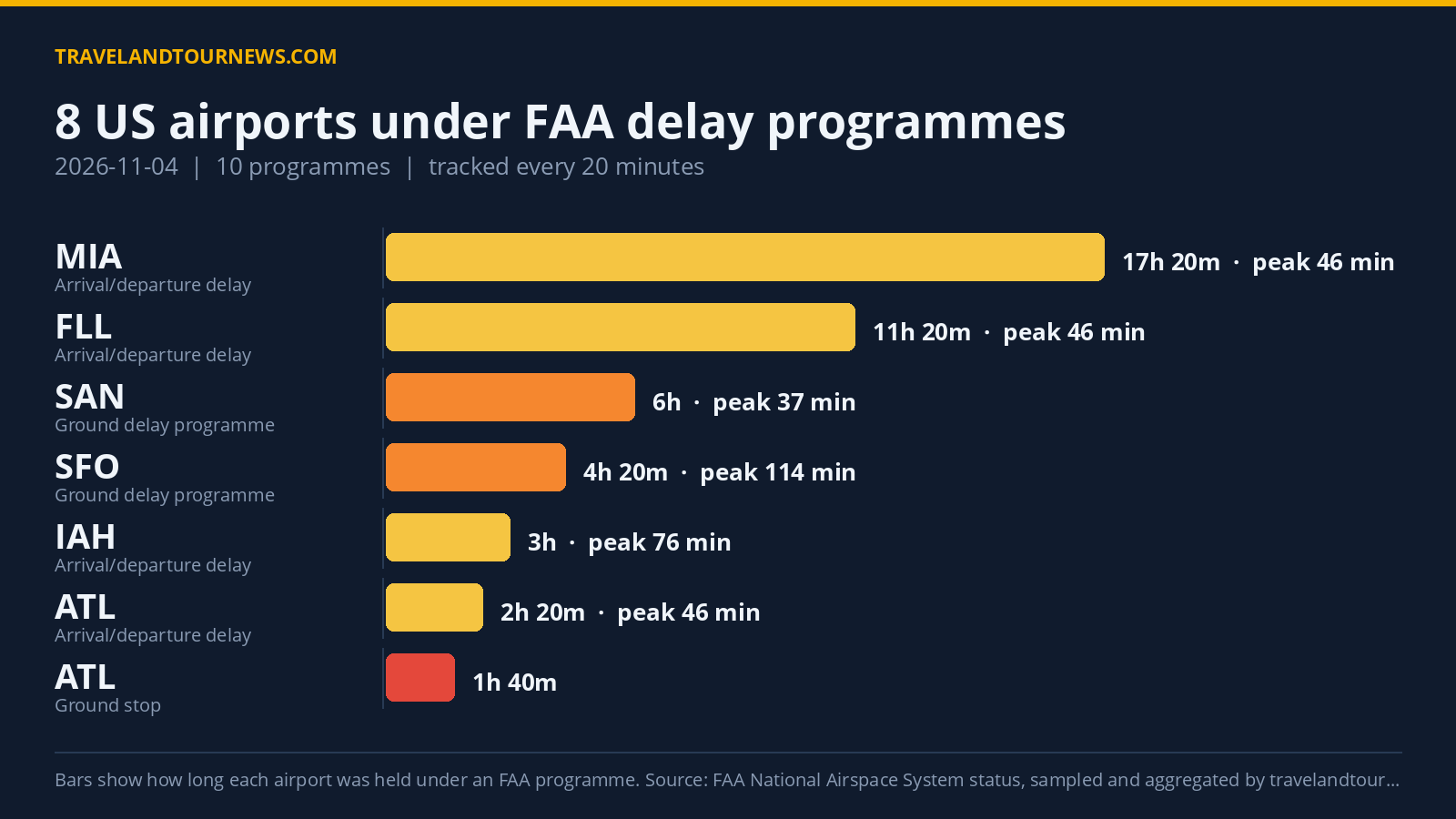
By 12:44pm Eastern on November 4, 2026, US airports recorded 1,442 flight delays and 141 cancellations. This data shows widespread disruption across the country’s major aviation hubs during the day.
JetBlue Leads Cancellations; American Airlines Reports Most Delays
JetBlue accounted for the highest number of airline cancellations with 46 flights canceled by midday. American Airlines registered the largest total delays with 375 flights delayed. Airport-level figures highlight Dallas-Fort Worth Airport as the leader in delays with 278 flights delayed. Fort Lauderdale Airport experienced the most cancellations with 35, followed by Miami Airport with 30 cancellations.
FAA Forecasts Weather-Related Delays Across Several Cities
The Federal Aviation Administration’s morning outlook predicted potential thunderstorm-related delays affecting Memphis, Houston,
Austin, and San Antonio. Low visibility conditions were forecasted for Philadelphia. These weather factors contributed to travel disruptions at multiple locations nationwide.
Comparison to Previous Day Shows Fewer Delays but More Cancellations
Compared to November 2, 2026, when midday delays reached 2,426 and cancellations stood at 82, the November 4 snapshot showed a decrease in delays but a rise in cancellations. FlightAware’s data at about 10:25am ET on November 4 reported 881 delays and 133 cancellations, both figures expected to climb by evening as the day progressed.
Disruptions Span Major Hubs Including Chicago and New York
Although Dallas-Fort Worth and South Florida airports experienced the highest disruption levels, Chicago and New York airports also faced flight delays and cancellations.
Despite lower numbers compared to Texas and Florida hubs, these disruptions contribute to ongoing travel issues during the day across US airspace.