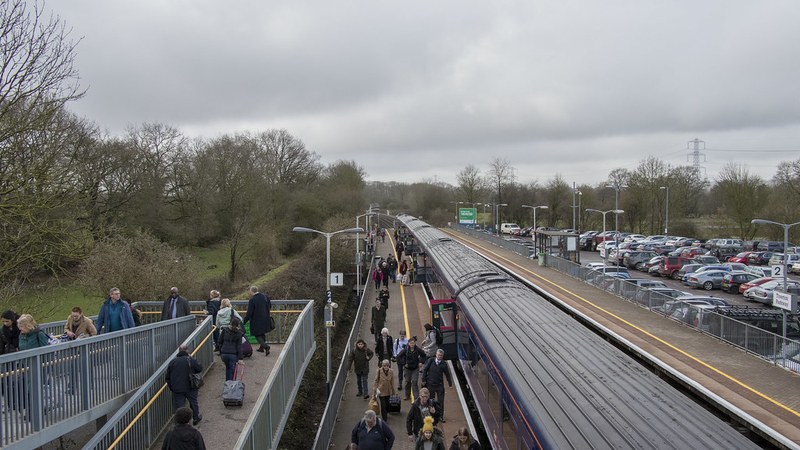
Transport Secretary Heidi Alexander has publicly condemned the service quality of East Midlands Railway (EMR), describing it as unacceptable due to persistent problems with the new Aurora (Class 810) trains. These trains, introduced in December 2025 and manufactured by Hitachi Rail, have caused delays, cancellations, and overcrowding, prompting an apology from Alexander ahead of EMR’s planned renationalisation in March 2027.
Service Reductions, Industrial Action, and Timetable Recovery
EMR temporarily reduced its Intercity timetable to 87% in July 2026 due to reliability and maintenance challenges with the Aurora fleet. Services operating to and from London St Pancras faced cancellations and fewer carriages, leading to significant passenger crowding. Following
improved performance, the timetable was increased to 92% on 1 September 2026, with plans to reach 96% by 19 October 2026. RMT union members, representing EMR staff, planned 24-hour strikes on 16 and 17 September 2026, but these were called off after talks with the operator. Despite this, strike actions short of full walkouts continue, resulting in occasional short-notice alterations and cancellations.
Renationalisation Plans and Financial Rationale
The UK government aims to renationalise East Midlands Railway by March 2027, with the contractual core term expiry allowing transfer from Sunday before 16 October 2026. This move is part of a broader plan to consolidate Department for
Transport (DfT) contracted rail services under the new public body Great British Railways (GBR), headquartered in Derby. The government expects to save approximately £150 million annually by ending payments to private operators. Several operators, including Greater Anglia and South Western Railway, are already publicly owned, while Avanti West Coast is scheduled for nationalisation starting March 2027.
Official Statements on Service Quality and Expectations
Transport Secretary Heidi Alexander apologized for the summer 2026 service disruptions, stating, “I recognise people have received an unacceptable service this summer and I apologise for that. It’s not good enough.” She emphasized that EMR must improve service quality before renationalisation and noted that
the process “is not going to be a silver bullet that transforms things overnight.” EMR acknowledged that the reduced timetable was necessary due to a three-year delay in delivering the Class 810 trains and ongoing maintenance challenges with both the new Aurora fleet and the existing Class 222 trains. The company committed to restoring full service levels and continues working closely with Hitachi Rail and the DfT.
Causes of Service Disruptions and Train Fleet Challenges
The delayed delivery of the Aurora (Class 810) trains by three years contributed to operational disruptions for EMR. Since entering service in December 2025, the new fleet has faced reliability and maintenance problems
that led to months of delays and cancellations. These issues escalated to industrial unrest among staff, with strike threats and actions from the RMT union. Additionally, the EMR managing director resigned amid ongoing Aurora fleet difficulties.
Impact on Passengers and Future Outlook
Passengers on EMR routes experienced overcrowded trains, delays, cancellations, and short-notice service changes throughout summer 2026, partly due to the temporary timetable reduction. The government and EMR anticipate improvements following the renationalisation scheduled for early 2027, although Transport Secretary Alexander cautioned that challenges such as driver shortages and punctuality will require time and investment to resolve. EMR’s spokesperson reiterated the company’s commitment to increasing
service levels, with a planned timetable restoration to 96% by 19 October 2026.