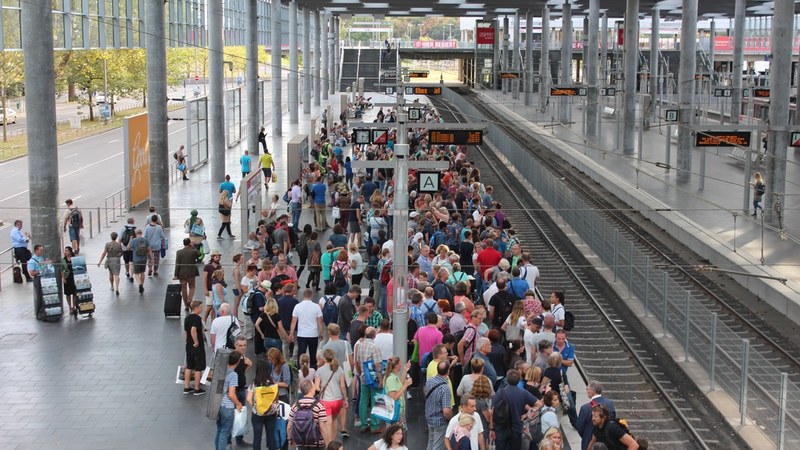
Indian Railways cancelled 245 trains scheduled to arrive at New Delhi and Hazrat Nizamuddin railway stations on October 10, 2026, including premium Rajdhani and Shatabdi express trains. The cancellations affected trains departing after 2 PM on October 9 and scheduled to reach these stations between 4 AM and 2 PM on October 10. Notable cancelled trains included the Sealdah–New Delhi Rajdhani Express (12313) and the CSMT–Hazrat Nizamuddin Rajdhani Express (22221). Western Railway rescheduled the Mumbai Central–New Delhi Rajdhani Express (12951) and August Kranti Rajdhani Express (12953) by five hours. The North Western Railway cancelled 13 services scheduled to depart for
Delhi on October 9 and 10, and the Jammu Railway Division cancelled four trains headed to Delhi, including a superfast Rajdhani Express.
Delhi Metro Stations Closed, Security Deployment
The Delhi Metro Rail Corporation (DMRC) closed 45 metro stations from 9:00 PM on October 9 until 6:00 PM on October 10, 2026, citing law and order concerns. Affected stations included Janpath, Patel Chowk, Central Secretariat, Rajiv Chowk, Mandi House, Kashmere Gate, Hauz Khas, and Supreme Court. Entry and exit at these stations were barred, while interchange facilities remained operational at all except New Delhi station. Approximately 23,000 security personnel were deployed in Delhi between October 8 and
October 12 to manage the expected protests. Authorities installed multi-layered barricades along with CCTV and facial recognition cameras to strengthen surveillance.
CJP Protest and Associated Demands
The measures preceded a protest organized by the Cockroach Janta Party (CJP) led by founder Abhijeet Dipke, scheduled for October 10 at Jantar Mantar, New Delhi. The protest called for the resignation of Chief Election Commissioner Gyanesh Kumar and the rollback of the Special Intensive Revision (SIR) of electoral rolls, which protesters claimed involved voter list manipulation. Participating groups included student organizations such as the All India Students Association (AISA) and All India Students Federation (AISF), social activists, and
farmers’ groups. The Delhi Police denied permission for the protest, citing previous violations and short notice.
Impact on Passengers and Services
Passengers with trains scheduled to arrive between 4 AM and 2 PM on October 10 at New Delhi and Hazrat Nizamuddin stations faced cancellations. Railway sources reported that several passengers could not reach stations on time due to traffic disruptions on October 9, resulting in missed trains and cancellation of IRCTC group bookings. Retail liquor vendors were ordered to remain closed on October 9 and 10. Educational institutions, including Sardar Patel Vidyalaya, moved classes online and postponed campus events in the same period. Passengers
were advised to check train running statuses and cancellation updates on official Indian Railways platforms prior to traveling. Refund and alternative travel arrangements were also recommended for affected passengers. The Delhi–Meerut Namo Bharat Rapid Rail service was likely suspended on October 10, pending confirmation.
Official Statements and Security Coordination
Railway Board officials cited intelligence inputs and traffic advisories warning of potential disruptions around railway stations as justification for cancellations. The Divisional Railway Manager (DRM) of Sealdah posted on social media urging passengers to take note of cancellations and plan journeys accordingly. The DMRC confirmed station closures on Twitter (now X), stating: “Due to security reasons,
the entry and exit at the following metro stations will remain closed from 09:00 PM on 9th October, 2026 till 06:00 PM on 10th October, 2026…Interchange facility will remain available at all the concerned metro stations except New Delhi metro station.” Railway sources told IANS: “Several passengers could not reach railway stations on time, while IRCTC group bookings were also cancelled.” The Ministry of Home Affairs deployed additional Central Armed Police Forces companies to augment Delhi Police forces for maintaining law and order during the protest period.