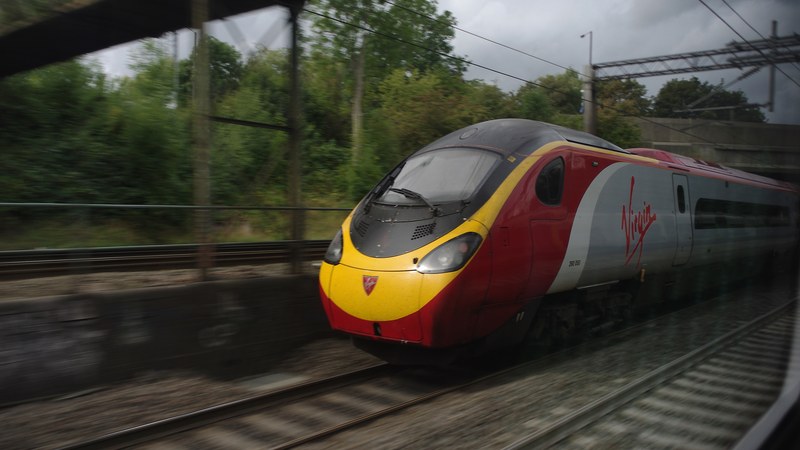
The UK Office of Rail & Road (ORR) rejected on 8 October 2026 applications by Wrexham, Shropshire & Midlands Railway (WSMR), FirstGroup’s Lumo NW, and Avanti West Coast seeking to introduce new passenger services from London Euston to Wrexham, Rochdale, and Blackpool. The regulator cited insufficient capacity on the West Coast Main Line (WCML) and potential harm to network performance as primary reasons.
New Applications and Regulatory Background
The applications were submitted under Sections 17 and 22A of the Railways Act 1993, following failure to reach joint agreements with Network Rail. Network Rail did not support the applications from Lumo and WSMR and expressed concerns
over the Avanti West Coast proposal. ORR’s final decision followed detailed and extensive analysis, supported by an external review confirming that capacity and performance conditions on the southern part of the WCML had not materially changed since the rejection of similar proposals in July 2025.
Reactions from Applicants and Officials
WSMR, supported by Alstom and consultancy SLC, expressed disappointment after campaigning for over two and a half years. The company highlighted that its service would have enhanced educational, leisure, and work opportunities for communities in North Wales, the Midlands, and London, citing strong local backing from residents, businesses, councillors, and MPs.
Julia Buckley, Labour MP
for Shrewsbury, called the decision a setback and referenced a £9 million annual regional economic benefit expected from the direct London service. She indicated plans to collaborate with the Department for Transport under the framework of Great British Railways nationalisation to restore the route.
FirstGroup, the parent company of Lumo NW, said it was reviewing its options and believed its revised proposal demonstrated significant economic advantages, including improved competition, wider passenger choice, reduced fares, and growth opportunities across Manchester and northwest England. The group affirmed that open access rail services contribute to connectivity, economic development, and increased rail usage without
government subsidy.
Avanti West Coast declined to comment, referring to the ORR’s announcement as self-explanatory.
ORR Explanation and Capacity Challenges
Stephanie Tobyn, ORR’s Director of Strategy, Policy & Reform, explained that the WCML operates under significant pressure with limited resilience. The regulator’s analysis concluded that adding new trains would reduce recovery ability from disruptions, increase the spread of delays, and degrade network reliability for all passengers. ORR confirmed that economic benefits were not the decisive factor; capacity and performance impact were paramount.
Despite rejecting these applications, ORR reaffirmed its principle support for open access services as a means to promote competition for the benefit of
rail users.
Passenger Service Impact
No new passenger services will start on the WCML routes between London Euston and Wrexham, Rochdale, or Blackpool at this time. However, ORR approved the carrying of passengers on an existing Avanti West Coast weekday service departing Chester at 19:29 to London Euston. This train operates as a fully crewed empty move and adding passenger service does not create additional path capacity demand.
Policy Context and Future Prospects
The ORR decision underscores the challenge of balancing demands for expanded rail services with the limited infrastructure capacity and performance constraints on busy routes like the WCML. Open access rail service applications require careful assessment
of network resilience to prevent systemic delays. The role of the upcoming Great British Railways nationalisation framework has been highlighted by elected officials as a potential mechanism to revisit route restoration and service enhancements in the future.