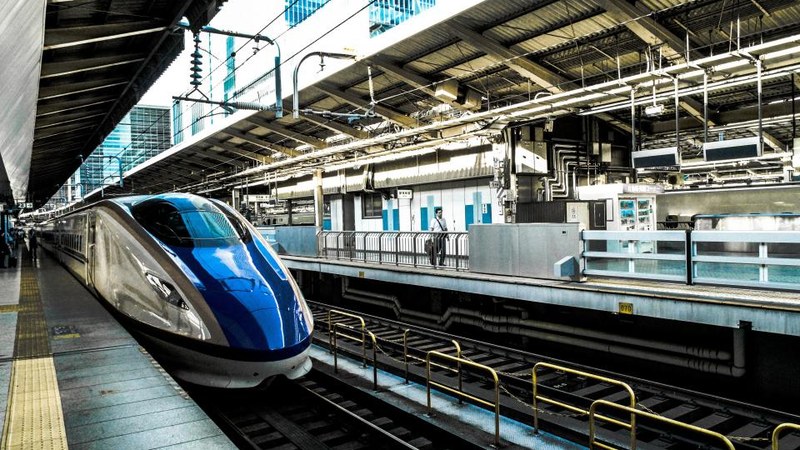
India’s inaugural bullet train project, a 508 km high-speed rail corridor connecting Mumbai and Ahmedabad, remains incomplete nearly a decade after construction began. Originally targeted for completion in 2022, the project has yet to carry a single passenger, with initial operations now expected to start by December 2027 on the Surat to Vapi section in Gujarat.
Diplomatic Tensions Between India and Japan
Delays have escalated diplomatic strains between the Indian and Japanese governments, with former Japanese justice minister Hideki Makihara publicly accusing India of “recklessness” behind the stalled schedule. Makihara claimed India failed to keep promises throughout negotiations, blaming the Indian side entirely for the project’s
lack of progress. Indian foreign ministry spokesperson Randhir Jaiswal rejected these accusations, describing Makihara’s remarks as personal opinion at odds with the facts and stating bilateral discussions are ongoing and constructive. Masafumi Shukuri, chairman of the International High-Speed Rail Association and head of Japan Transport and Tourism Research Institute, acknowledged the complexity of building such a long high-speed rail within a decade, citing land acquisition challenges and COVID-19 disruptions as significant factors.
Technology Disputes and Procurement Changes
Japan had planned to supply an integrated Shinkansen system comprising trains, signalling, and the Operation Control Centre (OCC). However, India has shifted toward deploying domestically developed high-speed trains
built by Bharat Earth Movers Limited (BEML) and Integral Coach Factory (ICF), with train speeds designed up to 280 km/h but operational speeds capped at 250 km/h initially. The next-generation Japanese Shinkansen E10 trains remain under design and will not be available until the early 2030s, likely after 2034, forcing India to initiate services with indigenous rolling stock.
The signalling system contract awarded to Germany’s Siemens, adopting the European Train Control System (ETCS), diverges from Japan’s original integrated signalling plan. This decision has reportedly dismayed Japanese companies such as Japan Rail East (JR East), which emphasized the importance of preserving
the system’s integrated design for safety and reliability. Indian railway officials confirmed the choice of the ETCS standard, widely used in Korea, Taiwan, China, and Europe, and stated that without offers from Japan for signalling and OCC systems, India prioritized operational readiness.
Project Progress, Costs, and Financing
While major elevated track sections and necessary land acquisitions have been completed along the Mumbai-Ahmedabad route, the overall project cost has surged from the initial estimate of approximately Rs 1.08 trillion (£8.4 billion) to around Rs 1.98 trillion (£15.5 billion). The Japanese government is providing a loan covering about 81% of the original estimated cost via the Japan
International Cooperation Agency (JICA) at an interest rate of 0.1%, repayable over 50 years. Construction has moved forward steadily, though at a pace considered slower than Japan’s original expectations.
Indigenous Manufacturing and Operational Timeline
India’s strategy emphasizes domestic manufacturing of high-speed trains within the Make in India and Aatmanirbhar Bharat initiatives. State-owned enterprises BEML and ICF are designing and producing the indigenous trainsets, with manufacturing expected to finish by April 2027 and testing scheduled between May and July 2027. Initial services on the Surat to Vapi section could thus launch before full operations across the entire corridor anticipated by 2029.
Negotiations and Future Rail Network Ambitions
The ongoing discussions between India
and Japan focus on reconciling divergent choices regarding technology integration, procurement, and operational control systems. Despite the disputes, both governments affirm the flagship Mumbai-Ahmedabad corridor’s importance for their strategic partnership. Japanese Prime Minister Sanae Takaichi reaffirmed this at a July 2026 summit, describing bilateral ties as “brother and sister” relations.
India plans an extensive high-speed rail network with seven corridors totaling nearly 4,000 km, targeting investments of about Rs 16 trillion (£125 billion). The Mumbai-Ahmedabad line is expected to serve as a blueprint for future corridors, balancing technological transfer from Japan with expanding indigenous capabilities to reduce import dependency on
foreign systems and components.