More than 1,238 flights were delayed and 53 canceled at United States airports on Tuesday, September 15, 2026, amid widespread disruptions across multiple major hubs. The disruptions affected departure and arrival schedules nationwide, driven primarily by adverse weather and traffic-management constraints, according to data from FlightAware and The Traveler.
Key Airports and Regions Affected
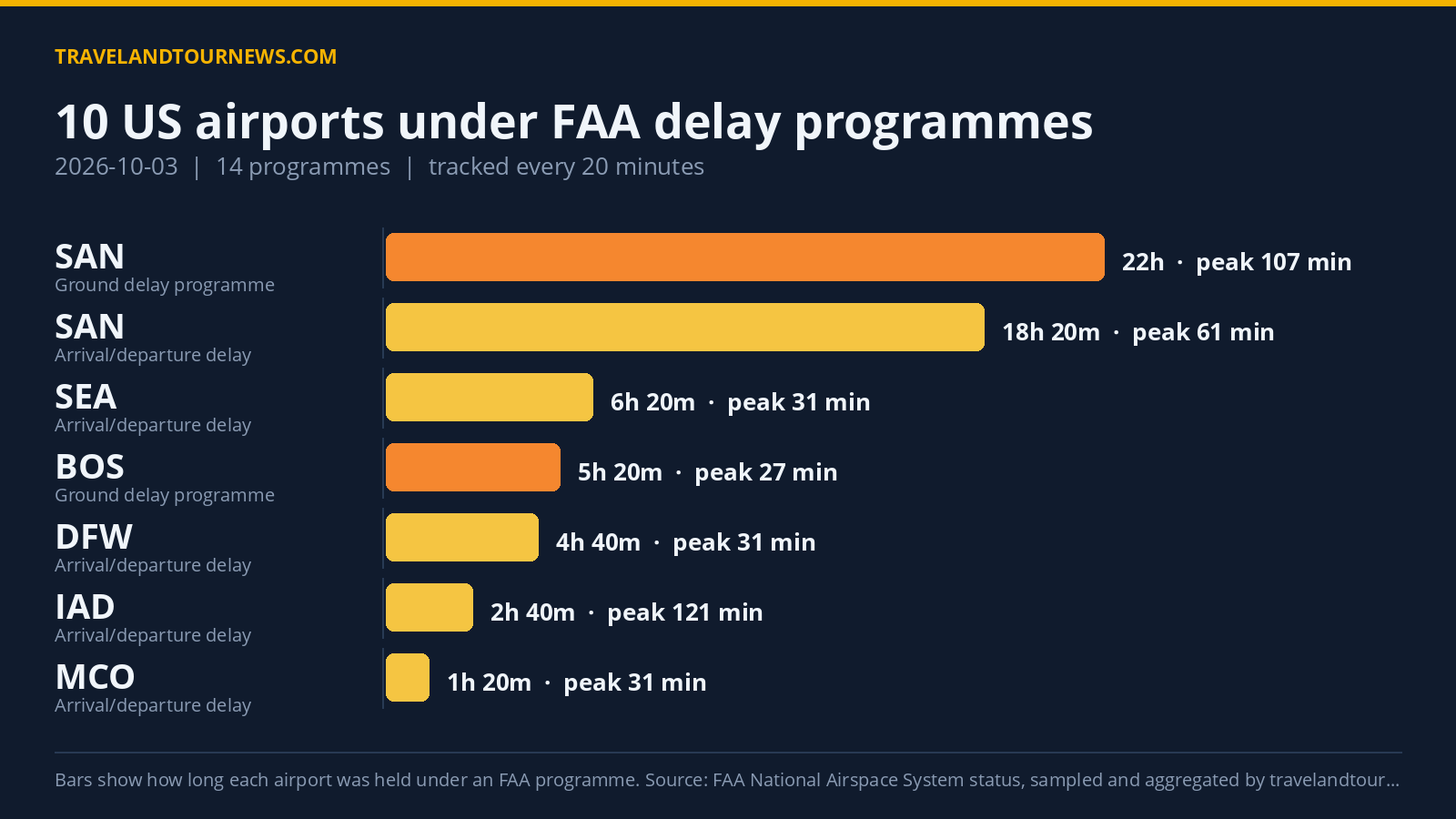
Significant travel interruptions were reported at airports in the Chicago area (Midway and O’Hare), Houston area (Hobby and Intercontinental), and several Florida gateways. Denver and Seattle airports also experienced delays as low cloud conditions limited arrival rates. Boston Logan and Miami International airports implemented ground delay programs to manage arrival demand
under constrained conditions.
Weather and Traffic Management Driven Delays
The Federal Aviation Administration’s daily air traffic outlook for September 15 identified thunderstorms as a major contributing factor to delays in the Midwest, Gulf Coast, and Florida. These storms disrupted air corridors and terminal areas, forcing reroutes and imposing spacing requirements that reduce arrival rates. Low clouds further constrained arrivals at Denver and Seattle. Ground delay programs were used at Boston Logan and Miami International to meter arrivals when capacity fell below demand.
Cascading Operational Impacts Across Airlines
The interconnected nature of airline networks magnified the disruptions. Flights arriving late impact subsequent departures as aircraft and crews are delayed, with crew duty-time
limits complicating operations following extended ground holds. This cascade effect prolonged delays beyond initial weather events, affecting flights downstream of impacted hubs.
Passenger Experience and Response Options
Travelers faced departure holds, missed connections, and changing boarding times. U.S. Department of Transportation rules require airlines to offer refunds if passengers opt not to travel on canceled flights, even when cancellations result from weather. Rebooking typically prioritizes the same airline’s network but can be challenging across multiple constrained hubs. Some passengers found faster alternatives by rerouting through nearby airports in multi-airport regions like Chicago and South Florida.
Passengers are encouraged to check airline apps for the latest
flight-specific updates, monitor the FAA’s airport-status dashboard for broader traffic conditions, and use flight-tracking services such as FlightAware for nationwide delay and cancellation statistics that update throughout the day.
The FAA relies on ground delay programs and ground stops to maintain safe traffic flow when demand exceeds airport capacity. Weather has been described by the FAA as the dominant driver of system-impacting delays in recent years, with national schedules heavily affected when storms and low cloud conditions occur simultaneously in multiple key regions.