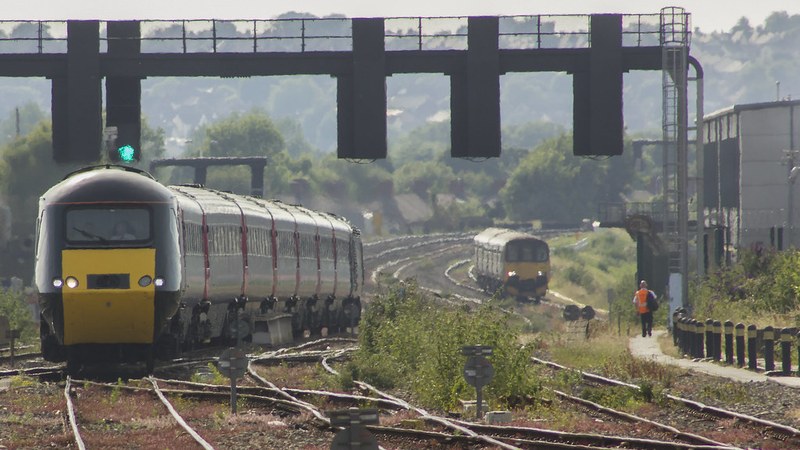
A commemorative train journey is scheduled for the first Sunday in October 2026 to mark the 1976 launch of the UK’s first high-speed rail service. The preserved Intercity 125 High-Speed Train (HST), originally operating between London and Bristol, will run from Paddington station through Bristol and onward to South Wales.
Intercity 125 Technical Specs and Original Impact
The Intercity 125 HST introduced in 1976 allowed passengers to travel at speeds up to 125 mph, which was 25% faster than any other British rail service at the time. Its arrival represented a British Rail strategic response to the growing competition from motor vehicle travel, particularly for business journeys.
The train, initially seen as a temporary solution, became an icon for combining speed, style, and comfort. 1976 also saw the Concorde enter commercial service, an era marked by high-speed travel innovations across transport modes.
Preserved Train Set and Maintenance
The preserved train managed by the 125 Group consists of five power cars and nine coaches. It is based at Buckley Wells, the restoration site of the Flying Scotsman locomotive ten years ago. Engineer James Treblinski, responsible for maintaining the train’s mainline speed capability, noted that despite reduced mileage, careful maintenance is necessary to preserve its 125 mph design speed.
The train still operates at
full speed on the mainline owing to the dedication of the group. Modernised versions of the Intercity 125 remain in passenger use in Scotland, whereas the rest of the UK has seen the trains fade from regular service. Some retired trains have been exported to Mexico and Nigeria.
Key Individuals and Public Interest
Gary Heelas from Woodley, Berkshire, a 125 Group member, stated, “We’re basically retracing the steps on that very first day.” He compared the train’s impact on rail travel to that of Concorde on air travel in 1976, emphasizing its role as one of British Rail’s last major designs and its reputation for
passenger comfort.
The group began preserving these trains in the 1990s, acquiring additional power cars and coaches over time. Roger Senior, a volunteer with extensive experience working on the trains, summarized their appeal: “Speed, comfort, air conditioning and just the shape. You knew it was a winner.” The repainting of one power car into retro British Rail colours sparked enthusiast interest.
Ticket sales for the commemorative journey have been strong, with around three quarters of seats sold by early September 2026, reflecting continued public enthusiasm.
Historical and Cultural Significance
The Intercity 125 revolutionized UK rail in the 1970s by significantly reducing journey times on
major routes. It was heavily marketed in television campaigns promoting rail as a fast alternative to road travel. One notable advertisement featured a High Speed Train racing alongside a police car, underscoring the message that train travel avoided the risk of speeding fines.
The commemorative run preserves the legacy of British Rail’s innovation in high-speed services and celebrates the cultural impact of the Intercity 125 on public transport in the UK.