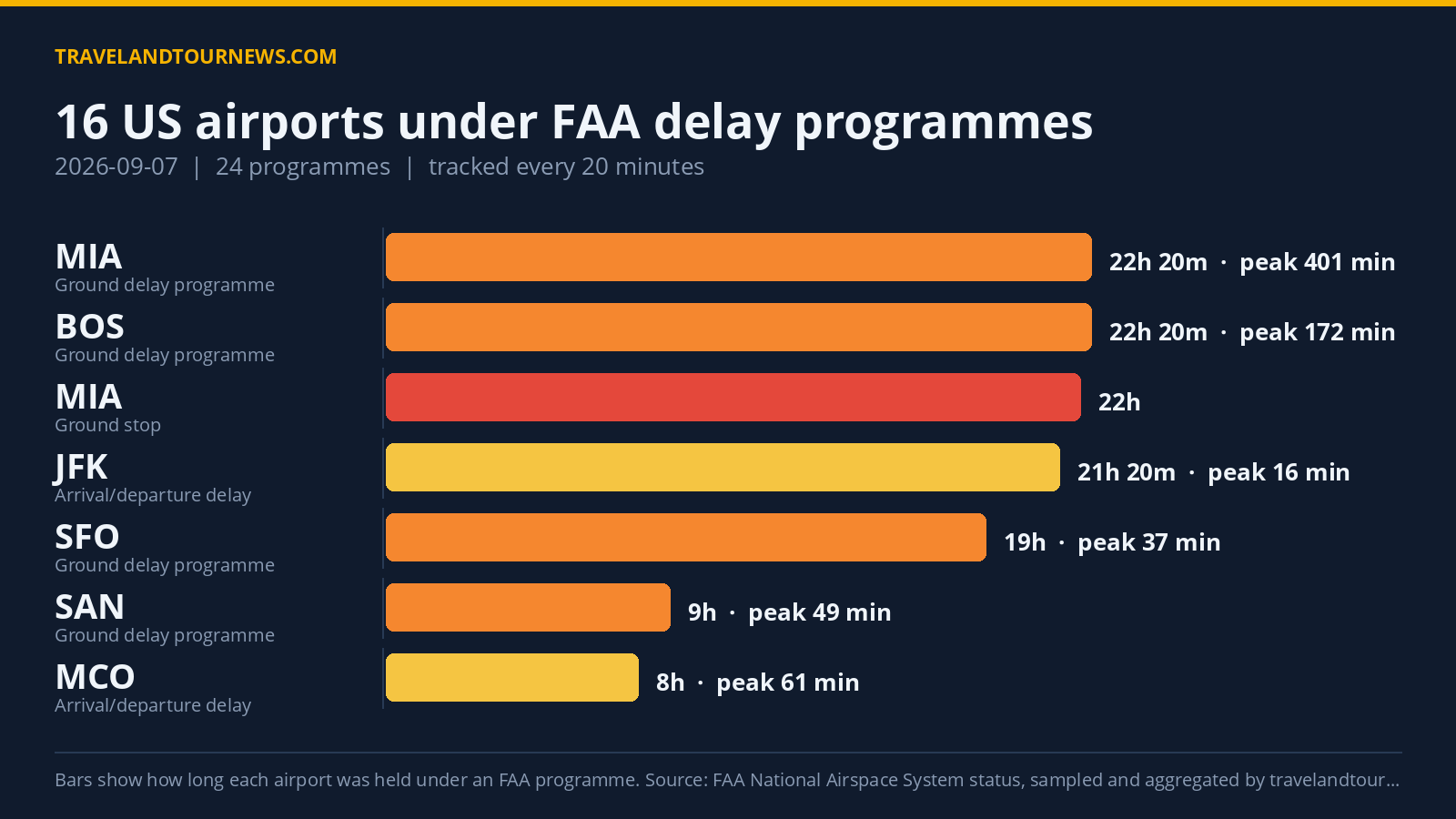
An Amazon Prime Air Boeing 767 cargo aircraft overran the runway at Miami International Airport on Sunday, September 6, 2026, at approximately 2 p.m. local time before coming to rest near Northwest 67th Avenue and catching fire. The Federal Aviation Administration (FAA) imposed a rare full ground stop at Miami International around 3 p.m., closing all runways and taxiways while emergency and recovery operations began.
The crash caused extensive flight cancellations and delays at Miami International, with cascading effects on major Texas airports including Dallas Fort Worth International, Houston airports, and Austin-Bergstrom International Airport. Passenger flights and cargo operations were
disrupted along routes connecting Texas with Miami, Florida, leading to stranded travelers, long lines at ticket counters, and missed connections throughout the Labor Day holiday weekend.
The accident resulted in at least five fatalities and multiple injuries involving individuals both on board and on the ground. The Amazon Prime Air cargo jet, operating a flight arriving from Luis Muñoz Marín International Airport in San Juan, Puerto Rico, overran Runway 30 and came to rest outside the airport perimeter, striking vehicles before catching fire. Miami-Dade Fire Rescue crews responded immediately to the scene.
Miami International Airport and 21 Air, operator of
the flight, confirmed the aircraft overran the diagonal runway and is disabled at the northwest end of the airport. The FAA described the ground stop as a rare action typically reserved for severe weather events and confirmed it had launched a formal investigation into the runway overrun. Flight data recorders and cockpit voice recordings are being analyzed. A ground vehicle operator relayed to the control tower: “Looks like we have an aircraft that overran the runway on 30.”
Airlines serving Miami and Texas have implemented policies allowing passengers to change itineraries without additional fees on affected routes. Rebooking desks and
mobile app platforms were heavily utilized amid widespread delays. Some travelers faced multi-day disruptions or rerouting via hubs such as Atlanta, Charlotte, or Chicago. Two of Miami International’s four runways reopened on September 7, 2026, while inspections and recovery continue, prolonging operational limitations during the busiest Labor Day travel period.
The FAA’s ongoing investigation has not disclosed the cause of the overrun, with no confirmation regarding weather or mechanical factors at the time of the accident. The Boeing 767 landed on Runway 30 before veering off the runway and striking vehicles near a busy road outside the airport boundary. Recovery
and investigative efforts remained active into the following day.
Miami International Airport serves as a significant gateway to Latin America and the Caribbean. The crash occurred amid the Labor Day weekend peak, complicating logistics at airports across the United States. Dallas Fort Worth International Airport, anticipating roughly 1.4 million passengers between September 3 and 8, 2026, faced heightened strain as Miami disruption affected flight schedules and capacity. The event created a ripple effect at Texas hubs that persisted beyond the holiday weekend as airlines adjusted operations to accommodate residual delays and cancellations.