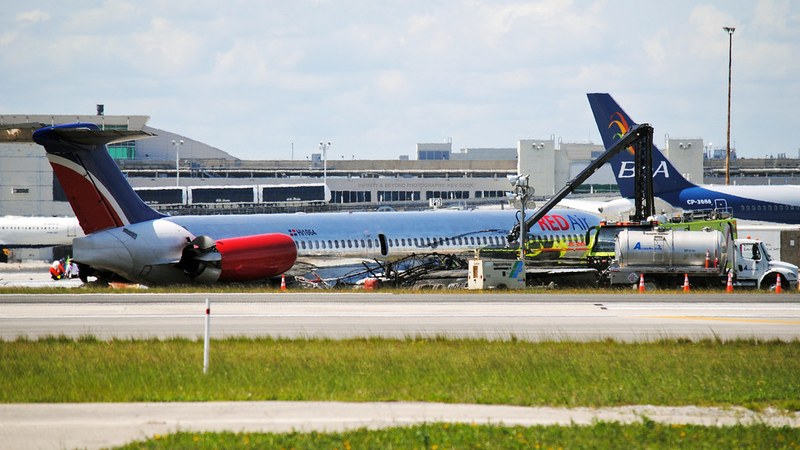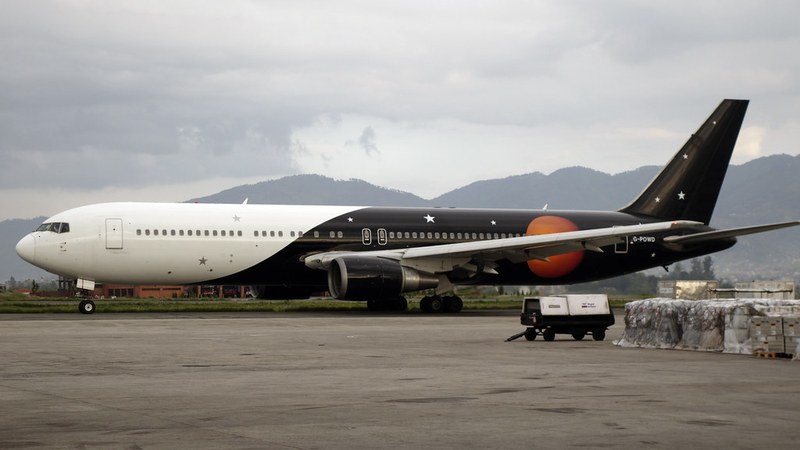
An Amazon Prime Air Boeing 767-300 cargo flight operated by 21 Air overran the diagonal Runway 30 at Miami International Airport shortly before 2 p.m. local time on Sunday, September 6, 2026. The aircraft, designated Flight 7598, had departed Luis Muñoz Marín International Airport in San Juan, Puerto Rico, earlier that day.
Runway Overrun and Crash Details
The plane failed to stop upon landing and overran the runway, coming to rest outside the airport perimeter near Northwest 67th Avenue. During the overrun, the Boeing 767 collided with multiple vehicles near the runway edge. The aircraft ignited, producing heavy flames and thick black smoke visible from
the scene.
Casualties and Emergency Response
At least five people were killed in the crash, with five others hospitalized, including three in critical condition, according to Miami-Dade Sheriff Rosie Cordero-Stutz. Some victims were trapped inside the struck vehicles. Miami-Dade County Fire Rescue deployed over 60 units to the site. Fire Chief Raied Jadallah reported the plane was leaking fuel and crews were working to contain the hazard while assessing patients.
FAA Ground Stop and Airport Closure
The Federal Aviation Administration (FAA) responded by issuing a full ground stop at Miami International Airport effective from 1743Z to 1900Z, roughly 3 p.m. to 5 p.m. local time, with potential for extension. This
directive halted all runway and taxiway operations, closing the airport temporarily.
Air Traffic Disruptions
Flight tracking service FlightAware recorded nearly 200 flight cancellations and over 250 delays at Miami International Airport as a result of the crash. Inbound flights were delayed by approximately 6.5 hours. The disruptions affected departure operations at other airports, including Houston, Jacksonville, Atlanta, and Washington, due to network impacts.
Statements from Officials and Amazon
Miami-Dade Sheriff Rosie Cordero-Stutz said, “We will continue to update you as soon as information is confirmed,” and expressed condolences, stating, “Our entire community is joined in prayers and grieving for those who are affected.” Miami-Dade County Fire Chief Raied
Jadallah confirmed the aircraft fuel leak and firefighting efforts. Amazon released a statement saying, “We’re working closely with local authorities and officials to understand exactly what happened. Right now, our absolute priority is the safety, well-being, and care of everyone involved.” The FAA confirmed the incident and reaffirmed it will conduct an investigation.
Investigation and Context
The cause of the runway overrun has not been disclosed. The FAA’s probe will evaluate factors including runway conditions, aircraft braking performance, and crew actions. The crash occurred during the Labor Day travel surge at Miami International Airport, one of the busiest U.S. airports, which handled 26
million passengers in 2025 and anticipated nearly 900,000 over the Labor Day weekend of that year. This incident follows other significant cargo-related aviation accidents in the U.S., including a UPS cargo jet crash in 2025 and a regional jet collision earlier that year.