Severe thunderstorms on August 27 and 28 caused extensive flight delays and cancellations at major U.S. airports in the Northeast and Mid-Atlantic regions. Newark Liberty International Airport was placed under a Federal Aviation Administration (FAA) weather-related traffic management program, contributing to widespread disruption.
Newark, JFK, and LaGuardia Lead in Flight Delays and Cancellations
Newark Liberty International Airport experienced average arrival and departure delays of approximately two and a half hours on August 27 due to the thunderstorms and associated FAA traffic restrictions. John F. Kennedy International Airport recorded departure delays exceeding three hours early on August 28, with gate holds and taxi delays reaching nearly two hours. LaGuardia Airport had
the highest number of weather-related delays and cancellations in the U.S. on August 27, logging over 200 delays and dozens of cancellations. The FAA issued advisories covering Teterboro Airport in New Jersey as well, indicating congestion affecting private and corporate flights.
Widespread Impact Beyond New York City Airports
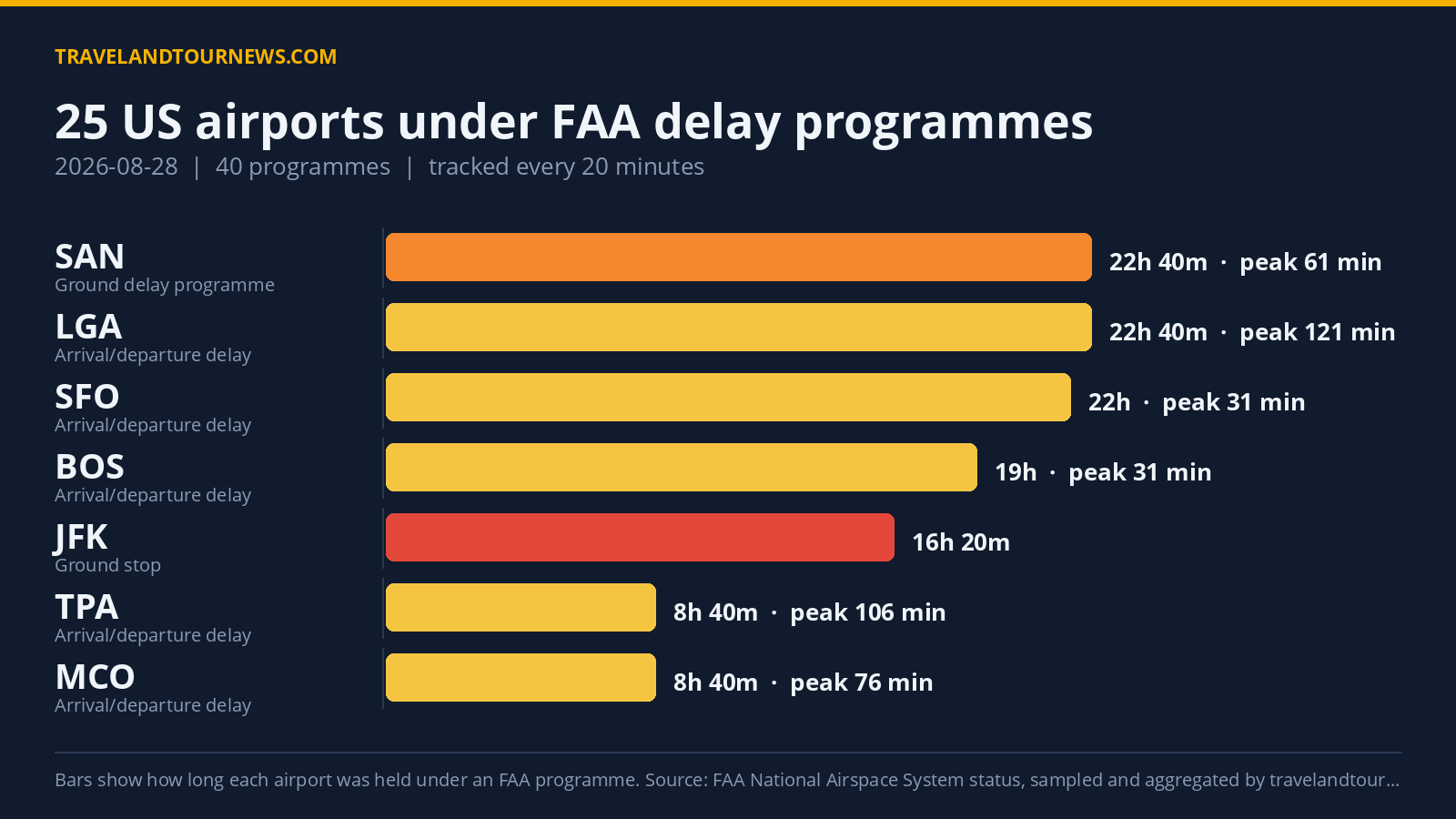
By the afternoon of August 27, more than 1,300 flights within, into, or out of the United States had been delayed nationally, with over 150 cancellations recorded, disproportionately affecting the New York City airport complex. Thunderstorms disrupted departures from additional major hubs, including Atlanta, Charlotte, Denver, and airports in Florida and Texas. Authorities implemented ground delay programs and intermittent
ground stops at nine airports to manage the flow of air traffic amid the weather disturbances.
Causes and Cascade of Delays
The primary cause of flight disruptions was a band of intense thunderstorms and heavy rainfall moving across the Mid-Atlantic and Northeast. This forced the FAA to enforce traffic management initiatives, such as ground stops and delay programs at key airports. Congestion in northern New Jersey and the airspace over New York Harbor exacerbated the impact. The delays extended beyond direct storm zones, as inbound aircraft and crew scheduling issues generated secondary delays in locations with clear weather after the storms subsided.
Impacts on Passengers and Airline Responses
Passengers at the
affected airports confronted average delays ranging from about two and a half hours to over three hours, with many facing cancellations. Rebooking became challenging as next-day seats often reached capacity on heavily trafficked routes. In response, major U.S. airlines introduced flexible travel policies allowing eligible passengers to change flights without fees for travel to and from the New York region around August 27. Travelers were advised to prepare for extended waiting times and frequent status checks on their flights.
Operational Constraints and Seasonal Patterns
The disruptions occurred during the late-summer travel peak when U.S. airlines and airports operate near capacity. The summer storm season regularly
causes afternoon and evening delays along the East Coast. Underlying factors such as tight crew scheduling, limited spare aircraft, and saturated runway and airspace infrastructure contribute to the severity of disruptions. The FAA and affected airports recommend travelers remain flexible as operational complexities persist amid variable weather conditions.