Severe thunderstorms over August 27 and 28, 2026 disrupted flights at major New York City area airports, including John F. Kennedy International Airport (JFK), Newark Liberty International Airport, LaGuardia Airport, and Teterboro Airport. The Federal Aviation Administration (FAA) issued weather-related traffic management programs, including ground delay initiatives, resulting in extensive delays and cancellations primarily affecting the New York metropolitan airspace.
Flight Delays and Cancellations Statistics
According to FAA data reported by The Traveler, Newark Liberty International Airport faced average delays of approximately two and a half hours for arrivals and departures on August 27. JFK saw average departure delays exceeding three hours by early morning
August 28. LaGuardia Airport recorded over 200 delays and dozens of cancellations on August 27, marking it the most impacted U.S. airport for weather-related disruptions that day. Nationally, more than 1,300 flights within, into, or out of the United States were delayed, while over 150 flights were canceled, with a disproportionate share linked to New York City airports.
FAA Traffic Management and Cascading Effects
The FAA implemented ground delay programs and intermittent ground stops affecting multiple storm-impacted hubs, notably Newark, JFK, LaGuardia, and Teterboro. Airspace congestion over northern New Jersey and New York Harbor complicated traffic flow, causing extended gate holds and taxi delays up to
two hours. These restrictions slowed the rate of arrivals and departures to manage capacity amid severe weather. The impact extended beyond storm-affected cities; flights departing unaffected airports such as Atlanta, Charlotte, Denver, as well as airports in Florida and Texas, experienced delays due to aircraft and crews arriving late into congested New York region airports.
Passenger Experience Amid Weather Disruption
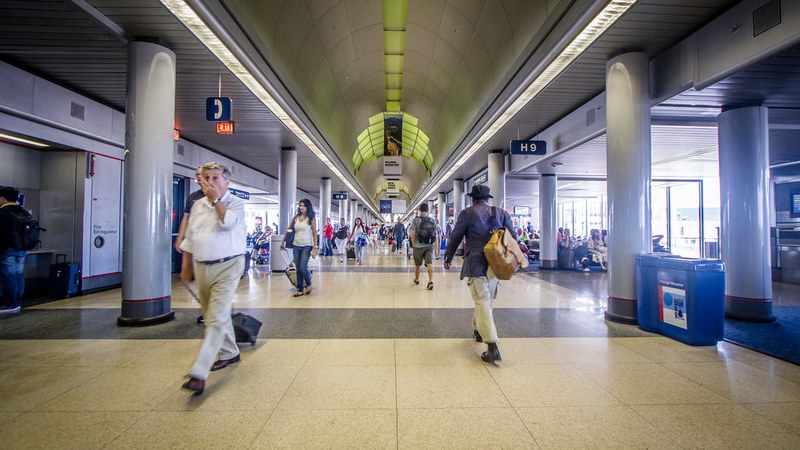
Travelers at the affected airports faced multi-hour flight delays including gate and taxi holds. Same-day rebooking availability was limited, with some passengers only securing alternate flights the following day or later. Airlines issued travel waivers allowing waiver of change fees for eligible passengers traveling to
or from New York area airports during the storm period, provided rebooking occurred within specified windows and routes remained unchanged. Passenger advisories emphasized frequent flight status checks and preparedness for prolonged wait times during flight rebooking processes.
Seasonal Factors and Operational Constraints
The flight disruptions coincided with the peak late-summer travel period, when U.S. airlines and airports operate near capacity. Frequent late summer thunderstorms on the East Coast often lead to schedule volatility, compounded by tightly timed airline operations. The FAA and airports have repeatedly advised passengers to monitor airlines directly for the most current flight-specific information. Despite advances in forecasting and air traffic management,
incremental convective storms over the country’s busiest air corridors frequently trigger widespread delays, including in major hubs like New York City.