Denver International Airport experienced severe weather on August 3, 2026, when a heat wave peaking at 102 degrees Fahrenheit collided with an incoming cold front. This shift caused wind gusts up to 40 miles per hour and temperature drops of 50 to 60 degrees overnight, creating unstable atmospheric conditions and severe turbulence.
The Federal Aviation Administration (FAA) grounded 29 flights at Denver International Airport, diverting them to Colorado Springs. Flight delays impacted roughly 40% of outbound flights and 32% of inbound flights, while cancellations accounted for 3% of total flight traffic. Delays extended from 6 PM into midnight for some
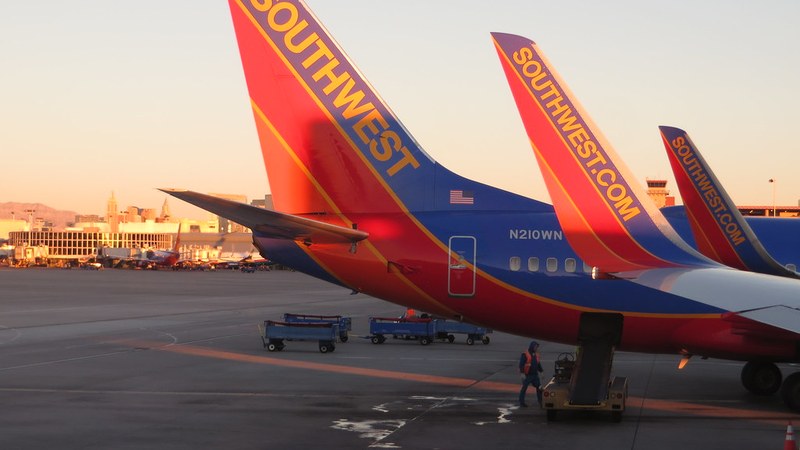
flights, disrupting schedules across multiple airlines including Southwest, United, and SkyWest.
Passengers endured the worst turbulence many had ever experienced, with several requiring medical attention. Ambulances met flights to transport injured travelers, with at least one patient taken to a hospital in stable condition. Many travelers missed connecting flights and faced multiple delayed rebookings, while some opted to switch to alternative transportation such as Uber to reach Denver.
Passengers reported severe in-flight turbulence and prolonged ground delays after diversion. One Reddit user described a flight stuck in the air for an hour, missing their connection, with their new flight delayed
until midnight. Another passenger stated turbulence at 10,000 feet was so intense that flight attendants made repeated announcements to calm the cabin. There was a “steady stream” of aircraft repositioning from Colorado Springs back to Denver, including planes from Southwest, United, and SkyWest.
Denver’s geographical location contributes to frequent turbulence due to mountain winds and wind shear. The day’s turbulence was worsened by poor air quality from drifting smoke caused by wildfires in the Pacific Northwest. The sudden cold front and high wind gusts created unstable atmospheric conditions that led to hazardous flying conditions and turbulence.
After passing over Denver,
the turbulent air mass moved northeastward, affecting the Great Lakes region and parts of the northeastern United States, including eastern New York and New England, where unstable air conditions continued into the following morning.