Three carriages of a Southern Rail passenger train derailed near Lewes in East Sussex, southeast England, on Thursday, August 13, 2026. The train, which departed London Victoria at 14:24 BST, was carrying approximately 150 passengers.
Two passengers sustained serious injuries while 18 others were hurt; none of the injuries were life-threatening. Passengers were evacuated onto the track following the derailment. Emergency responders including the East Sussex Fire & Rescue Service were praised for their swift and coordinated rescue efforts.
Rail services between London Victoria and Eastbourne have been cancelled for the weekend due to the closure of the line section
between Haywards Heath and Lewes. Stations Cooksbridge and Plumpton will not be served, with rail replacement bus services operating on affected routes. Travelers are advised to reach Eastbourne via Brighton as the popular Airbourne air show is scheduled to take place in Eastbourne this weekend. Commuters planning to travel on Monday are urged to check for updates starting Sunday evening.
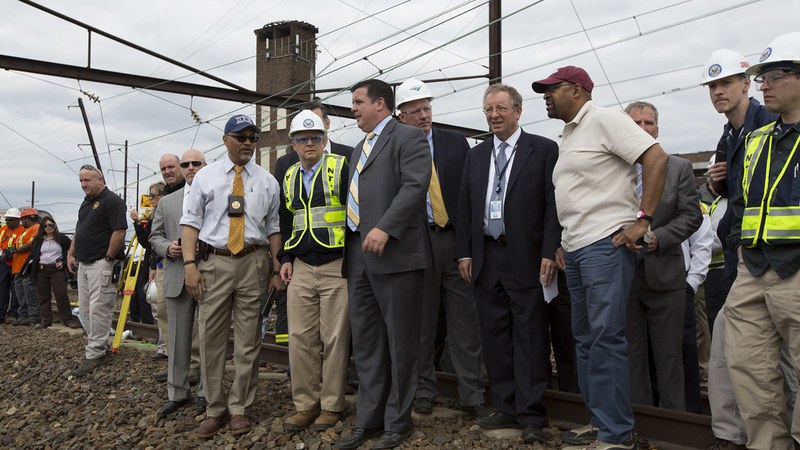
Investigators from the Rail Accident Investigation Branch (RAIB) are examining the infrastructure, CCTV, signalling systems, and train data at the derailment site. Network Rail’s safety director, Martin Frobisher, confirmed that there were no speed restrictions in place at the time
and that the track section involved was inspected the day before the incident. Mr. Frobisher indicated that investigations will explore whether the high temperatures in the 30s Celsius may have affected the tracks and infrastructure but avoided speculation on the cause.
Passenger Rachel Heath described the experience on the 14:24 Southern service as terrifying, recalling the train “bumping up and down and then jostling from side to side like a seesaw,” with surrounding screams and a feeling that the carriage was “almost lifted into the air” before falling onto its side. Another passenger, Tracy McGregor, said the derailment felt like
a “metal tube carving through the earth,” covering passengers in mud when it stopped.
John Whitehouse, chief executive of Greater Thameslink Railway, which operates Southern Rail, stated, “Accidents of this nature are incredibly rare, and the railway is incredibly safe.” He noted that if speed restrictions were necessary during hot weather, they are implemented as part of a robust inspection regime, but none were in place at the time of the derailment.
Emergency and investigation teams are operating from a command centre established in a nearby field. Efforts are ongoing to prepare a crane for the removal of the derailed
carriages. British Transport Police have called on passengers who have not yet contacted authorities to come forward. Lewes District Council’s deputy leader, Christine Robinson, also commended the emergency services for their rapid response, noting that without their actions the number of casualties could have been higher.