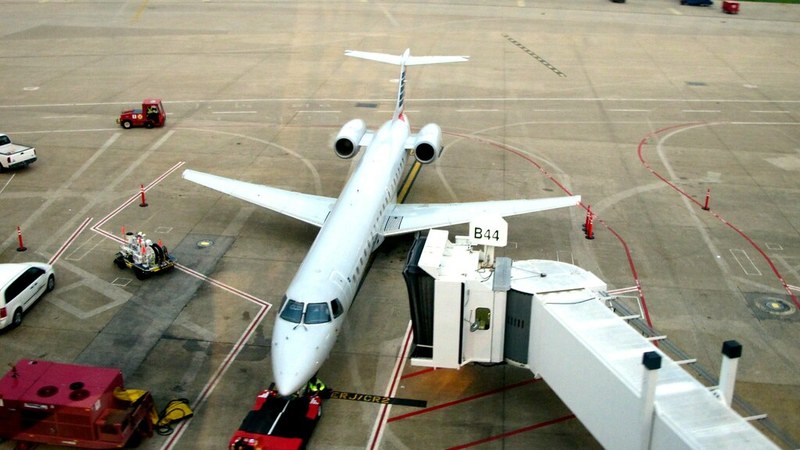
On Tuesday evening, July 28, 2026, American Airlines and its regional carriers experienced a technology outage that led the Federal Aviation Administration (FAA) to issue a nationwide ground stop for all American Airlines flights not already airborne. This ground stop halted departures at major hubs and resulted in extensive flight delays and cancellations nationwide.
FlightAware reported approximately 1,100 American Airlines flights were delayed on July 28, representing 30 percent of the airline’s scheduled flights that day. Additionally, 221 flights, or 6 percent of the daily schedule, were canceled. Connectivity issues affecting some of American Airlines’ systems were fully restored later
that evening, allowing the airline to resume normal operations after the FAA lifted the ground stop. An American Airlines spokesperson stated, “A technology issue briefly impacted connectivity for some of our systems on Tuesday evening. Connectivity has been fully restored. We apologize to our customers for the inconvenience.” The spokesperson also commended the team for promptly restoring service.
Major Hubs Impacted by the Outage
The IT outage disrupted operations at multiple key airports that serve as American Airlines hubs. Facilities affected included Charlotte Douglas International Airport in North Carolina, Dallas Fort Worth International Airport, Chicago O’Hare International Airport, Los Angeles International Airport, Fort Lauderdale–Hollywood International Airport,
Louis Armstrong New Orleans International Airport, Nashville International Airport, Ronald Reagan Washington National Airport, and Phoenix Sky Harbor International Airport. The ground stop and system connectivity problems caused cascading delays in flight schedules throughout these locations.
Expert Analysis on Airline IT System Vulnerabilities
Eric Napoli, chief legal officer at AirHelp, explained that IT disruptions are not uncommon in the airline industry due to the complexity of technology systems. Airlines depend on integrated software for flight scheduling, crew coordination, passenger communications, and booking. When these systems face failures, delays and cancellations can quickly ripple across the airline’s network. Napoli noted that some IT issues affect operational areas like
check-in or scheduling without compromising aircraft safety, while others can be more critical depending on system connections. Aviation electronics, including avionics and software, account for about 30 percent of an aircraft’s value and manage communication, navigation, flight control, and monitoring functions, amplifying the impact of any outage.
Traveler Impact from the Disruption
The disruption on July 28, 2026, impacted thousands of passengers as 1,100 flights were delayed and 221 canceled. The FAA’s ground stop on American Airlines flights not already in the air forced widespread delays, affecting travel plans across the United States. These interruptions occurred at several major airports serving as American’s hubs, compounding
delays and cancellations during peak travel periods.
In commenting on the situation, American Airlines expressed regret over the inconvenience caused. Napoli highlighted the frustration travelers face from delays and cancellations, especially after investments made in planned trips. He said, “Delays, cancellations and a lack of clear communication can be incredibly frustrating, especially when people have already spent a lot of money on trips they’ve been planning for months.” The airline confirmed the issue had been resolved and normal flight operations resumed the same evening.