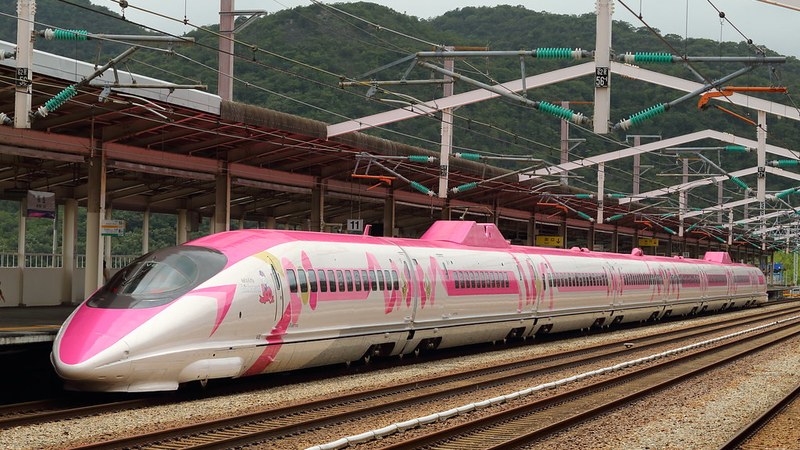
Former Japanese minister Hideki Makihara publicly blamed the Indian government for delays in the Mumbai-Ahmedabad bullet train project, asserting that Indian actions were solely responsible for the slow progress. Makihara criticized India for repeatedly breaking promises, altering decisions, and prioritizing its own interests until late in the project negotiations. He highlighted Japan’s exclusion from supplying the project’s critical signalling system as a significant factor in delays.
Indian Government Denies Delay Allegations
India’s Ministry of External Affairs (MEA) dismissed Makihara’s statements as an individual viewpoint inconsistent with the facts. MEA spokesperson Randhir Jaiswal affirmed that discussions between India and Japan on the high-speed rail corridor are
progressing well, with construction advancing rapidly. Jaiswal noted that the signalling equipment was procured according to international standards and that an offer from Japan for this was never received.
Projected Milestones and Service Launch
Railway Minister Ashwini Vaishnaw announced the bullet train’s first operational phase will commence on August 15, 2027. This phase includes the opening of the Surat to Bilimora section, part of the Mumbai-Ahmedabad High-Speed Rail Corridor. Despite earlier delays, partial service is expected to begin as scheduled, with full line completion ongoing.
Japan’s Role in Train Supply and Technology
East Japan Railways will provide Indian Railways with one train set each of the E3 and E5 Shinkansen series as
inspection vehicles. The next-generation E10 series trains, currently under development by Japan, are slated for deployment on the corridor in the early 2030s. However, these E10 trains are not expected to be delivered by the line’s partial opening in 2027. Both Indian and Japanese governments have agreed to start operations using an Indian high-speed train initially.
The Mumbai-Ahmedabad bullet train project employs Japanese Shinkansen technology, underscoring its strategic importance to both nations. Japan places significance on supplying train sets for the project to maintain its technological footprint in India.
Makihara stated, “I feel 100% that the reason this hasn’t moved
forward is entirely on the Indian side,” criticizing India’s repeated changes and failure to uphold agreements. MEA spokesperson Randhir Jaiswal responded, “It is an individual opinion and at considerable variance with facts. India-Japan discussions on the Mumbai-Ahmedabad high-speed train are, in fact, progressing well,” and confirmed that construction has rapidly progressed.