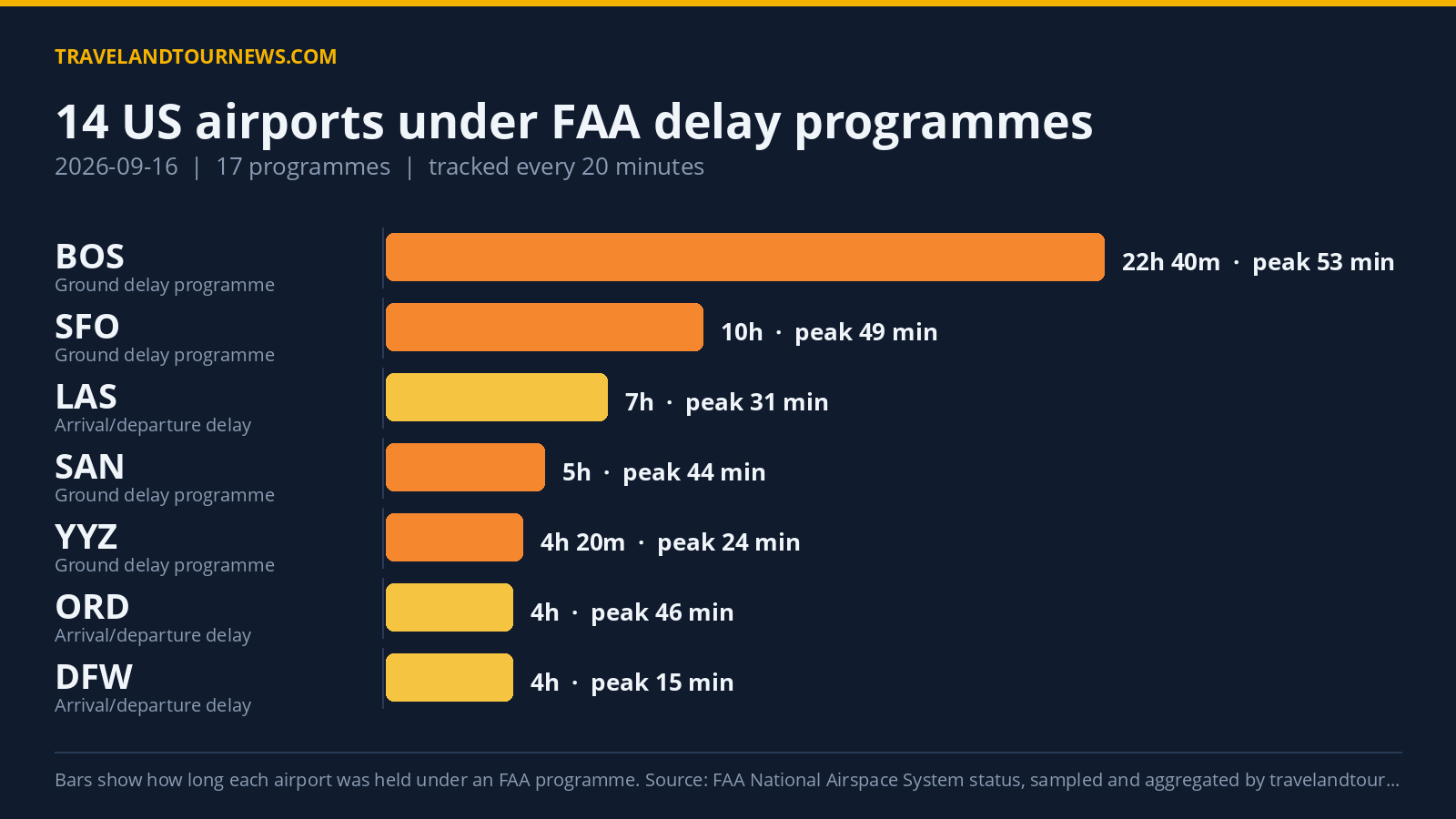
On July 17, 2026, a nationwide surge in flight disruptions resulted in 4,896 delays and 126 cancellations across U.S. airports. Chicago O’Hare International Airport saw the most severe impact, reporting 801 delays and 17 cancellations. Other airports with significant disruptions included Hartsfield-Jackson Atlanta with 420 delays and 16 cancellations, Orlando International with 216 delays and 5 cancellations, San Francisco International with 213 delays and 7 cancellations, San Diego International with 182 delays and 12 cancellations, John F. Kennedy International Airport (JFK) with 115 delays and 4 cancellations, and Newark Liberty International Airport with 87 delays and 4 cancellations.
Airlines With Highest Operational Disruptions
Among carriers,
Southwest Airlines experienced the largest volume of delays, with 866 flights delayed and 9 cancelled. American Airlines followed closely, recording 850 delays and 11 cancellations, impacting flights primarily through Dallas/Fort Worth International Airport (DFW) and Chicago O’Hare. Regional carrier SkyWest had 434 delays and the highest cancellation count among airlines, with 21 cancellations. United Airlines faced 434 delays alongside 4 cancellations, many linked to flight routes through Chicago O’Hare and Newark Liberty.
Impact of Canadian Wildfire Smoke on Visibility and Operations
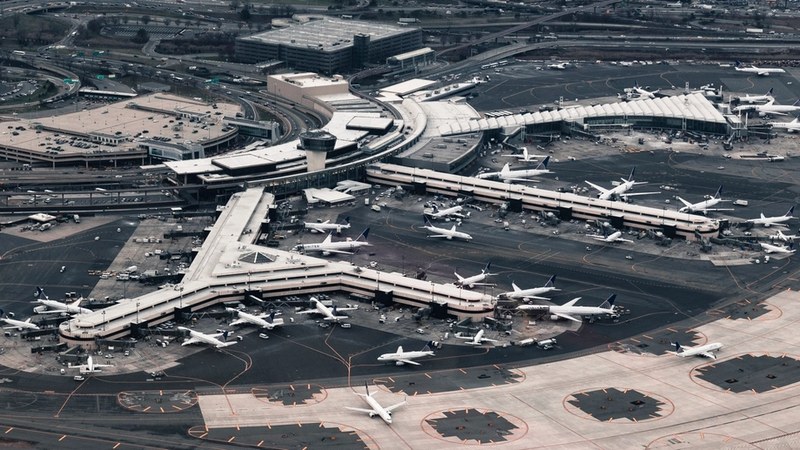
Operational challenges at airports throughout the Northeast and Great Lakes regions were intensified by wildfire smoke drifting south from Canadian wildfires. Reduced visibility at New York metropolitan airports,
including JFK, Newark Liberty, and LaGuardia, slowed air traffic by requiring greater spacing between arriving and departing aircraft. This smoke also contributed to hazardous air quality alerts in parts of New York, New Jersey, Chicago, and Detroit. Air Quality Index values in several cities reached hazardous levels, prompting health advisories.
Cascading Effects on National Air Traffic and Passenger Disruptions
The interconnected nature of the U.S. aviation network amplified the disruptions originating from key hub airports. Delays at Chicago O’Hare, Dallas/Fort Worth, Hartsfield-Jackson Atlanta, Orlando, San Francisco, San Diego, Seattle-Tacoma, JFK, and Newark Liberty caused widespread scheduling disruptions nationwide. Large connecting hubs such as Chicago O’Hare and Dallas/Fort Worth spread
delays across domestic and international routes. Thousands of passengers faced prolonged waits and schedule changes due to the cascading effects of these operational constraints.
Public Health Concerns and Major Event Implications
Alongside aviation impacts, hazardous air quality warnings affected residents and travelers in metropolitan areas exposed to the wildfire smoke. MetLife Stadium in New Jersey, scheduled to host the 2026 FIFA World Cup Final, was located within the region experiencing smoky conditions. This presented potential public health concerns for players, officials, and the projected 82,500 spectators attending the outdoor event. Meanwhile, airports including JFK and Newark Liberty continued operating under these challenging air quality conditions.