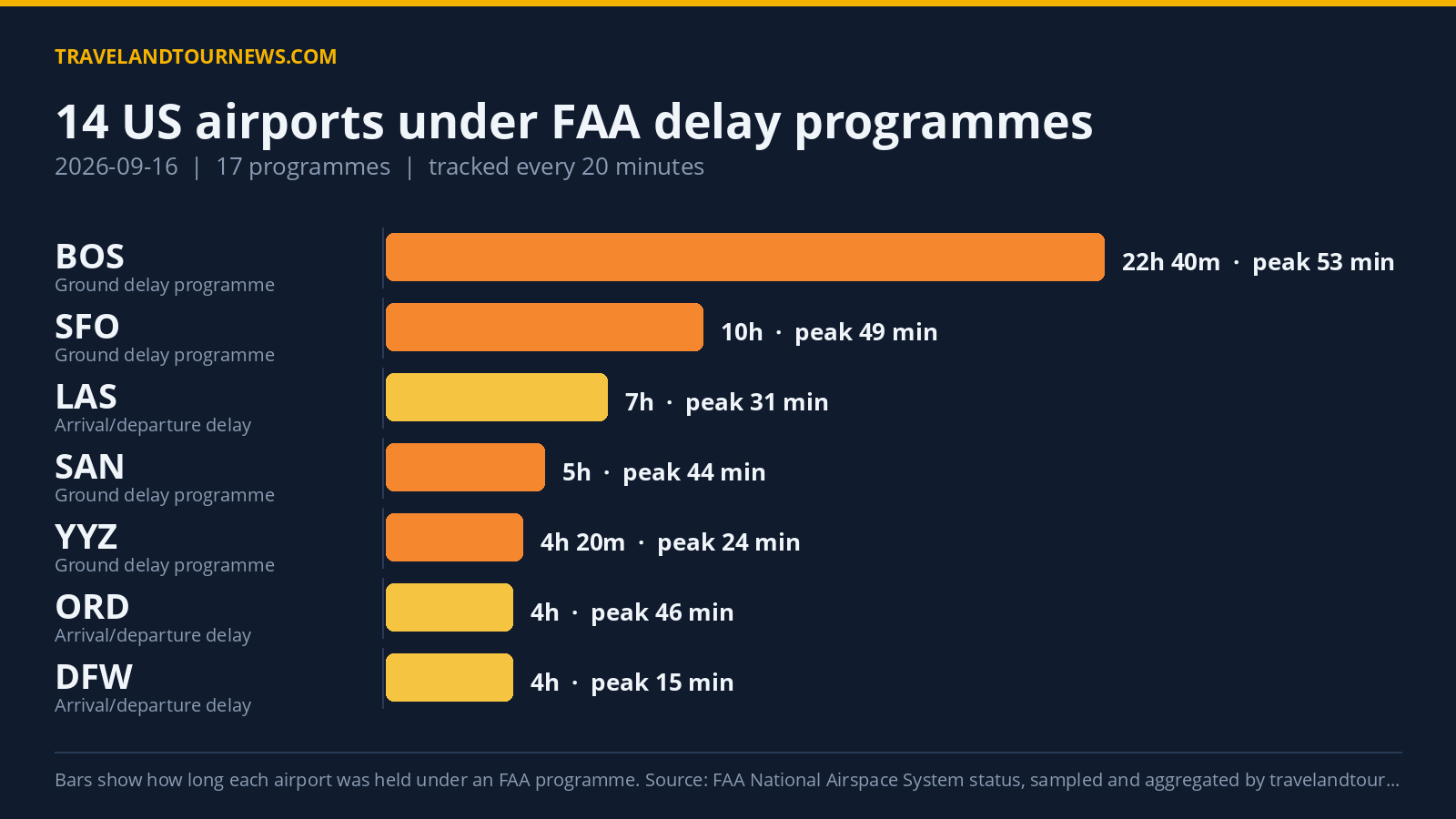
On July 18, 2026, 4,896 flights were delayed and 126 flights cancelled across the United States, impacting major hubs and airlines nationwide. Chicago O’Hare led with 801 delays and 17 cancellations, while Southwest Airlines reported 866 delayed flights and 9 cancellations, the highest delay count among carriers. Other significantly affected airlines include American, which recorded 850 delays and 11 cancellations, SkyWest with 434 delays and the highest cancellation count of 21, and United with 434 delays and 4 cancellations.
Airport and Airline Disruption Statistics
Key airports with major delays and cancellations included Chicago O’Hare with 801 delays and 17 cancellations, Hartsfield-Jackson Atlanta logging 420 delays
and 16 cancellations, Orlando with 216 delays and 5 cancellations, San Francisco reporting 213 delays and 7 cancellations, San Diego experiencing 182 delays and 12 cancellations, New York JFK with 115 delays and 4 cancellations, and Newark Liberty accounting for 87 delays and 4 cancellations. In addition to Southwest and American, Frontier Airlines also faced considerable operational disruptions.
Wildfire Smoke and FAA Staffing Issues Trigger Flight Disruptions
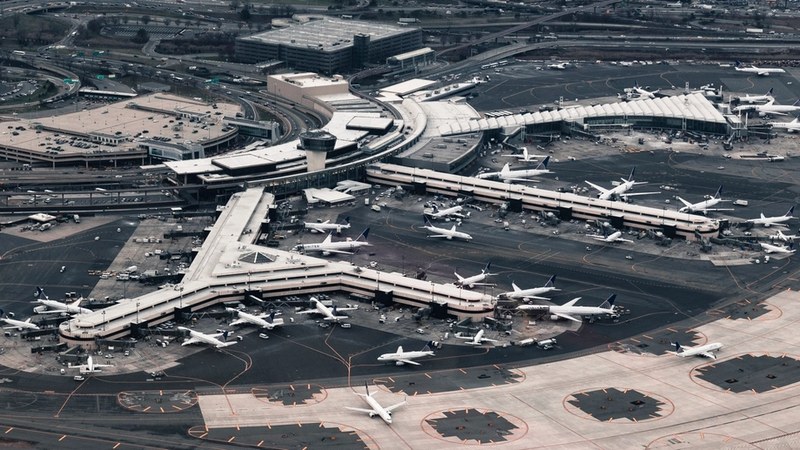
Smoke from hundreds of active Canadian wildfires has drifted south, reducing visibility across parts of the Northeast and Midwest. This includes significant impacts on the New York metropolitan airspace around JFK and Newark airports. Reduced visibility compels air traffic controllers to increase
intervals between arriving and departing aircraft, slowing overall operations and contributing to widespread delays. The Federal Aviation Administration (FAA) also faces staffing shortages that compound the operational difficulties amid weather challenges.
Traveler and Public Health Impacts in Affected Regions
Air quality advisories have been issued in major cities such as Chicago and Detroit where hazardous smoke levels persist, prompting local health warnings to limit outdoor activity. Airport delays affected travelers from California to New York and Florida. New York City’s skies, obscured by smoke, contributed to operational constraints at JFK and Newark Liberty airports during the disruptions. The deteriorated air conditions have heightened public concern, amplified by the
upcoming 2026 FIFA World Cup Final at New Jersey’s MetLife Stadium, where smoke exposure may influence attendees and participants.
Major Hubs and Airlines Face Broad Operational Pressure
Delays at major connecting hubs including Chicago O’Hare, Dallas-Fort Worth, Hartsfield-Jackson Atlanta, and New York airports have amplified nationwide cascading effects on domestic and international flight schedules. Southwest Airlines, American Airlines, United Airlines, SkyWest, and Frontier Airlines all reported significant schedule disruptions. The combination of wildfire smoke reducing airspace capacity and FAA personnel shortages has placed strain on airline operations during peak summer travel.
Flight disruption data reflects real-time aggregations sourced from FlightAware as of July 17, 2026, 3:24 pm ET,
verified against authoritative tracking. Travelers should account for ongoing schedule changes across affected airports and airlines on July 18, 2026.