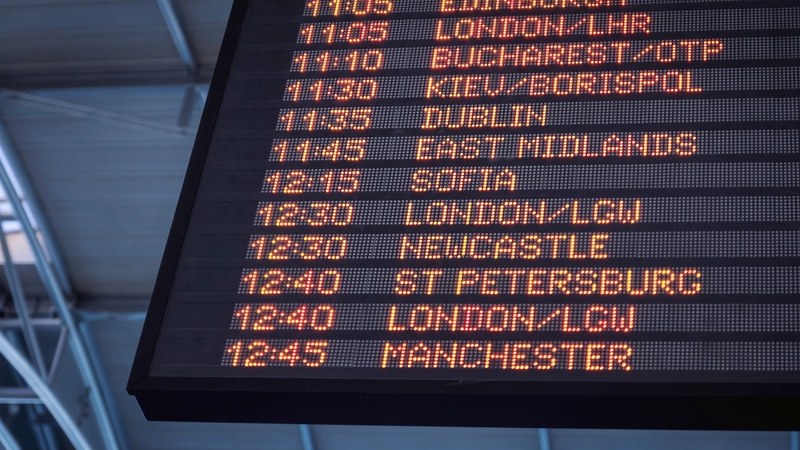
On 14 July 2026, European airports across Germany, Austria, Bulgaria, Switzerland, the United Kingdom, and Denmark experienced 91 flight cancellations and 1,457 delays. Major carriers affected included Lufthansa, British Airways, and Austrian Airlines.
Airport-Level Disruptions and Airline Impact
Frankfurt Airport was the most disrupted airport in Europe today, recording 254 delays and 40 cancellations. Lufthansa represented nearly half of all cancellations with 200 delays and 43 cancellations across affected airports. London Heathrow Airport recorded 229 delays and six cancellations, with British Airways accounting for 127 delays mainly at its largest UK hub. Berlin Airport faced 224 delays and eight cancellations, mainly involving easyJet and Eurowings.
Vienna Airport had 198 delays and six cancellations, primarily impacting Austrian Airlines. Munich Airport recorded 193 delays and eight cancellations with Lufthansa most affected, while Zurich Airport saw 165 delays and 13 cancellations, disrupting Swiss and Helvetic operations. Other airlines disrupted included Condor, Discover, City Airlines, Ryanair, Turkish Airlines, Pegasus Airlines, Lauda Europe, Air Baltic, Edelweiss Air, Emirates, Etihad Airways, and Virgin Atlantic across key hubs like Copenhagen, Hamburg, and Burgas airports.
Causes of Flight Disruptions Across Europe
Localized severe weather, including persistent low clouds around Zurich, Munich, Geneva, and Vienna, reduced arrival rates and forced holding patterns or diversions. Air traffic flow restrictions over Central
and Western Europe slowed aircraft movements further. Operational bottlenecks at border control, particularly at Frankfurt Airport during peak summer volumes, lengthened processing times with multiple screening points due to new procedures not yet fully adapted to the holiday season passenger surge.
Passenger and Network Impact
Thousands of travelers were stranded due to the cancellations and delays at major European airports including Frankfurt, London Heathrow, Berlin, Vienna, Munich, Zurich, Copenhagen, Hamburg, and Burgas. These operational challenges at key hubs caused ripple effects through Europe’s interconnected flight network, disrupting onward connections inside and beyond the continent. Passengers faced longer wait times at overwhelmed border control, especially
at Frankfurt where secondary screening points increased processing delays.
Verification and Industry Context
The disruption data was sourced from Flightaware as of 1:00 pm ET on 14 July 2026 with editorial cross-checking for accuracy. The widespread impact on airlines such as Lufthansa, British Airways, and Austrian Airlines highlights the fragility of Europe’s tightly connected flight schedules. Increased online searches for regional weather radar services in Frankfurt underscore heightened caution amid weather-related operational challenges during the busy summer travel period.